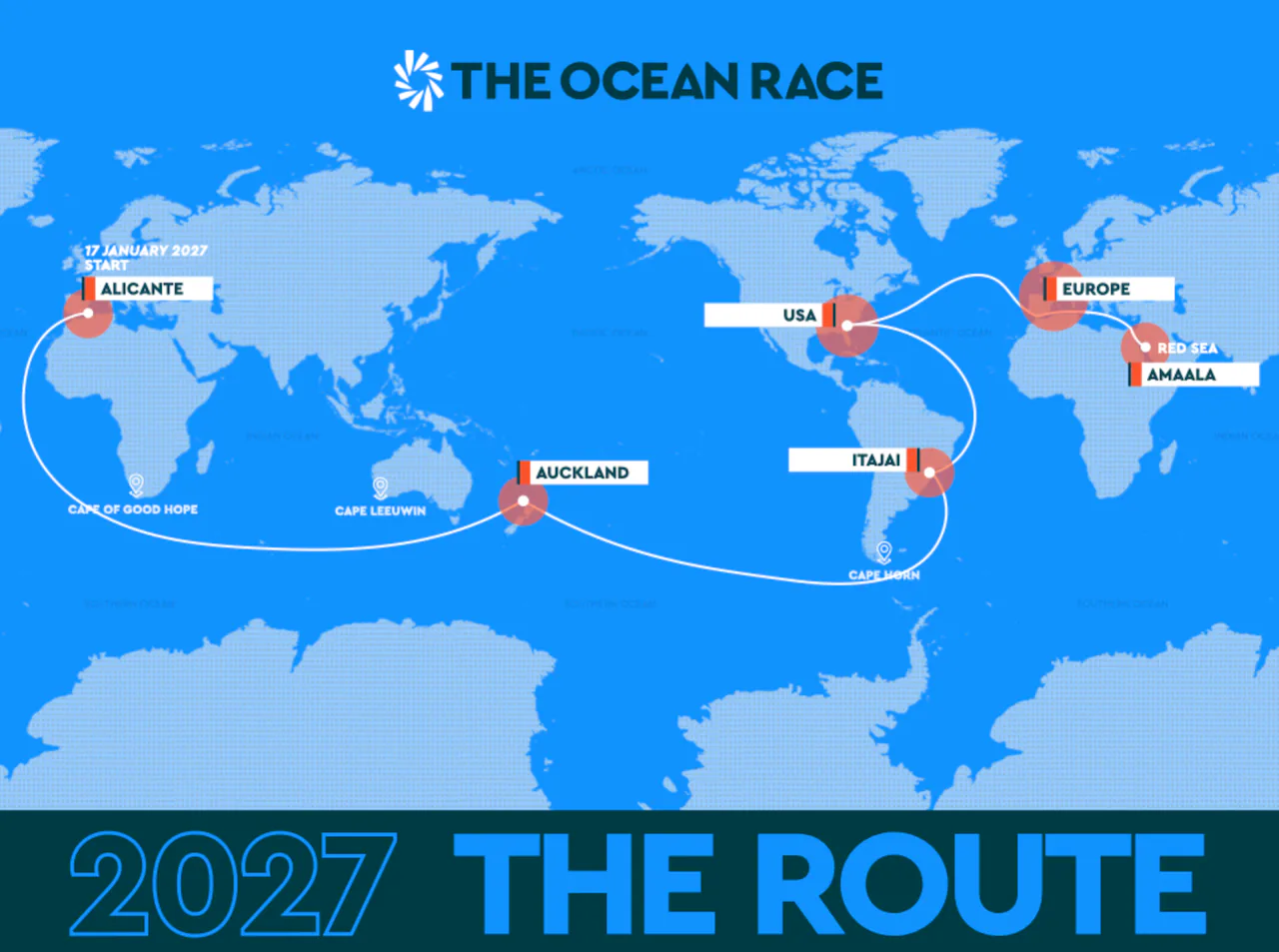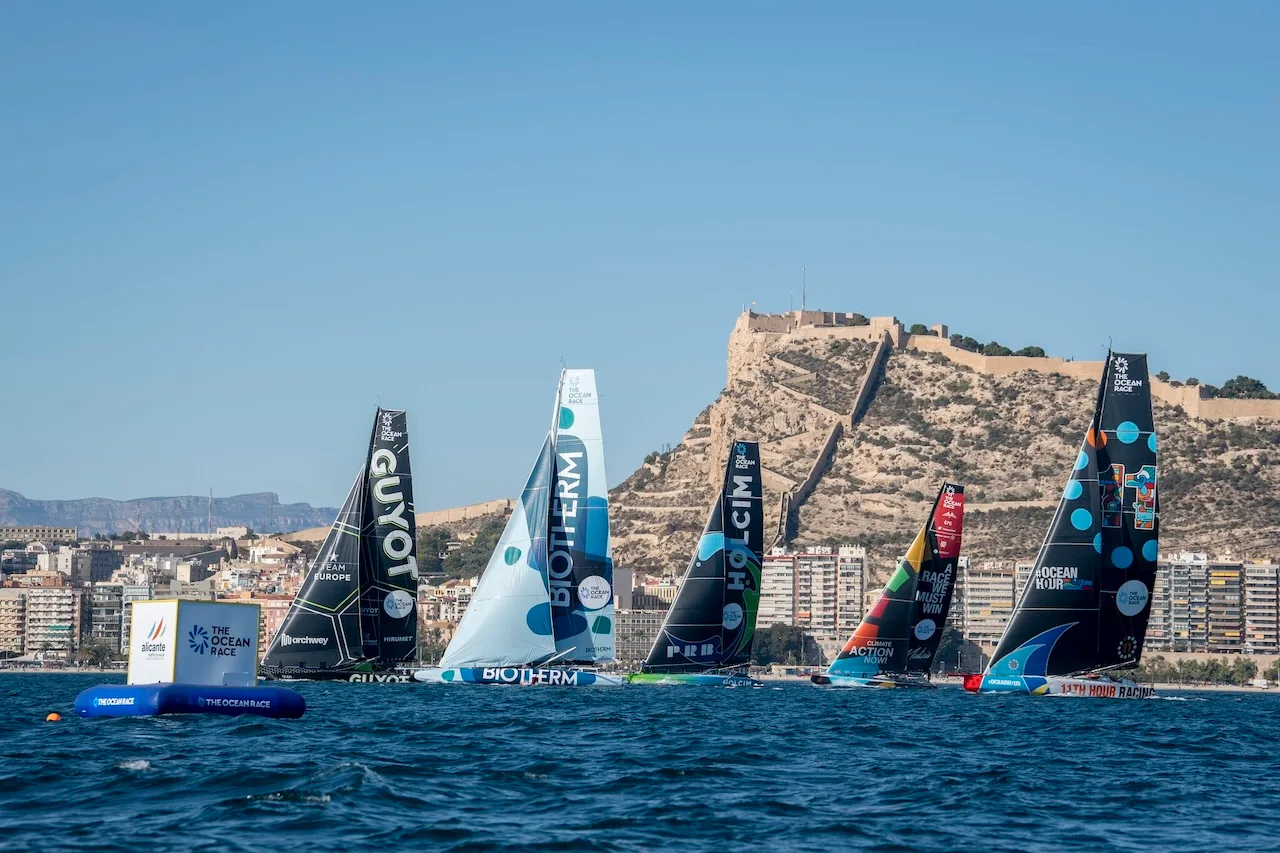
The salt-scented air over Alicante’s waterfront already carries the quiet intensity of crews who know the next horizon will test every limit of boat and body. For the sixth consecutive edition the Spanish Mediterranean port will serve as Puerto de Salida for The Ocean Race, the around-the-world contest that has defined offshore team sailing since its first gun sounded in Portsmouth in September 1973. On 17 January 2027 the fifteenth edition will begin with an opening leg of 14,000 nautical miles to Auckland, New Zealand, the longest first stage in the race’s fifty-four-year history and a passage that will carry the fleet halfway around the planet before any stopover is reached.
That history began with seventeen yachts of wildly differing sizes and a mixed company of amateurs, adventurers and professionals who set out on a 27,000-mile course via Cape Town, Sydney and Rio de Janeiro. Mexican skipper Ramón Carlín and his Swan 65 Sayula II claimed the corrected-time victory after 133 days at sea, establishing a tradition of endurance that has never been diluted even as the boats evolved from heavy displacement cruisers into the pure racing machines of later decades. The Whitbread Round the World Race name endured through the 1980s and 1990s, producing legends such as Sir Peter Blake whose Steinlager 2 swept every leg in 1989-90, and Grant Dalton’s NZ Endeavour which dominated the maxi division in 1993-94. When Volvo assumed title sponsorship in 2001 the professionalisation accelerated; one-design classes arrived, first the Volvo Open 70s and later the Volvo Ocean 65s, before the race adopted the foiling IMOCA 60s that now define the modern fleet.
Alicante’s relationship with the event began in earnest with the 2008-09 edition and has grown into a strategic partnership that local authorities now describe as central to the region’s international sporting identity. Regional Minister Marián Cano has spoken of the Comunitat Valenciana’s capacity to stage major events that combine sport, tourism, sustainability and innovation, while Mayor Luis Barcala calls the sixth successive start both an honour and a pleasure that will once again transform the waterfront into Ocean Live Park. For ten days from early January the free-to-enter race village will place sailors, boats and public side by side along the harbour, offering families, schools and visitors the chance to explore the science of ocean health, the technology of modern foiling yachts and the human stories behind the campaigns.
The sailors themselves speak of the opening leg with a mixture of anticipation and respect. Mariana Lobato, co-skipper with Paul Meilhat of United by the Ocean, the team that claimed victory in the recent Ocean Race Atlantic, describes a route that contains every classic challenge: the Mediterranean exit, the long descent of the Atlantic including the doldrums, a substantial stretch of Southern Ocean and the final climb toward Auckland. Preparation of boat and crew for the next three months is already the singular focus. Oliver Heer, skipper of Embrace the Challenge and a first-timer in the full around-the-world race, notes the energy that surrounds the Alicante start yet emphasises how quickly the focus narrows once the dock is left behind. Boris Herrmann of Team Malizia, returning with a new boat whose performance potential is still being unlocked, calls the Alicante departure a special moment that balances the excitement of crowds and families with the knowledge of the demanding miles that lie beyond the start line. Conrad Colman, the two-time Vendée Globe competitor preparing MSIG Europe, speaks of the particular appeal of racing into his home country of New Zealand after covering half the globe, describing the moment the real adventure begins as the fleet leaves Alicante.
Technical demands of the 14,000-mile leg will be severe. Foiling IMOCA 60s capable of sustained high speeds must balance power with reliability across trade-wind reaches, the unpredictable calms of the equator and the big seas of the high latitudes. Tactical decisions will begin immediately after clearing the Mediterranean: whether to leave the Canaries to port or starboard, how to position for the Cape of Good Hope scoring gate, and how to manage crew energy across five weeks of continuous offshore sailing before the first landfall. The subsequent route will carry the fleet from Auckland to Itajaí in Brazil, then north to St. Pete-Clearwater in the United States, across the Atlantic to Cascais in Portugal and ultimately through the Mediterranean and Suez Canal for a final sprint down the Red Sea to AMAALA, with the possibility of one further Mediterranean stopover still under consideration.
In the wider sailing world the race continues to occupy a unique place. It remains the ultimate test of a team rather than an individual, demanding not only sailing skill but the ability to maintain performance, morale and systems over months of continuous competition. Its purpose-driven emphasis on ocean health, expressed through onboard science programmes and public engagement at every stopover, has become as central to its identity as the racing itself. Alicante’s role as the consistent launch point reinforces the continuity of that tradition while allowing each new generation of sailors to write its own chapter on the same Mediterranean waterfront that has watched the fleet depart five times already.
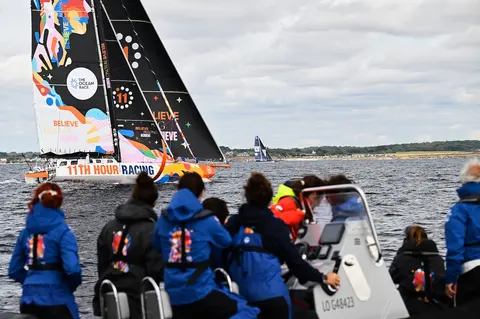
When the starting gun fires on 17 January the crowds will line the shore and the spectator fleet will fill the bay, just as three thousand boats once accompanied the first Whitbread fleet out of Portsmouth more than half a century earlier. The boats will be faster, the technology more advanced and the opening distances longer, yet the essential character of the contest will remain unchanged: a group of sailors bound together by a shared purpose, heading into the open ocean to discover what they and their yachts are truly capable of achieving.