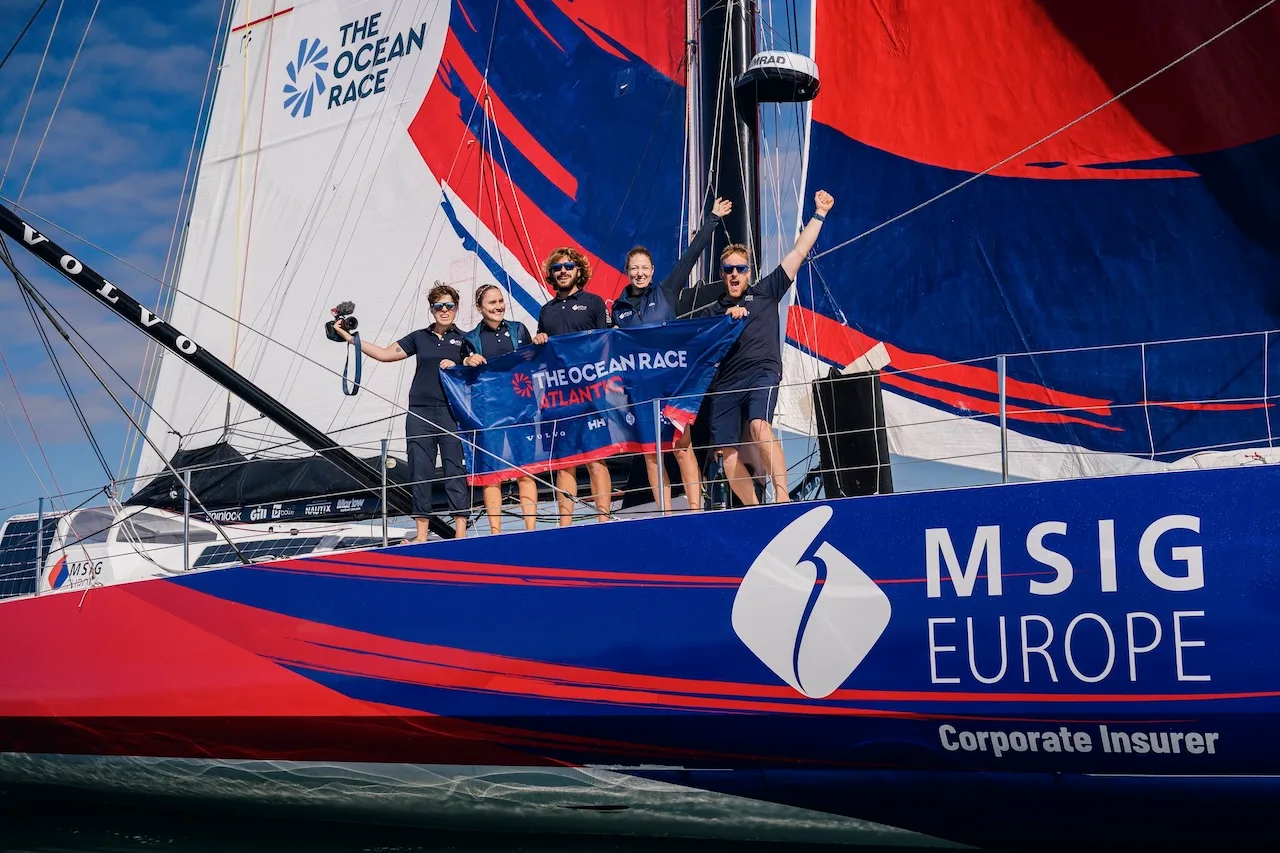
The final miles refused to come easily for MSIG Europe, although little about Conrad Colman’s passage across the North Atlantic had suggested that the ocean intended to offer his crew a gentle conclusion.
After more than nine days of racing from New York, the oldest boat in the six-strong fleet approached Lorient through almost disappearing wind and an adverse tidal current. Fifteen nautical miles remained when the Race Committee decided that continued competition could no longer produce a meaningful finish, officially recording the New Zealand entry’s position on a shortened course. The official finishing time was 07:40 UTC on 12 September 2026, giving MSIG Europe an elapsed time of 9 days, 7 hours and 40 minutes. Sixth place brought one championship point and closed the inaugural edition of The Ocean Race Atlantic.
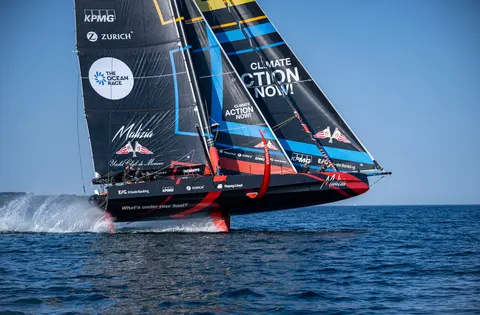
Nearly two days separated Colman’s crew from Paul Meilhat’s victorious United by the Ocean, yet the figures alone could not explain the scale of the New Zealand performance. MSIG Europe was the only yacht in the fleet using a straight keel and daggerboards rather than the large lifting foils carried by its rivals. Launched in 2007, it was racing against two new-generation designs and several proven foilers capable of maintaining speeds that simply did not exist when Colman’s boat first touched the water.
The New Zealanders were never competing with equal machinery. Their race became an examination of preparation, persistence and how much performance an experienced crew could extract from an old but dependable hull.
A Finish Decided Away From the Line
Being “finished in place” can sound unsatisfactory in an offshore race, particularly when a crew has crossed an ocean and the proper finishing line remains visible on the chart. Race committees use the procedure when exceptional conditions make it unreasonable or impractical to require a boat to complete the remaining distance. In this case, extremely light wind combined with an adverse tide approximately 15 miles from Lorient.
A yacht without meaningful boat speed can be carried backwards by the current, turning a short final approach into many hours of drifting without changing the sporting order. Fifth-placed Embrace The Challenge was already safely ahead, while no further competitor remained astern. The decision therefore protected the established result and allowed the final crew to complete its arrival without waiting indefinitely for the wind to return. The official Ocean Race report confirmed MSIG Europe’s sixth place, official time and shortened-course finish.
Colman Builds Another Campaign From Determination
Conrad Colman has spent much of his career moving mountains before he can begin crossing oceans. Born in New Zealand and established for many years within the French offshore community, he became the first New Zealander to compete in the Route du Rhum and the Solitaire du Figaro before completing the Vendée Globe twice. His 2016-17 Vendée Globe became one of the great stories of modern solo sailing. Colman was dismasted south of Portugal with hundreds of miles remaining, yet he constructed a jury rig and continued to Les Sables-d’Olonne rather than abandoning the race. That determination has become inseparable from his reputation. Colman rarely arrives with the largest budget or newest equipment, although he repeatedly creates opportunities through technical knowledge, persistence and an extraordinary tolerance for adversity.
He bought the Verdier-designed IMOCA in 2022 and knows its systems, behaviour and weaknesses intimately. Familiarity could not make the boat foil, but it allowed the skipper to judge when the yacht could be pressed and when its ageing structure required sympathy. One year after sailing in The Ocean Race Europe with Alan Roura, Colman returned to fully crewed competition aboard his own boat and with a predominantly New Zealand team.
A Crew Changed Before the Start
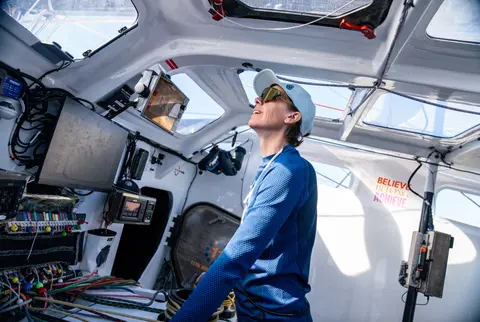
Anna Marchant and Megan Thomson joined Colman within the four-person racing crew, while Georgia Schofield sailed as the On Board Reporter responsible for recording the experience. Aaron Hume-Merry had been expected to complete the sailing team, but an injury suffered during the delivery passage to New York forced a late change. Elie Pirnay, a versatile member of the technical and shore operation, stepped aboard only days before the start.
Late substitutions create more than an administrative inconvenience because offshore crews depend upon rehearsed communication and clearly understood responsibilities. Every reef, tack and sail change requires coordination inside a small and violently moving space. A sailor joining shortly before a transatlantic race must learn the watch system, emergency procedures, equipment layout and working habits of new crewmates at considerable speed.
Pirnay’s existing technical knowledge provided valuable continuity. Understanding how a yacht is assembled becomes particularly useful when something fails hundreds of miles from assistance.
A Strong Start Before the Foilers Escaped
MSIG Europe began impressively, remaining within approximately 50 miles of the leaders through the opening day. The fleet initially faced lumpy upwind conditions before positioning itself ahead of an eastward-moving low-pressure system. As the wind increased and moved towards faster reaching angles, the technical difference between the boats became more pronounced. Modern IMOCA foils generate lift that reduces the hull’s contact with the water, allowing the yacht to sail faster with less drag. A straight-keel boat must push its entire hull through the sea, creating a disadvantage that grows rapidly in strong reaching conditions.
By Friday, MSIG Europe was more than 100 miles behind. The deficit reached approximately 400 miles on Sunday as the foiling boats rode the developing weather system east. Those losses were not evidence of poor sailing. They reflected the brutal mathematics of racing an older displacement design against machines created to rise partially above the water and cover more than 500 nautical miles in a day.
The Atlantic Begins Breaking Things
The crew’s task became harder when equipment problems joined the speed disadvantage. A fault developed within the headsail furling system on Friday, complicating the handling of a sail already carrying substantial loads. The boom track then tore away on Sunday as rough seas threw the boat through repeated impacts. Colman described life aboard as being trapped inside a washing machine. His greater concern involved the loads travelling through the rig because each violent landing increased the possibility of a more serious structural failure. Offshore crews must distinguish between damage that can be managed and damage threatening the yacht. Continuing at full speed might protect a position for several hours while placing the mast, boom or hull at unacceptable risk.
Repairing a furling system or boom attachment at sea demands ingenuity, especially when the deck remains wet and unstable. Replacement components may not exist, leaving sailors to adapt materials intended for other purposes. The crew held the yacht together and continued racing rather than reducing the passage to a simple delivery towards France.
A Sprint Result Nobody Expected
Three days after leaving New York, MSIG Europe surprised the fleet by taking third place in a Super Sprint. The daily competition measured the distance each boat covered during the same 20-minute period. It rewarded immediate speed rather than progress towards Lorient, providing Colman’s older yacht with an opportunity when local wind and sea state suited its strengths. Later in the race, MSIG Europe and Embrace The Challenge gained a more direct route towards France while the leaders were forced north around a ridge of high pressure.
The New Zealanders began recovering part of their deficit, demonstrating that careful positioning could still produce gains against a newer foiling rival. Colman took satisfaction from reducing the distance to Embrace The Challenge, even though fifth place remained beyond reach.
The comeback mattered because it confirmed that the crew had retained its competitive purpose. Tired sailors aboard a damaged and slower boat could easily have settled into survival mode, but MSIG Europe continued searching for every available mile.
United by the Ocean Wins a Classic Finish
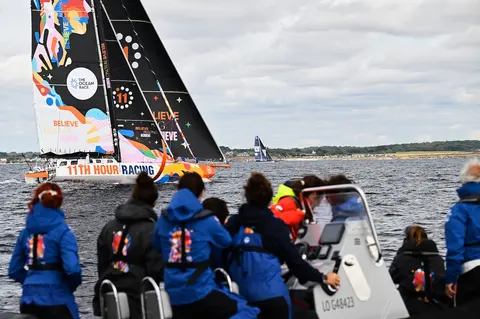
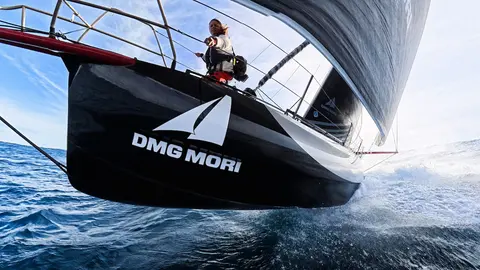
At the front of the race, United by the Ocean claimed victory after an extraordinary final contest with Francesca Clapcich’s 11th Hour Racing. Meilhat, Mariana Lobato, Benjamin Ferré and Sara Stone completed the crossing in 7 days, 23 hours, 39 minutes and 11 seconds, defeating Clapcich’s crew by only 8 minutes and 56 seconds. DMG MORI Global One finished third, only 13 minutes behind 11th Hour Racing. The new Japanese yacht held off a rapidly closing Team Malizia by five minutes, placing the first four boats inside less than half an hour after approximately 3,000 nautical miles. Oliver Heer’s Embrace The Challenge completed the race fifth after overcoming severe mainsail damage repaired by Liz Wardley during the passage. The compact leading finish demonstrated the extraordinary competitiveness of fully crewed IMOCA racing. MSIG Europe’s later arrival revealed the equally important story of what can be achieved when speed is limited but determination remains intact.
From the Whitbread to a Mixed-Crew Atlantic Sprint
The Ocean Race began in 1973 as the Whitbread Round the World Race, when 17 yachts left Portsmouth for a four-leg circumnavigation through Cape Town, Sydney and Rio de Janeiro. Ramon Carlin’s Swan 65 Sayula II won the inaugural edition on corrected time, establishing a tradition in which resourcefulness could sometimes overcome greater experience and faster machinery.
Purpose-built maxis later transformed the event, while Peter Blake’s Steinlager 2 won every leg of the 1989-90 race. The Volvo era introduced the VO60, VO70 and one-design VO65 generations before IMOCA yachts joined the round-the-world competition in 2022-23.
The 2026 Atlantic race became the first standalone point-to-point event within that history. Every racing crew contained two women and two men, while an On Board Reporter carried the reality of the crossing to audiences ashore.
The format provided valuable preparation for the next round-the-world Ocean Race, scheduled to begin from Alicante in January 2027. It also tested how boats developed largely for solo competition behave when driven relentlessly by four professional sailors.
The Value of an Old Boat
Age is often treated as a weakness within professional sailing because new foils, lighter structures and improved hull shapes continually move performance forward. Older boats retain another kind of value. They provide opportunities for sailors, national teams and sponsors unable to finance a new build while offering dependable platforms for training and campaign development. MSIG Europe gave Marchant and Thomson experience within a fully crewed IMOCA race and allowed Colman to strengthen New Zealand’s presence in a class traditionally centred upon France.
The yacht’s limitations were clear, but so was its reliability. A 2007 hull survived another punishing Atlantic crossing while several newer boats reached Lorient carrying significant damage. Colman’s campaign demonstrated that older machinery can still belong within elite racing when expectations are honest and the human purpose extends beyond the final position.
The Last Boat Closes the Race
Sixth place rarely receives the noise reserved for victory, yet every great ocean race depends upon its final finisher. MSIG Europe reached the French coast after 9 days and 7 hours of competition, having survived damaged equipment, violent seas and conditions favouring every technical advantage possessed by the opposition.
The shortening of the final course denied the crew the satisfaction of crossing the original line under sail, although it did not remove the ocean already crossed. United by the Ocean won the race and deserved its place in the history books. MSIG Europe completed the story by carrying the oldest boat and a developing New Zealand team safely to Lorient. Fifteen miles disappeared from the official course, but nothing was missing from the achievement.