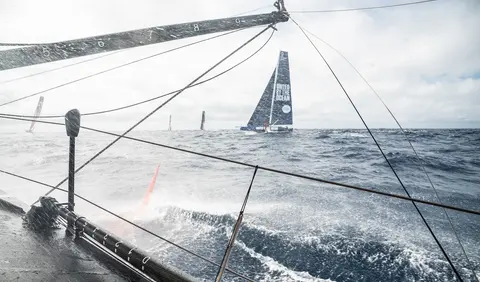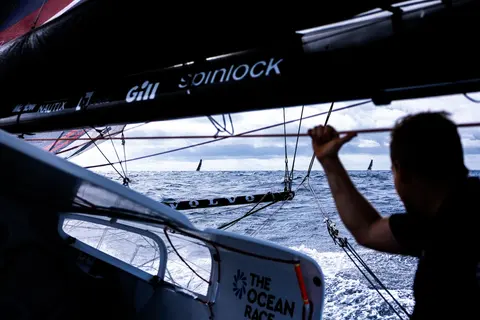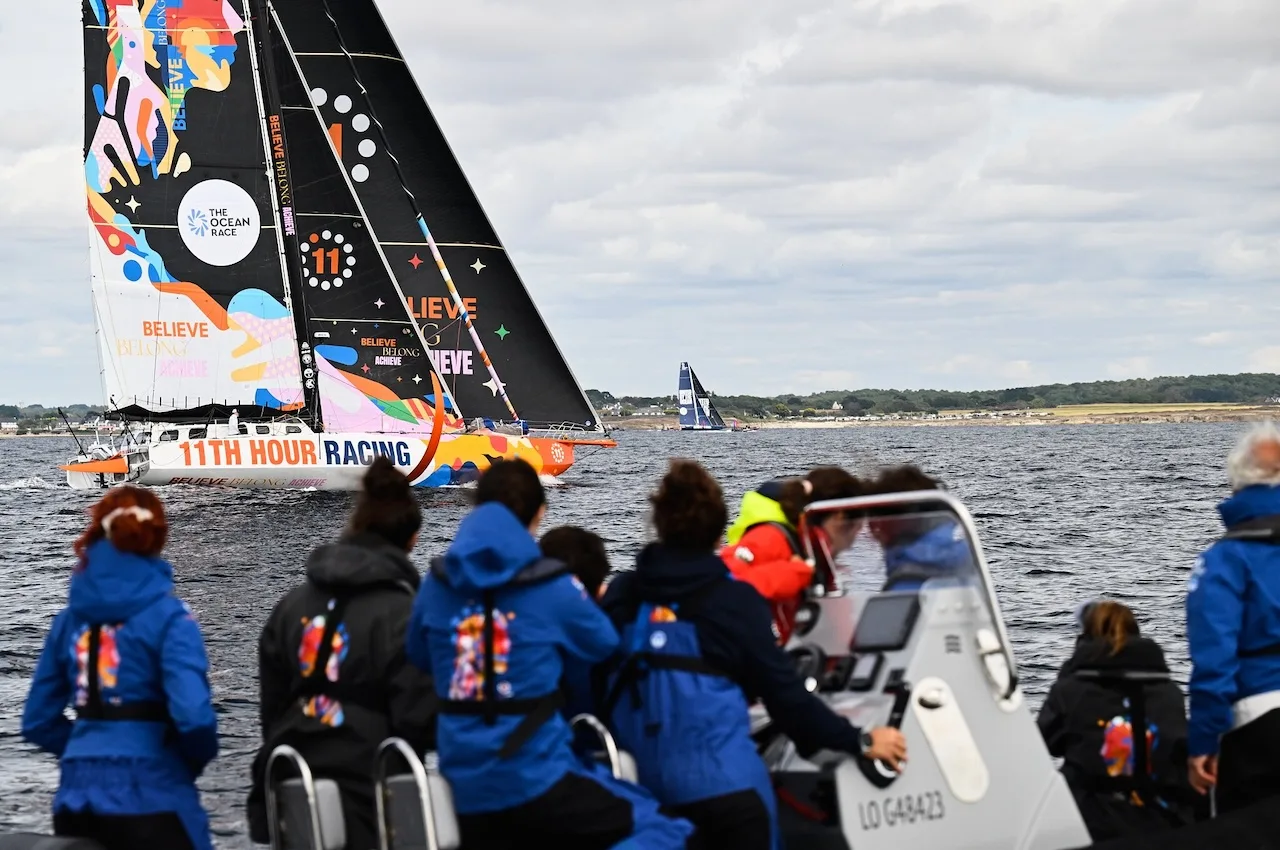
The final hours of the inaugural Ocean Race Atlantic delivered pure coastal drama as two hard-driven IMOCA crews traded places within sight of the Brittany shore, their sails silhouetted against a flat grey sea while the breeze faded to little more than ten knots. Paul Meilhat's United by the Ocean finally slipped across the finish line north of le de Groix to claim the first victory in this new transatlantic classic, completing the 3000-nautical-mile course from New York in seven days, 23 hours, 39 minutes and 11 seconds. Francesca Clapcich's 11th Hour Racing followed just eight minutes and 56 seconds later, the narrowest of margins after a race that had already tested every limit of boat, body and strategy.
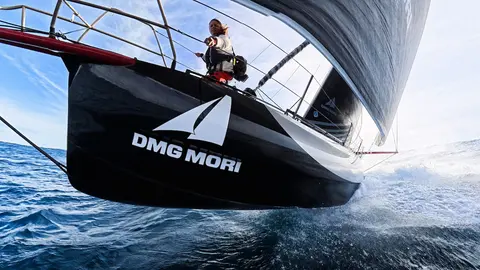
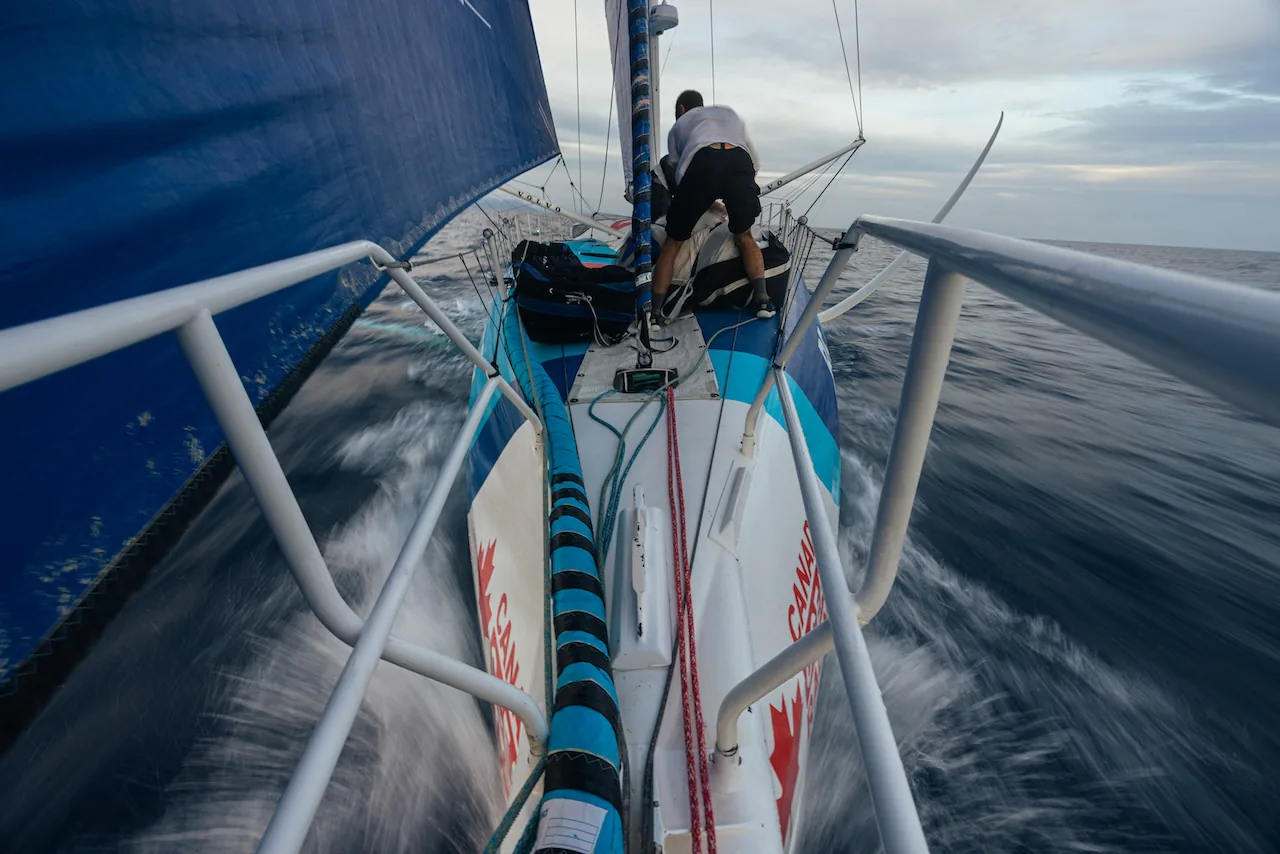
Earlier in the crossing the six-boat fleet had ridden the forward edge of an easterly-moving low-pressure system for days on end, the 60-foot foiling machines slamming through bumpy seas at sustained speeds above 30 knots. That high-speed phase gave way on the approach to France to a completely different contest. Overnight the leaders worked their final tactical options, with 11th Hour Racing taking the lead from Kojiro Shiraishi's DMG MORI Global One around 1100 CEST after choosing a more southerly track. United by the Ocean soon overhauled the Japanese boat as well, setting up the bow-to-bow duel that would decide the race. For the last few hours the two crews remained almost inseparable as their courses gradually converged over the final ten nautical miles. Meilhat's slightly more northerly positioning ultimately proved decisive in the light and variable air, allowing the French boat to ease into a one-mile advantage that held all the way to the line.
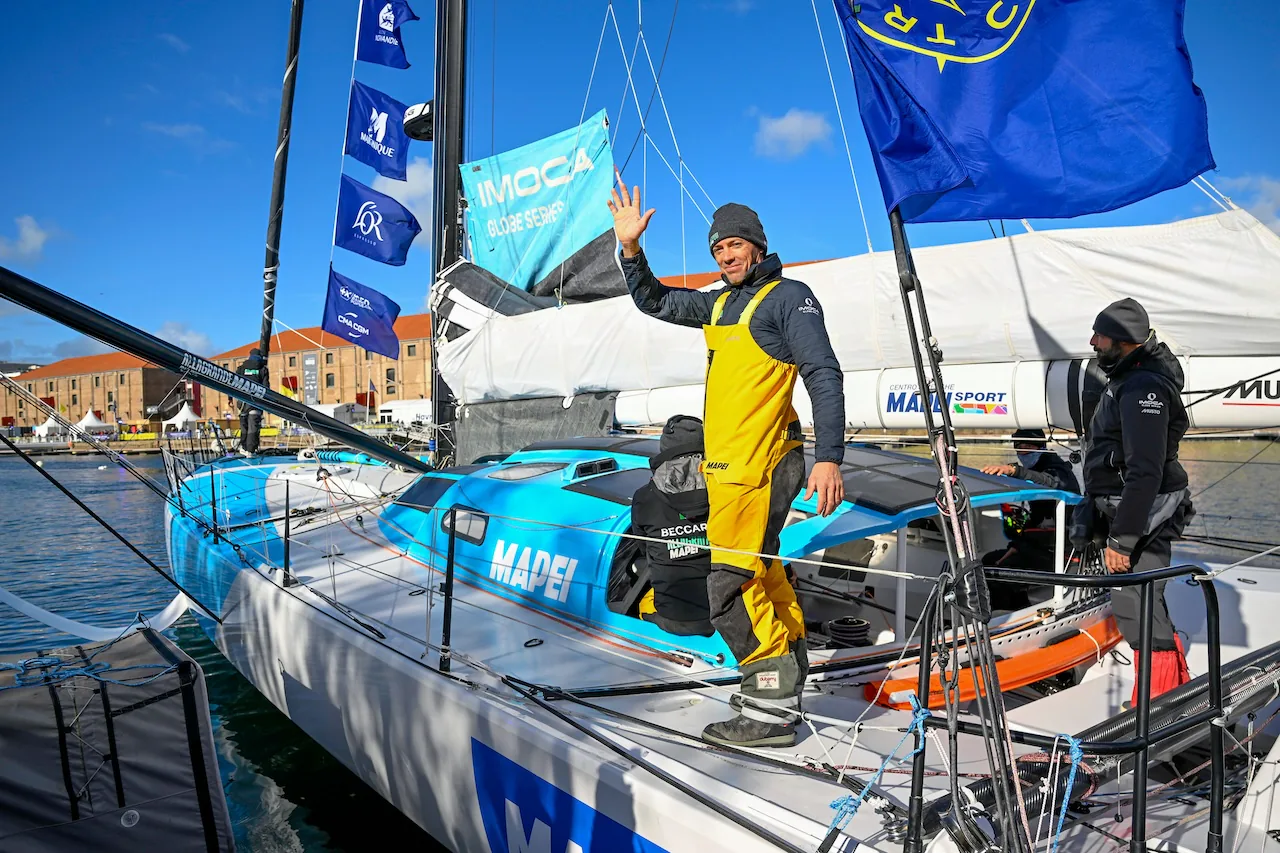
Behind the leading pair DMG MORI Global One had to fend off a determined late charge from Boris Herrmann's Team Malizia, who had been 40 miles off the lead at midday yet closed the gap dramatically. The Japanese crew secured third place after eight days, four minutes and 40 seconds of racing, with Team Malizia crossing exactly five minutes later to take fourth. The result marked a notable success for Meilhat, who had already won last year's Ocean Race Europe aboard the same boat, then known as Biotherm. The boat is not the latest design, he explained after stepping ashore. It is fast, but we had some bad moments because it is not really fast in the big waves. Three days ago we had a really tough night in big waves in the wrong direction. We know that in medium and light wind on flat water it is really, really fast. A lot of races finish in these conditions. We are a good team with this boat and that is working well.
Clapcich reflected on the frustration of coming so close while still recognising the quality of the contest. It was quite epic. When you get so close to winning the race you want to fricken win it, right? A few hours ago we could not have hoped for this result. In the end at Glnan we had the chance to win it, but we ended up second and we are super happy. Doing a transat like that of 3000 miles and ending up just a few minutes apart is a dream. It's why we go racing. You get so close to the other teams that you are not even looking at the numbers anymore because you can see them. You are sailing against them, just looking at them it's pretty awesome. Samantha Davies, racing aboard DMG MORI Global One, highlighted the remarkable closeness of the entire crossing. It's amazing to have such a close finish. We saw that coming from quite a few days out. What is more impressive is that we crossed the ocean that close together and that there were place changes, so that it wasn't just one person dominating. For me the interesting part was that there was a bit of boat speed, a bit of strategy, a bit of luck so it was fun all the way across the Atlantic. She also underlined the value of the race as preparation for next year's full Ocean Race around the world. The best team-building exercise is taking your team out of its comfort zone and we definitely did that in this transat, because it was brutal for quite a few days. We pushed the boat and ourselves to our limits. That's where you learn how each person is in the team, how to support each other, and how to communicate with each other. Cole Brauer of Team Malizia spoke of the emotional toll after the crew had battled a damaged port foil control system for much of the passage. We had the foil rake issue from day three or four and then having to jury rig something and make it happen. We were in 40 knots and then no wind. To come back after being behind 100 miles and then lose it in the last mile is very gutting. We pushed every inch of the way. From the moment we found out about the foil rake situation we never released the hammer. As a team we came together way better than I could have expected. Justine Mettraux and I were absolute weapons on our watch. When the going gets tough, you just put the hammer down.
This first Ocean Race Atlantic forms a new strand in a competition whose origins reach back to September 1973, when the original Whitbread Round the World Race set sail from Portsmouth with a mixed fleet of mostly amateur crews. Over five decades the event evolved through the Volvo Ocean Race era into the modern Ocean Race, progressively embracing professional teams, high-performance designs and a growing emphasis on ocean health and inclusion.
The 2026 Atlantic edition marks the first pure point-to-point transatlantic sprint in that long history, contested under a mandatory 50-50 gender balance rule that placed two women and two men on every boat alongside an onboard reporter. The course itself follows the classic west-to-east track long used by record hunters and commercial sailing vessels, now raced by the latest generation of foil-assisted IMOCA 60s capable of extraordinary daily runs when the conditions favour them.
With the leading four boats safely home, attention turns to the final two finishers. Oliver Heer's Embrace the Challenge is expected overnight, while Conrad Colman's non-foiling MSIG Europe is due at the weekend.
The Ocean Live Park at La Base continues to welcome visitors with activities, school programmes and evening events that will celebrate the entire fleet. In the end the race delivered everything promised of a new classic: sustained high-speed passages, tactical complexity across changing weather systems, mixed crews performing at the highest level, and a finish so tight that the outcome remained uncertain until the final miles. The North Atlantic has tested these sailors thoroughly, and the new chapter of offshore racing they have written will stand as a benchmark for years to come.