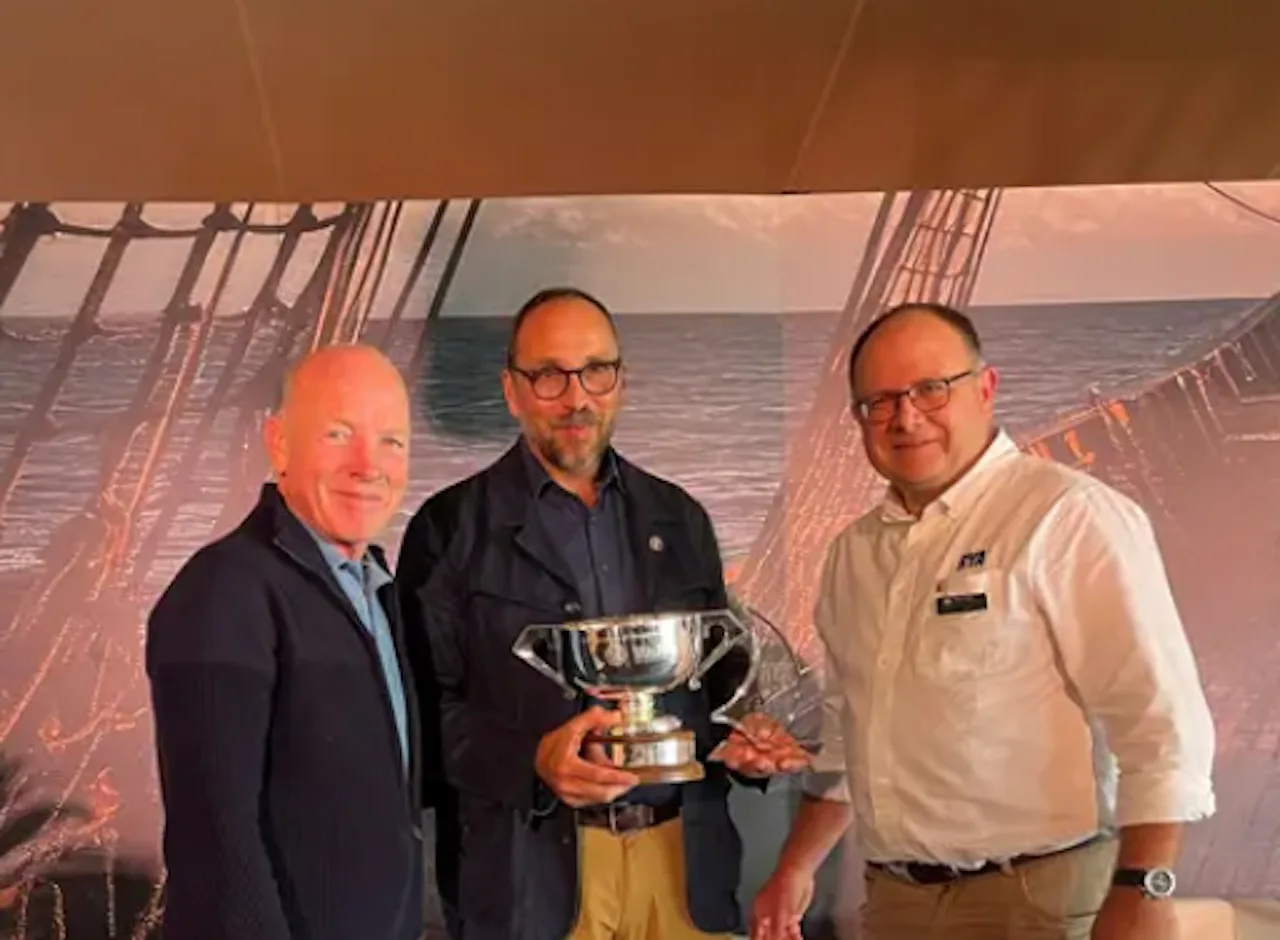
The Southampton International Boat Show always carries a particular atmosphere of salt-tinged ambition, yet on Friday 18 September the air held something more focused as Mike Golding OBE stepped forward to present the RYA Yachtmaster Trophy. The recipient was Tom Stierle, a 56-year-old general and trauma surgeon from near Basel in Switzerland, whose quiet mastery of the demanding examination had marked him out among thousands of candidates examined across the globe each year. Stierle’s story begins far from the Solent’s racing marks. Born in Stuttgart, he first felt the pull of water on the River Rhine and the sheltered Swiss lakes. Those early days of local sailing gradually gave way to longer passages with friends and family through the Mediterranean and Baltic, experiences that kindled a deeper appetite for offshore work. Parallel to a demanding surgical career he began methodical progress through the Royal Yachting Association training scheme, travelling to Scotland, Wales and the Solent for courses that steadily built both theory and practical competence.
The modern RYA Yachtmaster Certificate of Competence stands as the gold standard for amateur and professional skippers alike, recognised worldwide as proof of seamanship under pressure. Its roots stretch back further than many realise. In 1938 the Board of Trade, at the Admiralty’s request, began examining Yachtmasters primarily for Royal Navy reservists yet also for capable amateurs. That foresight proved valuable two years later when civilian yachtsmen answered the call at Dunkirk. By the early 1970s the RYA had assumed administration of the examination after careful negotiation led by Commander Bill Anderson. The first RYA Yachtmaster certificate was issued in 1973, and the scheme has since evolved into a rigorous practical test of navigation, boat handling, crew management and decision-making that few candidates take lightly. Stierle approached the examination with characteristic thoroughness. During a three-month sabbatical he combined humanitarian surgical work aboard a hospital ship with intensive preparation, studying pilotage and tidal calculations in every spare hour. By the time of the exam he knew every Solent pilotage by heart. The examination itself delivered the classic unexpected challenge: an overnight passage around the Isle of Wight that required precise timing through tidal gates and a dawn transit of the Needles to catch favourable conditions. Such moments reveal the true measure of a skipper, when theory meets the living sea and judgement must remain clear.
Having secured his Yachtmaster, Stierle continued without pause. Last autumn he completed a Yachtmaster Ocean qualifying passage from Madeira to Gibraltar in unusually demanding weather before passing the oral examination earlier this year. His gaze is already fixed further afield. Mediterranean cruises and a voyage to the North Cape form part of his immediate plans, while the longer ambition of crewing in the Clipper Round the World Yacht Race offers a still greater horizon.
Richard Falk, RYA Director of Training and Qualifications, noted that examiners nominate only those candidates who have demonstrated exceptional skill, judgement and competence under examination conditions. Stierle stood out not solely for technical ability but for the sustained commitment woven through his sailing journey. The award itself, first presented in 2002, is selected exclusively from examiner nominations and carries the RYA Yachtmaster Trophy originally donated by the Royal Institute of Navigation. Past recipients have included military officers, professional sail trainers, a Paralympian and, in one notable case, an eighteen-year-old who became the youngest winner. Stierle now joins that lineage as a non-British sailor whose determination mirrors the international reach of the qualification itself.
Mike Golding OBE, the legendary offshore racer who has circumnavigated in both directions, held world records and earned an OBE for services to sailing, was a fitting presenter. His presence at Southampton linked the practical excellence of the Yachtmaster scheme to the highest levels of ocean racing, reminding everyone present that the same fundamentals of seamanship underpin both coastal competence and Southern Ocean survival.
Stierle himself received the news with characteristic understatement, describing the honour as entirely unexpected yet deeply encouraging. He spoke of the satisfaction found in meeting challenges, drawing a quiet parallel between the precision required in surgery and the constant learning demanded by the sea. Looking ahead he hopes to find ways of drawing his professional life and his passion for sailing closer together, a path many dual-career sailors have explored with lasting reward. The Yachtmaster examination remains deliberately free of a single formal course. Candidates must accumulate substantial sea time, often measured in thousands of miles, and then place themselves before an examiner who will test every aspect of their competence. Those who succeed join a global community of skippers trusted to take charge in conditions that can change without warning. Stierle’s achievement, forged between operating theatres and tidal streams, stands as a reminder that the highest standards of seamanship remain open to anyone willing to invest the necessary time, focus and humility.
In an age when many seek shortcuts, the RYA Yachtmaster of the Year award continues to celebrate the longer road: patient preparation, respect for the sea, and the quiet confidence that comes only after the Needles have been rounded at first light with the tide running true.