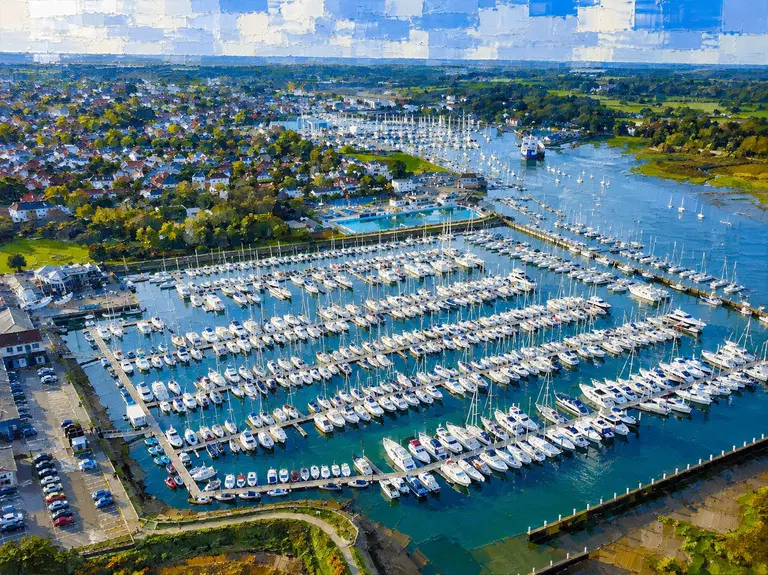
Booking a Visitor Berth
A visitor berth is a short-term berth for a boat that does not belong to the harbour, charged per metre of length per night or per day. Some harbours take bookings weeks ahead; others allocate every berth on arrival, or cannot reserve moorings at all. The guide to booking a visitor berth explains the methods, what information a harbour asks for, how charges are calculated and what happens on arrival.
VHF Radio
A fixed VHF radio on a UK boat needs an Ofcom Ship Radio Licence, and the person using it needs an operator’s certificate, normally the Short Range Certificate. The VHF basics guide covers the licences, the channels used for distress, calling and harbour working, how a call to a marina is structured and where the Coastguard broadcasts its safety information.
Tidal Gates
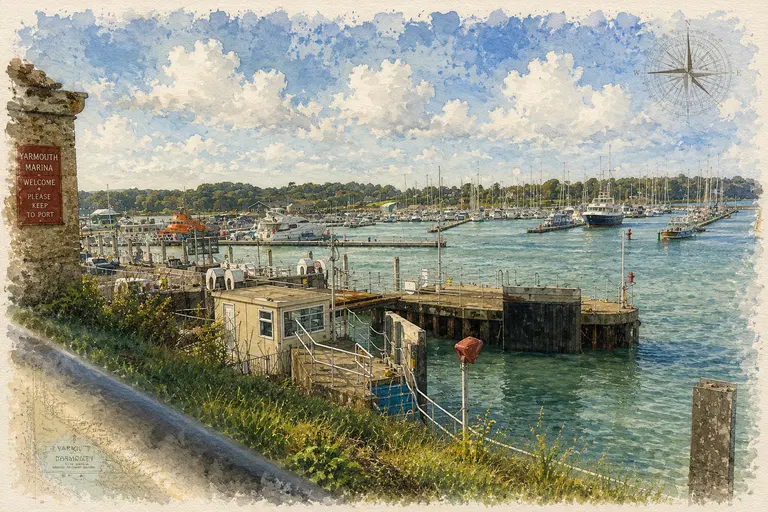
A tidal gate is a point that can only be passed at certain states of the tide: a sill or bar that needs enough water over it, a lock or bridge that opens at set times, or a headland or channel where the stream runs too fast to push against. The tidal gate guide explains each type, with examples from harbours across the south coast and the Channel Islands, and how heights and streams are read from the official tables.
Crossing the Channel
Sailing from Great Britain to France, Belgium or the Channel Islands is a journey across a customs and immigration border. The Crossing the Channel guide covers the pleasure craft report, the documents carried by the boat and crew, arrival procedures at French and Belgian ports, the Q flag and the rules for returning to the UK.
Key Terms
A handful of terms appear on every harbour guide and passage planner. The table below gives each one in plain English, and the beginner guides explain them in more detail.
| Term | Meaning |
|---|---|
| LOA | Length overall: the boat’s full length, the usual basis for berthing charges |
| Visitor berth | A short-term berth or mooring for a boat not based in the harbour |
| Chart datum (CD) | The level from which charted depths and tidal heights are measured, close to the lowest astronomical tide |
| HW / LW | High water and low water |
| Springs / neaps | Tides with the largest and the smallest range in the lunar cycle |
| Tidal diamond | A point on an ADMIRALTY chart where the hourly tidal stream direction and rate are tabulated |
| Sill | A wall across a marina entrance that holds water in at low tide |
| VHF Channel 16 | The distress, urgency, safety and calling channel |
| DSC / MMSI | Digital Selective Calling, and the nine-digit identity a DSC radio transmits |
| SRC | Short Range Certificate, the minimum radio operator’s certificate |
| VTS | Vessel Traffic Service, run by a port to manage shipping movements |
| TSS | Traffic Separation Scheme: one-way shipping lanes, such as in the Dover Strait |
| ICC | International Certificate of Competence for pleasure craft skippers |
| Q flag | The yellow code flag flown on arrival from abroad until cleared |
| Pleasure craft report | The UK Border Force and HMRC report for leaving or arriving in the UK by private boat |
Safety Information and Forecasts
HM Coastguard broadcasts maritime safety information, including the inshore waters forecast and gale warnings, on VHF. Each broadcast is announced on Channel 16 and then read on Channel 62, 63 or 64. Solent Coastguard’s full broadcasts are at 07:30 and 19:30 local time, and Dover Coastguard’s at 07:10 and 19:10, with shorter updates every three hours between.
The Met Office inshore waters forecast divides the UK coast into areas. Area 6 runs from North Foreland to Selsey Bill and area 7 from Selsey Bill to Lyme Regis; the Channel Islands have their own area. The shipping forecast covers the sea areas further offshore. NAVTEX receivers on the south coast pick up safety messages from the Niton station.
In an emergency at sea, the Coastguard is called on VHF Channel 16 or with a DSC distress alert on Channel 70, or by telephone on 999. The live tides and weather page gathers today’s tide times from the UK Hydrographic Office and wind from the Met Office for every harbour in Old Sea Dogs Guides.
Who Sets the Rules
Several official bodies set the rules covered in these guides. Ofcom licenses ship radio equipment and assigns call signs and MMSIs. The Maritime and Coastguard Agency, which runs HM Coastguard, sets standards for radio use and operator certificates, publishes guidance notes such as MGN 324 on VHF, and broadcasts maritime safety information. The RYA administers the Short Range Certificate for the MCA and issues the International Certificate of Competence.
The UK Hydrographic Office publishes ADMIRALTY charts, tide tables and tidal stream data, and its predictions are used for the tide times on Old Sea Dogs. Border Force and HMRC handle pleasure craft reports and arrivals in the UK. Abroad, French Customs (the Douane) and the Police aux Frontières run border control at French ports, and the Belgian Federal Police’s Maritime and River Police do the same in Belgium. Each harbour has its own authority, whose local rules, signals and VHF channels appear in the harbour guides.
Where to Go Next
Once the basics are familiar, the area guides cover individual harbours in detail: the Solent, Poole Harbour, Chichester Harbour, Sussex & Kent, the West Country and the Channel Islands. Each harbour guide includes its VHF channels, berthing arrangements and tide times from the UK Hydrographic Office, and the live tides and weather page brings today’s tides and wind for every harbour together.
For anyone new to the sport, the guide to yacht clubs explains how clubs work and how to join one.
Frequently asked questions
Do I need a licence to use a VHF radio on my boat?
Yes. The boat needs an Ofcom Ship Radio Licence (free online), and the operator needs a certificate of competence, normally the Short Range Certificate.
What is a tidal gate?
A point on a passage or harbour approach that can only be passed at certain states of the tide, such as a sill, bar, lock, bridge or a narrows with a strong tidal stream.
Do I need to report a trip to France?
Yes. gov.uk requires a pleasure craft report for any departure from Great Britain to a destination outside the UK, made 2 to 24 hours before departure online.