A new flag will rise above SailGP’s crowded starting line when the championship opens its 2027 season in Hong Kong, although the most significant figure aboard the new United Arab Emirates team will already be familiar to anybody who has followed modern Olympic sailing. Hannah Mills, Britain’s double Olympic champion and one of the most influential sailors of her generation, will become Driver and Team Principal of the new UAE SailGP Team, leading the championship’s 14th national entry and the first to represent the Middle East. Her appointment brings together elite sporting ability, years of experience within the demanding F50 environment and a determination to create opportunities for women and young sailors far beyond the racecourse.
The UAE SailGP Team will make its competitive debut at the American Express Hong Kong Sail Grand Prix on 23 and 24 January 2027, beginning a global campaign that will eventually bring Mills and her crew home to the Dubai Sail Grand Prix in November. Between those two events will lie a season of unforgiving starts, compressed tactical decisions and foiling catamarans capable of exceeding 100 kilometres per hour, where even accomplished sailors can move from the front of the fleet to the back during a single badly timed turn. SailGP may present itself with the polish of an international entertainment property, yet beneath the branding and waterfront grandstands remains a brutally exacting form of sailing in which the smallest lapse in communication, boat handling or judgement can decide an entire weekend.
Mills arrives at this challenge with a career built upon understanding pressure and performing when medals are at stake. Born in Cardiff, she rose through Britain’s formidable Olympic sailing system before winning silver in the women’s 470 class with Saskia Clark at London 2012, then claiming gold alongside Clark at Rio 2016. A second Olympic title followed at Tokyo 2020, sailed in 2021, where Mills partnered Eilidh McIntyre and confirmed her place among the finest British sailors of the modern era. Those results made her one of the most decorated female Olympic sailors in history, although her contribution to the sport has increasingly extended beyond the medals placed around her neck.
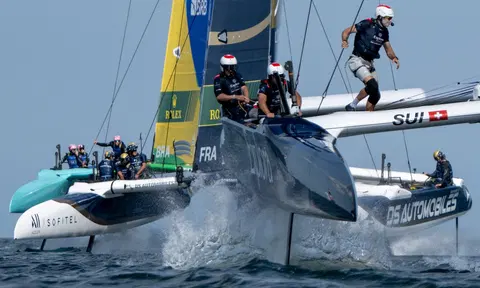
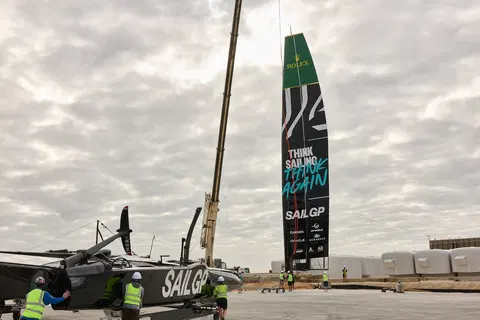
Her move into SailGP represented another demanding stage in that development, since the leap from a two-person Olympic dinghy to an F50 foiling catamaran involves far more than adjusting to greater speed. The F50 is a highly technical machine descended from the foiling catamarans developed for the America’s Cup, carrying a towering wing sail and rising clear of the water on hydrofoils when sufficient speed is generated. Crew members must work within a tight choreography while monitoring the boat’s height, balance, power and position relative to rivals, with closing speeds that leave remarkably little time for hesitation. Mills joined the British team in 2021 and became central to its progress, helping Emirates Great Britain secure the 2025 Rolex SailGP Championship while gaining five seasons of knowledge that should prove invaluable when assembling a new campaign.
Her appointment as SailGP’s first female Team Principal carries significance well beyond a line in the record books, particularly because Mills will combine leadership ashore with the responsibility of driving the boat. Building a SailGP team requires more than recruiting recognisable sailors and painting a national flag across the wing, since each campaign must establish its technical routines, communications, coaching structure and competitive identity while learning to work within the championship’s shared equipment system. Every national team races an identical F50 platform, placing the emphasis upon human performance, accurate data interpretation and the ability to adapt quickly as conditions change from venue to venue.
Light winds can demand delicate flight control and carefully protected momentum, while stronger conditions transform the F50 into a far more violent machine that rewards precise timing and absolute trust between the crew. Starts are often decisive because SailGP races are short, the boundaries are tight and opportunities to recover are limited once the leading boats begin sailing in clear air. Mills will need to judge the final approach to the line while managing speed, distance and rival positioning, then guide the UAE boat through mark roundings where several foiling catamarans can arrive together at frightening pace. Her Olympic career was built around tactical awareness and consistency across long regattas, while five seasons inside the British SailGP operation have given her direct experience of how those qualities must be reshaped for stadium racing.
The ownership structure behind the UAE team reflects the growing commercial confidence surrounding the championship. Chris Bake will own the team alongside Mubadala Capital, bringing established knowledge of SailGP’s sporting and business environment. Bake is already a part owner of Emirates Great Britain, while Mubadala Capital’s involvement expands a relationship with the championship that has developed over several seasons. Antonio Cozzolino has been appointed chief executive, giving him the responsibility of turning the announcement into a functioning national team capable of competing on the water, attracting commercial partners and building a genuine following across the Emirates.
Cozzolino and Mills will now face the crucial task of selecting the complete athlete line-up, with the remaining appointments expected to reveal how the UAE balances immediate competitiveness against longer-term development. Experienced F50 sailors could provide the fastest route towards respectable early results, although a credible national programme will also require pathways for Emirati talent, women and younger athletes to enter the system. Creating those opportunities will take time, particularly in a championship where the established teams have accumulated years of shared knowledge, yet the UAE possesses the resources, maritime culture and sporting ambition needed to make such a programme meaningful.
The country’s arrival on the SailGP starting line also reflects the championship’s deepening connection with the Middle East. Dubai and Abu Dhabi have hosted dramatic racing against waterfront backdrops that suit SailGP’s close-to-shore format, bringing the F50 fleet within sight of spectators who may previously have regarded sailing as distant or difficult to follow. A home team changes that relationship because supporters will no longer be choosing between visiting nations, while young Emiratis watching the race will have athletes, colours and a national identity of their own to follow.
SailGP’s expansion has been rapid since the championship was founded by Sir Russell Coutts and Larry Ellison. The inaugural season in 2019 featured six national teams and five events, with the original F50 concept emerging from the technological legacy of the America’s Cup. Australia, led by Tom Slingsby, quickly established itself as the early benchmark, winning the opening championship and building a formidable reputation through aggressive starting, accomplished foiling and remarkable consistency. Successive seasons brought additional teams, new venues and increasingly professional ownership structures, while the championship developed from an experimental global circuit into a substantial international sporting property.
By 2026, SailGP had grown to 13 teams competing across 13 events, with national campaigns carrying an increasingly diverse mixture of Olympic champions, America’s Cup veterans and athletes developed specifically for foiling competition. The UAE will increase the fleet to 14 teams at the start of 2027, marking another step towards the championship’s stated ambition of reaching 20 national teams by 2030. Such expansion creates opportunity, although it also increases congestion on the racecourse, places further pressure on event logistics and demands that newer teams become competitive quickly enough to maintain sporting credibility.
Mills understands that challenge better than most because she has watched SailGP evolve from inside one of its most closely scrutinised teams. Leaving Emirates Great Britain means stepping away from a successful and familiar operation, while Jemima Lines will succeed her in the British strategist role and make her racing debut in Abu Dhabi. The transition offers Lines an important opportunity within the British programme and demonstrates how one major appointment can create space for another female athlete to progress at the highest level.
The UAE project will inevitably be judged by results, particularly when the team reaches its home event in Dubai, where expectations will be higher and every manoeuvre will carry national attention. Early victories should not be considered automatic, since established campaigns have learned through seasons of mistakes, near misses and technical setbacks, yet Mills is unlikely to accept a prolonged period of cautious participation. Her competitive history suggests a sailor who prepares meticulously, learns quickly and understands that confidence must be supported by disciplined execution.
A more enduring measure of success may emerge away from the leaderboard, where the team intends to encourage greater participation in sailing and create opportunities for women and younger people. The UAE already possesses modern waterfront infrastructure, active sailing communities and a long relationship with the sea, stretching from pearl diving and dhow trading to contemporary yacht racing and international marine events. SailGP offers a highly visible platform through which that maritime heritage can be connected to modern technology, professional sport and new career paths.
When the UAE F50 enters the starting box in Hong Kong, its first result will matter greatly to the sailors aboard, although the larger meaning of the moment will reach beyond a finishing position. A Middle Eastern nation will have joined SailGP with an Olympic champion at the wheel and the championship’s first female Team Principal directing the campaign, creating an image that would have appeared improbable during the earliest years of professional sailing. Hannah Mills has spent her career collecting medals and challenging expectations, while her latest voyage may ultimately be remembered for opening a door through which many others can follow.