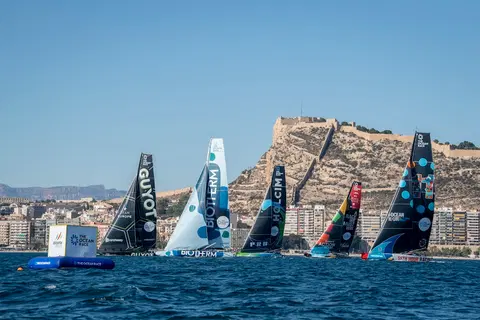
Morning light on Victoria Harbour has a habit of making even the most familiar machinery look theatrical, with ferries shouldering through the water, glass towers catching the sun and the hills enclosing a stage that has always belonged to movement. On 23 and 24 January 2027, another kind of traffic will arrive when the American Express Hong Kong Sail Grand Prix opens the Rolex SailGP Championship season beside Kai Tak Cruise Terminal. The boats will be identical F50 foiling catamarans, the crews will be drawn from the highest level of the sport, and the closing speeds should feel startlingly modern against a harbour shaped by generations of sailors, pilots, traders and shipwrights. This will be SailGP's first Hong Kong event, yet the venue should need little introduction, because few stretches of city water can place elite racing so close to such a vast audience while retaining the restless maritime character that gives a regatta its soul.
SailGP itself is young enough to remember its first launching, although its roots run deep into the America's Cup and the long pursuit of faster sailing. Founded in 2018 by Larry Ellison and Sir Russell Coutts, the championship began racing in 2019 with six national teams and a five-event calendar, using a fleet developed from the AC50 catamarans that transformed the 2017 America's Cup in Bermuda. Those Cup boats had already demonstrated that a 50-foot platform could rise clear of the water and turn wind into astonishing speed, while SailGP took the concept further by placing teams in common machinery and carrying the contest between waterfront cities. Australia, driven by Olympic champion Tom Slingsby, won the first three seasons and established the ruthless early benchmark, before Diego Botin's Spanish team broke that reign by winning Season 4 in San Francisco. The history remains compact, although its themes are thoroughly traditional: preparation, nerve, judgement and the difficult art of making a quick boat fast when everyone else owns the same tools.
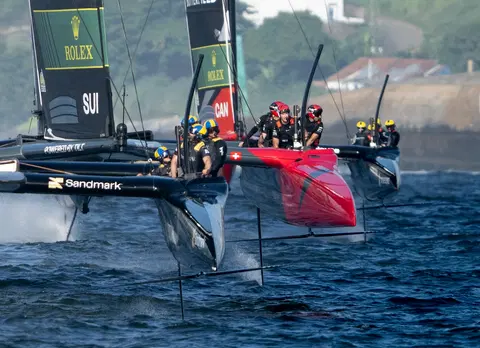
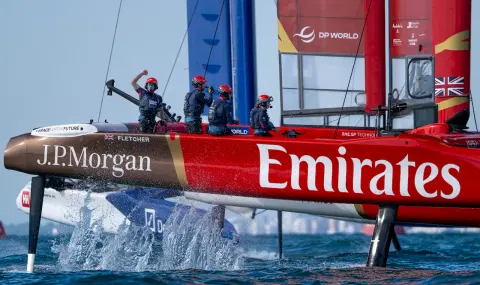
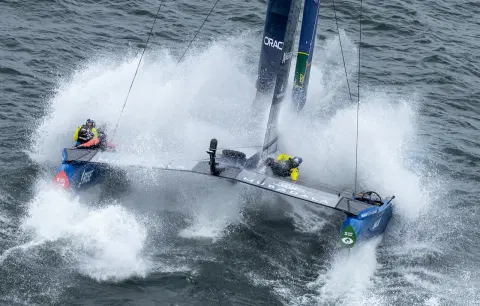
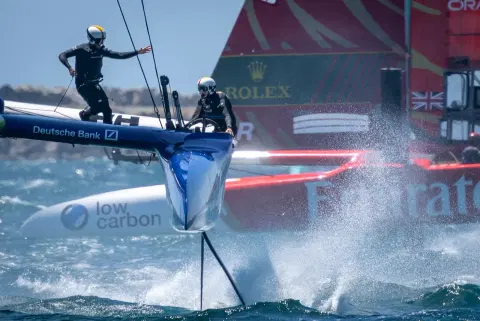
That equality is the foundation of the show, because the F50 offers nowhere comfortable for a weak start or muddled manoeuvre to hide. The catamaran's hydrofoils lift the hulls above the surface, reducing drag until the machine appears to fly, while the wing sail, rudders, control systems and crew choreography must work in close agreement. Speeds beyond 100 kilometres per hour are no longer promotional fantasy, with that threshold already passed during development, although the most impressive feature is not a single headline number but the repeated acceleration, deceleration and turning required on a short stadium course. A driver may carry the public reputation, yet flight control, wing trimming, tactical calls, grinding power and the strategist's view of the course all feed the same result. One hesitation can lead to a touchdown, one untidy turn can surrender several boat lengths, and one badly judged cross can turn a promising race into a long view of another team's stern.
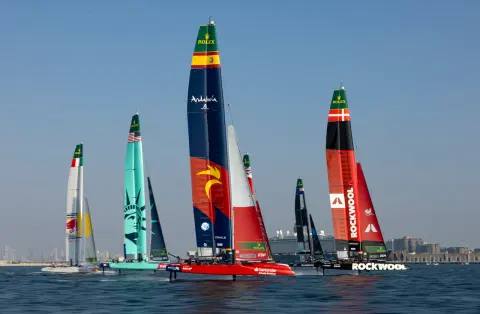
Hong Kong will add complications that are less obvious from the grandstand than they are from the cockpit. Tall buildings, reclaimed shorelines and surrounding hills can bend, block and pulse the breeze, leaving one part of the course pressed while another sits in a softer patch that was not there on the previous lap. Tidal current will also matter, particularly near boundaries and turning marks, because the quickest geometric route may not be the fastest route through the water. Crews will need to judge whether pressure or current deserves priority, then make that choice at a speed that allows little time for second thoughts. The start should be especially unforgiving, since the fleet will approach the line on foils while hunting for room, timing and a lane into the first reach, with umpires watching the smallest infringement and every rival ready to punish a boat forced low, late or slow. Spectators may see a few seconds of spray and apparent chaos, although the teams will be processing distance, velocity, overlap, wind angle and risk with extraordinary precision.
Placing the Race Stadium at Kai Tak gives the Hong Kong Sail Grand Prix a particularly intriguing sense of return. The district is remembered internationally for the old airport and its dramatic approach over Kowloon, yet its modern waterfront has been remade around public space, leisure and large events, while the cruise terminal occupies the former runway reaching into the harbour. Foiling catamarans should suit that geography rather well, because they need a visible arena and SailGP needs a city willing to gather at the water's edge. Waterfront Grandstand tickets are priced at HK$700 for one day or HK$1,120 for the weekend, with live commentary, large screens and views across the course included in the stadium experience. Eligible American Express Cardmembers receive priority booking from 10am on 21 October until 5pm on 22 October 2026, SailGP+ members follow from 23 to 26 October, and general sales open at 10am on 27 October, while VELA Prive will sit apart as the premium hospitality option.
The opening weekend will also set the tone for a season of unusual breadth. After Hong Kong, the championship is scheduled to visit Perth, San Francisco, Bermuda, Halifax, New York, Portsmouth, Sassnitz, Valencia, Rome, Rio de Janeiro and Dubai before a Grand Final at a venue still to be confirmed. Conditions will range from open-ocean swell and strong breeze to enclosed city courses where local effects can rewrite the tactical picture within minutes, so success will demand more than one favoured mode. Teams leaving Kai Tak with clean starts, reliable foiling manoeuvres and a healthy points return will carry valuable confidence into the long campaign, while those struggling with communication or boat handling will discover that a 13-event calendar offers time to recover without making the first points any less painful. Opening rounds always expose what winter training concealed, and Hong Kong's course is unlikely to offer much privacy for the examination.
The finest prospect lies in the contrast between old harbour instincts and new sailing technology, since every sensor, hydraulic adjustment and performance trace must still answer to moving air and water. A generation ago, racing at such speed within metres of a city shoreline belonged to sketches and ambition, while in January it will unfold in front of families, seasoned sailors and curious spectators who may never have watched a yacht race before. Some will come for the skyline, some for the spectacle, and some for the hard detail of foil choice, boundary tactics and starting geometry, yet the harbour has room for all of them. When the fleet bears away and the F50s lift together, Victoria Harbour should briefly resemble a runway once again, although the lasting measure of this inaugural Hong Kong Sail Grand Prix will be whether the city hears the whistle of foils, feels the tension before the gun and decides that these flying boats belong here.