Lake Huron rarely gives away its intentions when a fleet gathers off Port Huron in July, because the water can lie polished beneath a pale morning sky before darkening under a fast-moving squall, while a breeze that promised speed can disappear near the shoreline and leave crews staring towards the horizon for the first wrinkle of returning pressure. That uncertainty has shaped the Bayview Mackinac Race since its beginning in 1925, turning what appears on a chart to be a straightforward passage north into one of freshwater sailing’s most enduring examinations of judgement, endurance and patience. When the 103rd annual race starts on Saturday, 10 July 2027, every competing yacht will face those familiar demands on a completely new battlefield, with the fleet united on a single 225-nautical-mile route from Port Huron to a virtual gate south of Duck Island before turning towards Mackinac Island and a finish in front of Mission Point Resort.
Known as the Duck Islands Course, the new route will bring the whole Bayview Mackinac fleet together for the first time since the centennial race of 2024, when a record 332 entries raced over the original 204-nautical-mile course used in 1925. Modern editions have generally divided competitors between the Shore Course and the longer Cove Island Course, creating two distinct races shaped by different weather systems, navigational decisions and tactical demands. The Shore Course stretches for 204 nautical miles, while the Cove Island route extends to 259 nautical miles through Canadian waters, yet the 2027 course will occupy fresh ground between those established traditions and create one shared contest in which boats of every size will confront the same broad weather pattern, the same northern turning point and the same approach to Mackinac Island.
That decision grew from the powerful response to the 100th race, when grand-prix machines, club racers, family crews and Great Lakes veterans could see one another moving through the same patches of pressure rather than disappearing towards separate corners of Lake Huron. Sailors arriving at Mackinac carried comparable stories of calms, storms, sail changes and tactical gambles, restoring a sense that the race was not simply a collection of divisions sailing towards the same island, although it remained one great fleet bound together by a common stretch of water. Robert Eger, the 2027 Bayview Mackinac Race Chair, has described that unity as one of the centennial race’s defining qualities, while the new Duck Islands Course preserves the shared experience without merely repeating the anniversary route.
The race began on 25 July 1925 with only 12 yachts, a fleet small enough to be counted from the shore yet brave enough to establish a tradition that has survived economic depression, global conflict, changing fleets and more than a century of Great Lakes weather. Strong winds and high seas punished that inaugural field, damaging most of the competing boats and allowing only six to complete the course, while the 32-foot sloop Bernida, skippered by Russ Pouliot, reached Mackinac Island in 48 hours, 49 minutes and 49 seconds to become the race’s first winner. Pouliot and his crew could not have known that their difficult summer passage would become the opening chapter of the world’s longest continuously run long-distance freshwater yacht race, although their achievement still captures its essential character, because success depended upon seamanship and resilience long before satellite forecasts, digital charts and lightweight sailcloth changed the manner in which the race was sailed.
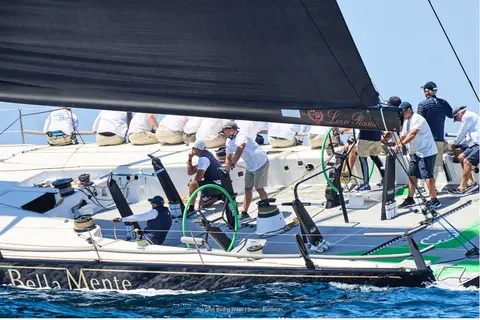
Technology has transformed the boats without taming the lake, as carbon masts, modern sail inventories, sophisticated routing software and precise position data now place enormous performance within reach of contemporary crews, while Lake Huron continues to produce abrupt changes that no screen can fully explain. The course record for the traditional 204-nautical-mile Shore Course stands at 17 hours, 11 minutes and 18 seconds, established by the Reichel/Pugh MaxZ86 OC86 in 2021, while Il Mostro, a Volvo 70 owned by Peter and Christopher Thornton, recorded 21 hours, 45 minutes and 12 seconds over the 259-nautical-mile Cove Island Course in 2017. Rick Warner’s ORMA 60 trimaran Arete completed that longer route in 21 hours, 44 minutes and 58 seconds during 2016, providing a reminder that raw speed can redraw expectations even when the Great Lakes withhold the steady ocean winds upon which high-performance yachts usually depend.
The Duck Islands Course will present its own complicated tactical argument, beginning with the familiar northward charge from southern Lake Huron, where crews must decide how closely to work the Michigan shoreline and how boldly to search offshore for stronger pressure. A boat sailing the shorter geographical distance may find itself trapped beneath a weakening land breeze, while a rival several miles farther east could carry uninterrupted wind and arrive at the next convergence with a commanding advantage. Nightfall will sharpen those decisions as visual references disappear, temperatures fall and the fleet stretches across the lake, forcing navigators to balance computer-generated routing against cloud patterns, changing wave angles and the hard-earned local knowledge that Great Lakes sailors carry from one Mackinac campaign to another.
The virtual gate south of Duck Island will become the defining geographical feature of the new course, placing the fleet near the eastern end of Manitoulin Island before the final push towards Mackinac. Duck Island’s 108-foot lighthouse should provide a memorable visual landmark in daylight, although the gate itself will demand precision from navigators who must approach the correct side without surrendering distance or speed. A northerly wind could turn the approach into a hard test of upwind sail handling, while a southerly breeze may produce a fast reaching passage in which the quickest yachts stretch their legs and smaller boats fight to remain within handicap reach. Lighter conditions could prove more disruptive, particularly if the fleet compresses around the gate and boats that have worked for hours to establish an advantage watch it dissolve within sight of the island.
Once clear of the northern turning point, crews will still have to solve the passage towards Mackinac Island, where local geography can disturb even the most convincing weather model. Narrowing waterways, nearby islands and the interaction between land and open water can create dramatic differences in wind strength across relatively short distances, while tired crews must continue changing sails, trimming accurately and protecting their position during the final miles. Corrected-time honours are often decided far from the spectacle surrounding the largest yachts, which means a modestly sized family boat arriving hours later can still challenge for the J.L. Hudson Trophy or Canadian Club Trophy after sailing an exceptionally clean race. That democratic quality remains central to the Bayview Mackinac, because professional sailors, experienced Corinthian crews and first-time competitors share the same lake even when their boats represent different generations of yacht design.
The restored finish near Mission Point Resort will also change the emotional shape of the race, bringing arriving boats back into view from the resort’s Great Lawn and reconnecting the final moments with one of the event’s traditional gathering places. Families and friends seated near the water will be able to watch masthead lights emerge from the darkness or sails appear against the morning horizon, while crews completing the long passage will hear the sounds of Mackinac Island growing louder as the finish approaches. The nearby Island Awards Party will ensure that racing and celebration once again occupy the same corner of the island, creating the sort of natural theatre that offshore sailing often struggles to offer when finish lines sit beyond the sight of spectators.
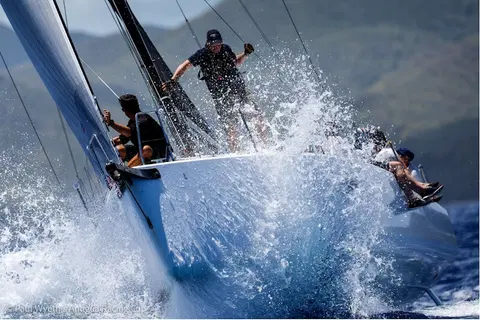
Winning the 2027 Bayview Mackinac Race will require far more than choosing the fastest theoretical route, because the successful crews will have to preserve concentration through changing light, unstable pressure and the accumulated fatigue of repeated sail changes. Heavy yachts may carry their momentum through unsettled water, lighter boats could accelerate first when a new breeze arrives, and experienced double-watch systems will become increasingly valuable once darkness and exhaustion begin to expose small errors. One mistimed tack, a delayed sail change or an overconfident move towards the shore can cost miles that cannot be recovered, particularly when the whole fleet is reading the same section of sky and searching for the same narrow lane of wind.
A century ago, Bernida sailed north into unknown weather with little more than a compass, a paper chart and the instincts of her crew, while the 2027 fleet will carry technology that Pouliot’s sailors could scarcely have imagined. The essential challenge will remain recognisable, because every boat must still find a way through a vast inland sea whose moods refuse to be reduced to numbers on a display. Bringing the fleet together on the Duck Islands Course will create new tactical questions, revive the shared spirit of the centennial and return the finish to a place where the island can watch the story conclude, although the truest ending will belong to each crew when Mackinac finally rises from the horizon and another passage becomes part of the race’s continuing legend.