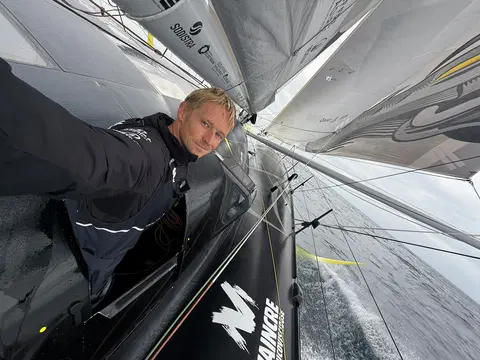
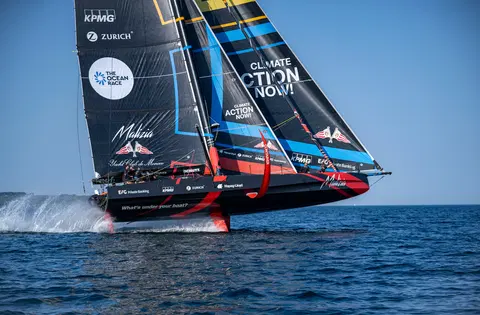
The Route du Rhum is supposed to contain a moment when the punishment ends, the bow turns towards the Caribbean and the Atlantic begins to feel like an enormous blue racetrack, yet the 2026 edition has stubbornly refused to follow that familiar script, replacing the expected trade-wind charge with stationary fronts, violent lows, confused seas, broken boats and a succession of tactical traps around the Azores. At the centre of it all is Corentin Horeau aboard MACSF, who has turned one decisive piece of weather into the sort of advantage solo sailors normally dream about while staring at somebody else’s tracker, building a lead that has hovered around 250 miles and more as the sailors behind him have been forced to fight one another, the weather and increasingly battered boats. The latest battle has Sam Goodchild on MACIF Santé Prévoyance pushing into second ahead of Boris Herrmann on Malizia 4, while Horeau continues towards Guadeloupe with enough clear water behind him to make the rest of the IMOCA fleet wonder whether they are still racing for victory or beginning a very expensive contest for second place.
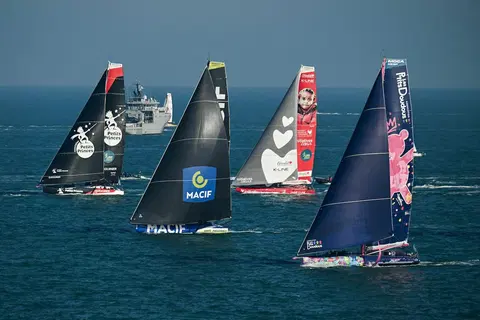
It did not begin that way, because the opening stages out of Saint-Malo produced exactly the sort of furious offshore sprint expected from a modern IMOCA fleet, with Goodchild and Ambrogio Beccaria aboard Allagrande MAPEI among the early favourites and Horeau initially running close enough to keep them honest without appearing to have discovered any magical route west. Everything changed when the leaders reached a stubborn north-south weather transition around the Azores, where the normal logic of sailing south towards warmer water and reliable trade winds was replaced by a narrow and shifting corridor through a system that seemed determined to close every door as soon as somebody approached it. Goodchild and Beccaria became tangled in the transition, Sébastien Simon paid heavily for being farther north, while Horeau attacked from the south and found the small patch of pressure that mattered, slipping through before the door slammed shut behind him and turning a modest advantage into an extraordinary one. It was not simply luck, even if Horeau himself has been happy to acknowledge how fortunate the timing felt, because getting into position to benefit required conviction, accurate weather interpretation and the willingness to continue with a route that looked increasingly uncomfortable while several highly experienced rivals chose something different.
That tactical moment is exactly why the Route du Rhum has survived nearly half a century as one of offshore racing’s great spectacles, because the race has never simply rewarded the fastest boat on paper. Created in 1978, the single-handed transatlantic from Saint-Malo to Pointe-à-Pitre immediately produced one of sailing’s defining finishes when Canadian Mike Birch brought the trimaran Olympus Photo home just 98 seconds ahead of Michel Malinovsky’s much larger monohull, a result that did more than decide a yacht race because it helped announce the multihull revolution to a fascinated public. Florence Arthaud added another unforgettable chapter with her victory in 1990, Laurent Bourgnon won consecutive editions in 1994 and 1998, and later names including Michel Desjoyeaux, Lionel Lemonchois, Franck Cammas, Loïck Peyron and Francis Joyon pushed boats and crossing times into territory that would have seemed extraordinary to the original fleet. Charles Caudrelier took the outright record below seven days in 2022 aboard Maxi Edmond de Rothschild, while Thomas Ruyant won that year’s IMOCA contest aboard LinkedOut, reinforcing the peculiar character of a race where giant trimarans, cutting-edge foiling monohulls and considerably older boats can share the same Atlantic while effectively competing in different worlds.
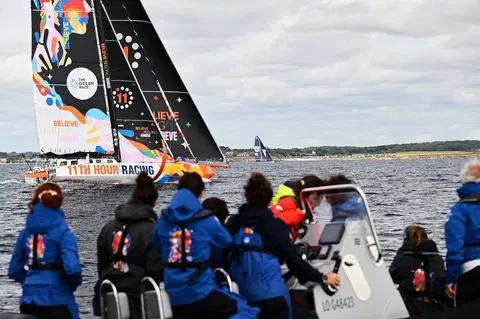
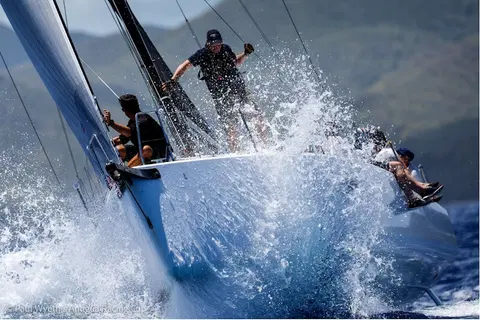
The thirteenth edition has provided a particularly brutal reminder that technological progress has not made the Atlantic obedient, because the sophisticated foiling IMOCAs may be capable of sustained speeds that would have belonged to multihulls in earlier generations, yet they remain vulnerable when the sea state turns hostile and the skipper is exhausted. Jérémie Beyou’s race ended on medical grounds after injury aboard Charal, while Beccaria was forced to retire after a heavy fall in the cockpit left him suffering serious back pain, and Francesca Clapcich’s impressive opening aboard 11th Hour Racing was compromised when her bowsprit failed following problems with her downwind sails. Across the wider fleet the same weather system has produced capsizes, damage and diversions, making this less a conventional Route du Rhum transition into the trades than something closer to the hard-edged North Atlantic racing usually associated with events heading the other way. Every fast mile now carries a question about preservation, because pushing a modern IMOCA through four-metre seas can gain precious distance while simultaneously increasing the chance that one violent slam, broach or failed fitting turns the entire race into a repair job.
Horeau’s performance becomes even more striking when viewed against his own career, because this is his first Route du Rhum in IMOCA, although he arrived with considerably more offshore craft than the word rookie might suggest. Raised around La Trinité-sur-Mer, trained through the merchant marine and hardened by years in the Figaro circuit, he won the Solitaire du Figaro in 2023 before moving into IMOCA and spending valuable time alongside Yoann Richomme, while his longer-term horizon now points towards the Vendée Globe in 2028. The Figaro background matters in a race such as this because it teaches sailors to read small weather changes, make decisions without hesitation and continue racing when fatigue has long since begun interfering with judgement, all qualities that have been visible in the way Horeau has managed his extraordinary advantage. He has also discovered that a 250-mile lead is not the same thing as comfort, with violent broaches, relentless manoeuvring and even a ripped-off hatch flooding the sail locker reminding him that the boat can erase an advantage rather more quickly than a rival sometimes can.
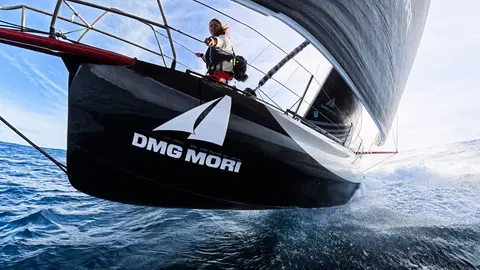
Goodchild’s recovery has been almost as impressive in a different way, because at one point the Anglo-French skipper had fallen well down the order after becoming trapped by the transition that released Horeau, yet he refused to let one routing setback define his race and has progressively worked his way back through the leading group. His MACIF is one of the most potent boats in the fleet and Goodchild has the experience to exploit it, having built a career across Class40, Figaro, Ocean Fifty, Ultim and IMOCA before finishing ninth in the Vendée Globe, and his move into second place gives the closing stages a fascinating shape even with Horeau still hundreds of miles ahead. Boris Herrmann remains firmly involved aboard Malizia 4, while Clapcich has been attempting to salvage as much performance as possible from a boat now missing one of the structures essential to carrying its largest reaching sails, leaving every sailor in the chasing group with a rather different balance between outright speed and simply keeping enough equipment intact to reach Guadeloupe competitively.
The race within the race among the straight-daggerboard IMOCAs has offered another reminder that new technology does not automatically erase good seamanship, with Nicolas d’Estais aboard Café Joyeux producing an excellent passage against considerably newer foiling machinery. D’Estais has already come through the Mini Transat and Class40 world, finished the 2022 Route du Rhum in Class40 and now has the Vendée Globe in his sights, while his approach to this Atlantic has been notably conservative without being slow. As the major depression developed, his priority was to work south of the worst conditions and find a manageable route through the centre rather than gamble everything on a more aggressive northern option, and around the five-day point that approach had given him a useful advantage over Sébastien Marsset among the daggerboard boats while allowing him to stay in touch with some of the foilers. His comment that the weather felt more like a Transat CIC towards New York than a Route du Rhum summed up the race rather neatly, because very little about this middle Atlantic has resembled the warm downwind conveyor belt generations of sailors normally hope to find once Biscay is astern.
Guadeloupe is still capable of changing everything, because the Route du Rhum has never been a race that gives away its result simply because one skipper has created a huge number on the tracker, and the approach around the island has broken hearts before when tired crews, changing breeze and local effects have turned apparently secure positions into desperate final miles. Horeau nevertheless has something every solo sailor wants and very few ever obtain in a fleet this strong, which is both distance and control, allowing him to think about preserving MACSF while his pursuers remain obliged to attack. The 2026 Route du Rhum may have refused to become the trade-wind sprint everybody expected, yet that refusal has produced precisely the sort of story on which the race built its reputation, where weather overwhelms predictions, favourites disappear from the front, older boats find their moment and one sailor makes a decision that looks brave, questionable and ultimately inspired. Horeau still has an Atlantic race to finish, although if he carries this advantage all the way to Pointe-à-Pitre, the decisive moment may already have happened hundreds of miles behind him in a miserable patch of weather near the Azores.