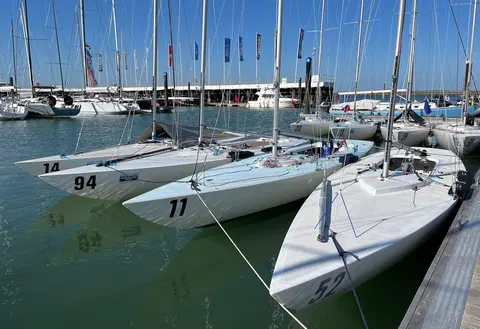
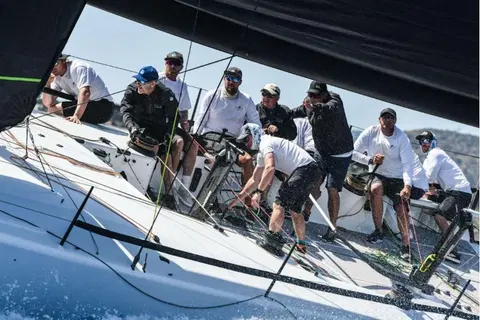
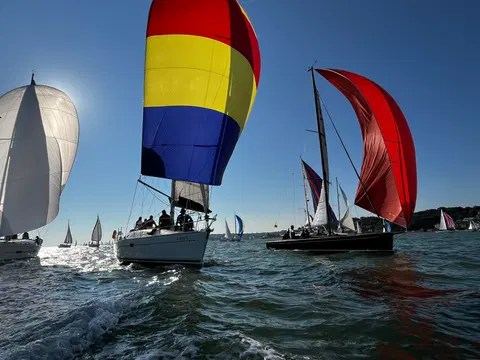
Long before the first warning signal carries across the Royal Yacht Squadron line on Saturday 10 July 2027, Cowes will already be awake, with sails appearing above marina roofs, crew bags thumping along pontoons and nervous conversations beginning over mugs of tea in cockpits crowded with waterproofs, sandwiches and last-minute tactical opinions. The Round the Island Race has always possessed this wonderful mixture of seriousness and mild disorder, because world champions, professional campaigns, family cruisers and first-time competitors all face the same 50.1 nautical miles around the Isle of Wight, even though their ambitions, budgets and likely finishing times may be separated by half a day. Henri-Lloyd will join that floating congregation as an official partner of the Island Sailing Club and the 2027 Round the Island Race, bringing more than six decades of British sailing history to an event that has spent nearly a century proving that great yacht racing does not have to belong exclusively to professional sailors.
The partnership feels more natural than most commercial arrangements, because Henri-Lloyd and the Round the Island Race grew from the same practical British sailing culture, where equipment earned loyalty by working properly when the breeze freshened and the sea began finding its way over the foredeck. Founded in Manchester in 1963, Henri-Lloyd became associated with some of the defining offshore voyages of the twentieth century, equipping Sir Francis Chichester and Sir Robin Knox-Johnston during an era when ocean sailing still carried a raw edge of uncertainty. Technical clothing has changed almost beyond recognition since those pioneering voyages, with lighter materials, improved breathability, taped seams and carefully engineered layering systems replacing much of the heavy equipment once accepted as unavoidable, although the fundamental purpose remains reassuringly familiar when rain arrives sideways off Hurst Castle.
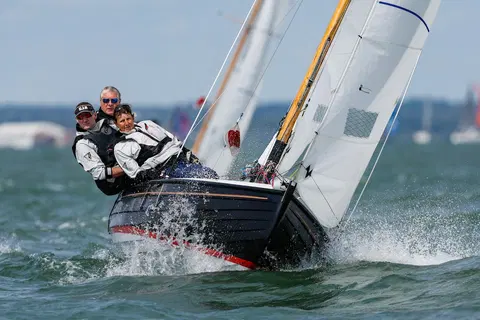
That understanding of sailors at every level should suit the Round the Island Race, because inclusiveness has been part of the event since its earliest days. Major Cyril Windeler, a member of the Island Sailing Club, conceived the idea in 1930 as a handicap race around the Isle of Wight for smaller boats, creating a contest in which modest yachts could compete meaningfully rather than simply watching the grander racing machines disappear over the horizon. The inaugural race followed in 1931 with only 25 entries, when Peter Brett sailed his 22-foot Cornish fishing boat Merry Conceit to victory and collected the first Gold Roman Bowl, having reportedly bought the boat for £45. That humble beginning established the spirit that still defines the race, because outright speed has always mattered, yet corrected time, preparation and intelligent sailing can still carry an ordinary boat towards an extraordinary result.
Round the Island Race History soon supplied the race with the kind of stories that survive long after finishing times have been forgotten, including the remarkable 1933 contest in which Isaac Bell’s Rosemary IV lost her mainsail close to the finish but managed to set a trysail and cross the line just 46 seconds ahead of Felise. Founder Cyril Windeler eventually won his own race aboard Kalliste in 1939, shortly before the Second World War halted leisure sailing, while the event returned in 1946 and continued growing until more than 100 yachts were entering by 1950. Mrs Tobin later became the first woman to win the Gold Roman Bowl aboard Barbar, while Sir Edward Heath’s Morning Cloud yachts claimed four victories during the 1970s, three of them in consecutive years, adding political celebrity without changing the essential character of a race still decided by weather, tide and sound judgement.
Round the Island Race Fleet numbers continued rising as post-war yacht ownership expanded, reaching 1,309 entries during the mid-1980s before an extraordinary 1,813 boats assembled for the Island Sailing Club’s centenary in 1989. A record fleet of 1,875 yachts later demonstrated how completely the race had moved from a modest club experiment into one of the largest participation sailing events in the world, although the view from an individual cockpit remained intensely personal. Every boat still had to escape the Solent, clear the Needles, survive the exposed southern coast, round Bembridge Ledge and return through the eastern Solent, with thousands of separate decisions accumulating between the first manoeuvre off Cowes and the final push towards the finish.
The course appears simple on a chart, although anybody who has raced around the Isle of Wight knows how quickly simplicity disappears once tide, wind shadow, sea state and traffic begin competing for attention. Staggered starts send divisions westward from Cowes towards Yarmouth and Hurst, where navigators must balance favourable current against shallow water and the crowded approach to the Needles. The leg from the Needles to St Catherine’s Point can deliver fast reaching conditions, hard upwind work or an uncomfortable sea, while the southern coast offers limited shelter and few opportunities to relax. Bembridge Ledge marks the beginning of the homeward contest through the eastern Solent, where fading breeze, foul tide and the temptation to cut too close to the Island shore have spoiled many otherwise excellent races.
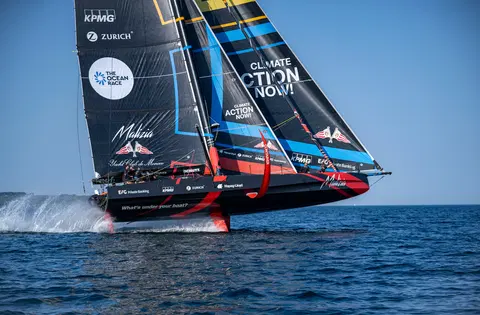
Round the Island Race Modern speed has added another layer to the history, with increasingly powerful monohulls and multihulls driving the course records steadily lower. Sir Ben Ainslie became the first sailor to complete the race in less than three hours when his AC45 catamaran finished in 2 hours, 52 minutes and 15 seconds, before faster machines pushed the mark still further. Ned Collier Wakefield and the team aboard Concise 10 established the present multihull record of 2 hours, 22 minutes and 23 seconds in 2017, while Mike Slade’s 100-foot supermaxi ICAP Leopard holds the monohull record of 3 hours, 43 minutes and 50 seconds, set in 2013. Those performances represent the spectacular end of the fleet, yet most crews will spend considerably longer at sea, carrying lunches, spare clothing and enough optimism to survive the inevitable moment when the wind weakens and every boat astern appears to be catching up.
Round the Island Race The 2026 race offered a timely reminder that corrected-time honours remain the heart of this vast contest, when Simon Moss and Tattarat won the IRC fleet and secured the Gold Roman Bowl, while 17-year-old Will Reeve earned the Young Sailor Trophy aboard Innuendo. More than 800 boats created a remarkable spinnaker start off Cowes before meeting difficult seas around the Needles and demanding tactical conditions near St Catherine’s, proving once again that a favourable forecast never removes the need for resilience. Nearly 100 trophies were eventually presented across the different classes, reflecting the breadth of a race in which victory can mean winning the Gold Roman Bowl, beating a lifelong rival or simply bringing the same crew safely back to Cowes before the pubs stop serving food. Round the Island Race Henri-Lloyd’s involvement throughout 2027 is expected to extend beyond branding, with the company planning a presence at the Island Sailing Club and around the race, where competitors and visitors will be able to explore its latest sailing collections and related experiences. The company’s Cowes store, support for UKSA and Sail Free initiative also connect the partnership with the wider question of how sailing attracts its next generation, because even the most celebrated races cannot live upon history alone. Sail Free was launched in 2026 to provide qualifying customers with a £300 contribution towards recognised courses at participating RYA training centres, creating a practical route from curiosity towards genuine time on the water. Round the Island Race Saturday 10 July 2027 will therefore represent far more than another sponsorship date in the sailing calendar, because the Round the Island Race remains one of the rare occasions when the full breadth of the sport can be seen moving towards the same horizon. Henri-Lloyd will bring a history shaped by ocean pioneers, technical development and generations of wet sailors, while the Island Sailing Club will provide a course that has challenged everything from little wooden cruisers to record-breaking multihulls since 1931. When the fleet rounds the Needles and turns towards the long southern coast, logos and announcements will matter rather less than sail selection, tide and seamanship, which is precisely why this partnership has the potential to work, because both names ultimately depend upon what happens when sailors leave the shelter of Cowes and meet the sea on its own terms.