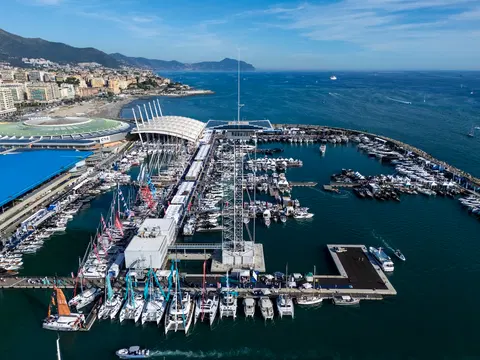
Yokohama has always looked comfortable with the sea, its great waterfront stretching around Tokyo Bay with ships, marinas, ferries and pleasure craft forming part of a landscape where modern Japan meets a long maritime tradition, and in March 2027 that relationship will once again take centre stage when the Japan International Boat Show returns for its 66th edition. Running from 18 to 21 March, the show will combine indoor exhibitions at Pacifico Yokohama with floating displays at Yokohama Bayside Marina and a wider programme of marine experiences spread across five venues, creating something considerably broader than a conventional exhibition hall filled with polished boats under artificial lighting. The intention for 2027 is clear, because alongside established boat owners, sailors and marine professionals, organisers want to reach families, newcomers and people who may never previously have considered boating part of their lives, turning the event into both a showcase for the marine industry and an invitation to discover what happens once the pontoon is left behind.
Reaching a 66th edition gives the Japan International Boat Show a history stretching across more than six decades of enormous change in both boating and Japan itself, a period during which leisure craft have moved from relatively simple wooden and early fibreglass boats to sophisticated cruising yachts, fast outboard-powered craft, personal watercraft and increasingly connected vessels carrying navigation, communications and propulsion technology that earlier generations would scarcely have recognised. Japan’s marine industry has played an important role in that transformation, particularly through manufacturers whose engines, electronics and small craft have become familiar in marinas around the world, and the country’s boat show has evolved alongside them, becoming a meeting place where domestic builders, international brands, equipment manufacturers, marina operators, sailing organisations and thousands of people interested in the water can occupy the same stage. That longevity is significant because boat shows survive only when they remain useful, and the modern exhibition increasingly has to provide more than rows of products for people already convinced they want to buy them.
The 2027 show therefore appears determined to make the experience itself part of the attraction, with Pacifico Yokohama providing the indoor heart of the exhibition while Yokohama Bayside Marina allows visitors to see larger boats where they really belong, afloat with pontoons beneath their feet and open water beyond the harbour entrance. That distinction matters because a yacht viewed from carpet level inside an exhibition centre can look magnificent, yet stepping aboard at a marina immediately reveals something different about the way the deck works, how the cockpit feels, whether the side decks offer enough security and whether the saloon genuinely feels like somewhere a family might spend a week rather than ten minutes. Floating shows have always possessed that particular magic, because boats appear more honest when they are moving gently against their lines, surrounded by water and other vessels rather than spotlights and exhibition stands.
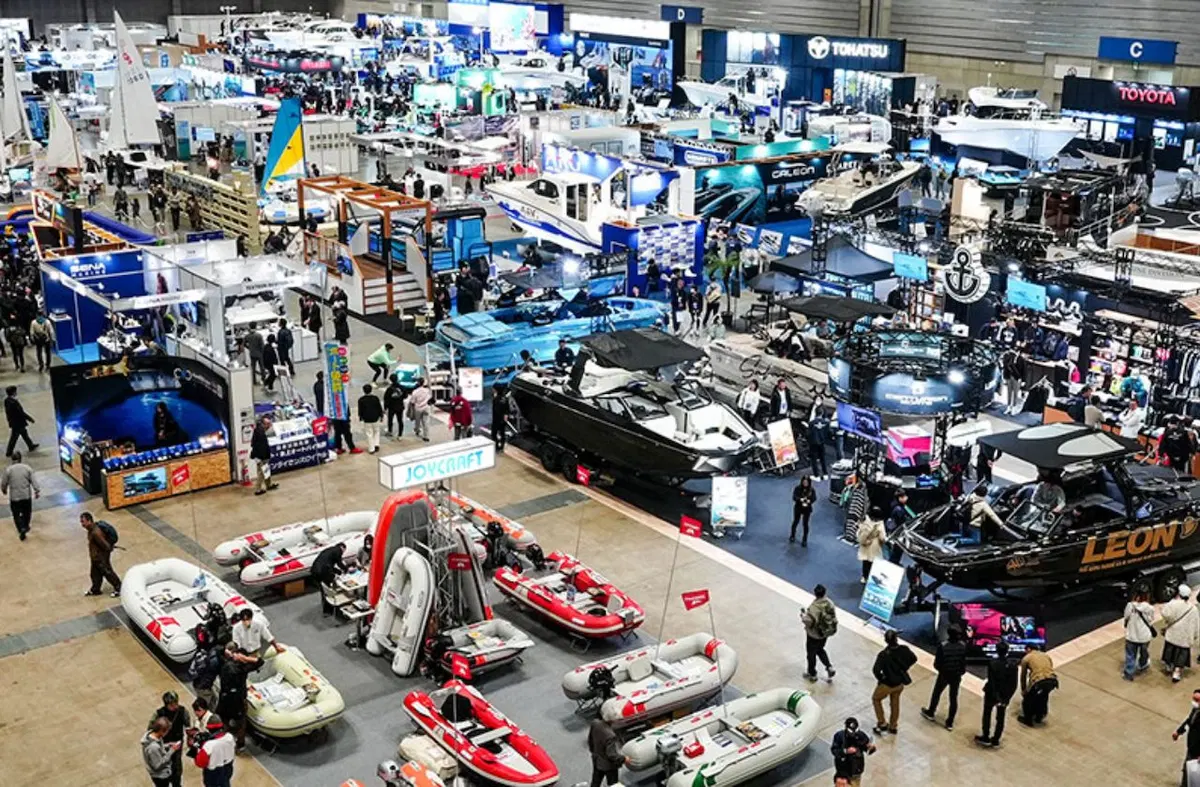
Pacifico Yokohama will provide a very different atmosphere, bringing together boats, yachts, personal watercraft, marine equipment, services, marinas and the wider collection of products now associated with the boating lifestyle, while face-to-face conversations between manufacturers and visitors remain one of the most valuable reasons these events continue to matter in an age when almost every specification can be found online. A website can tell somebody the beam, engine output and fuel capacity of a new cruiser, yet it cannot easily reproduce the moment when a prospective owner stands behind the helm, discovers whether the sightlines actually work and starts imagining where the family might be sitting when the boat leaves the marina on a summer morning. Exhibitors also gain something equally valuable because direct conversations reveal what buyers are asking for, which features they understand, which prices make them hesitate and which ideas attract attention long before a sales spreadsheet begins to explain the same story.
That commercial role is particularly important as the industry tries to bring younger people and new families towards boating, because many established marine markets face the same challenge of replacing owners who have spent decades on the water with people whose leisure habits developed in a very different world. Boating can appear complicated from the outside, surrounded by licences, marina fees, unfamiliar terminology and the assumption that everyone else somehow already knows what they are doing, so putting newcomers on boats, offering demonstrations and allowing children to experience marine activities may prove considerably more important to the future of the industry than simply unveiling another expensive yacht. Japan International Boat Show 2027 is placing considerable emphasis on that idea, using practical marine experiences alongside conventional displays to make boating something visitors can touch and try rather than merely admire from behind a barrier.
For established boat owners, the attraction will be different, because shows remain one of the few places where somebody can compare boats, equipment and services without spending weeks travelling between dealers, and the 2027 event should again provide an opportunity to examine the latest thinking in propulsion, electronics, onboard systems, cruising equipment and marine services alongside complete boats. Modern yacht ownership has become increasingly connected, with navigation displays talking to engines, digital switching controlling electrical systems, mobile devices monitoring boats remotely and battery technology steadily changing what can be achieved away from shore power, while outboard engines have grown in both sophistication and power to the point where large cruising boats can now carry installations once associated primarily with inboard machinery. A major boat show becomes a useful snapshot of where those developments have reached, especially when equipment can be compared across manufacturers rather than viewed in isolation.
Yokohama itself gives the event a setting that feels unusually appropriate, because this is not a marine exhibition dropped into a city with little connection to the water, and the combination of Pacifico Yokohama and Yokohama Bayside Marina allows visitors to move between the commercial world of the exhibition and the physical environment in which many of the products are intended to be used. The additional venues and marine experiences planned across the wider show should strengthen that relationship further, particularly for families and first-time visitors who may be more interested in trying something afloat than discussing the finer points of a diesel installation or debating which radar belongs on the next cruising yacht.
There is also a wider international significance to the Japan International Boat Show, because Japan remains one of the world’s major centres of engineering and marine manufacturing even though its recreational boating culture is often less visible internationally than the Mediterranean, northern Europe or the United States. The show provides an opportunity to see that market on its own terms, with domestic requirements, local cruising habits and Japanese design sitting alongside imported boats and international technology, while manufacturers and dealers gain the chance to build relationships in a market where personal trust and long-term business connections can carry considerable weight. For overseas companies looking towards Japan, four days in Yokohama can therefore provide rather more than exhibition exposure, offering a concentrated view of customers, dealers, competitors and the direction of travel in the country’s marine leisure sector.
The most interesting element of the 2027 show may ultimately be its attempt to bridge the gap between those already immersed in boating and those still standing on the shore wondering whether the lifestyle is really for them, because the future of marine leisure will depend on making that first step feel less intimidating. A child who tries a boat for the first time, a family that discovers a marina is not a private world reserved for experts, or somebody who finally steps aboard the sort of yacht they have previously only watched from the quay may matter just as much to the long-term industry as the experienced owner signing an order for another boat. After 66 editions, Japan International Boat Show has already witnessed extraordinary changes in boats, engines, navigation and the people using them, and its next challenge is perhaps the most important one of all: making sure there is another generation ready to take the helm when the old hands eventually step ashore.