Trinity Landing sat quiet in the small hours of Thursday morning, the kind of quiet that only follows a very long chase. Somewhere out beyond the Cowes fairway, two boats that had spent ten days circling an entire archipelago together were closing the last few miles almost within sight of one another, and nobody ashore quite knew which one would arrive first.
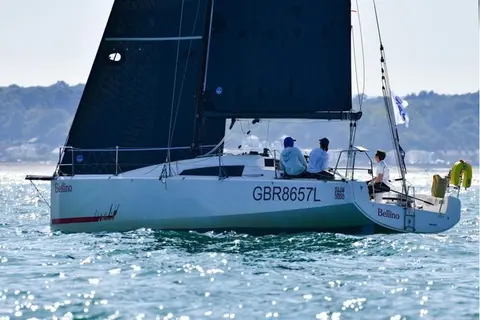
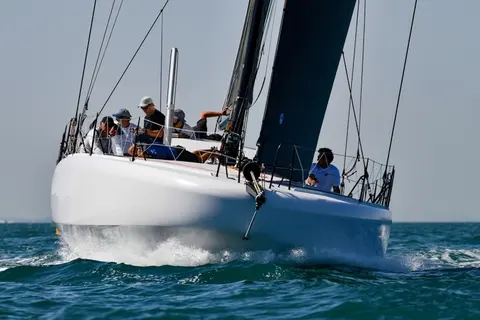
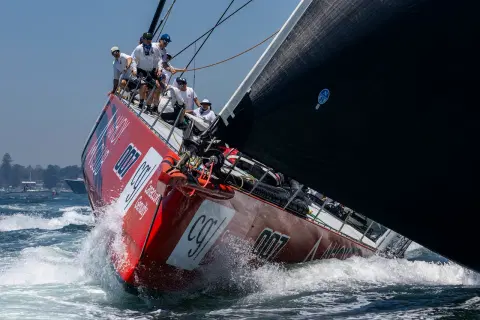
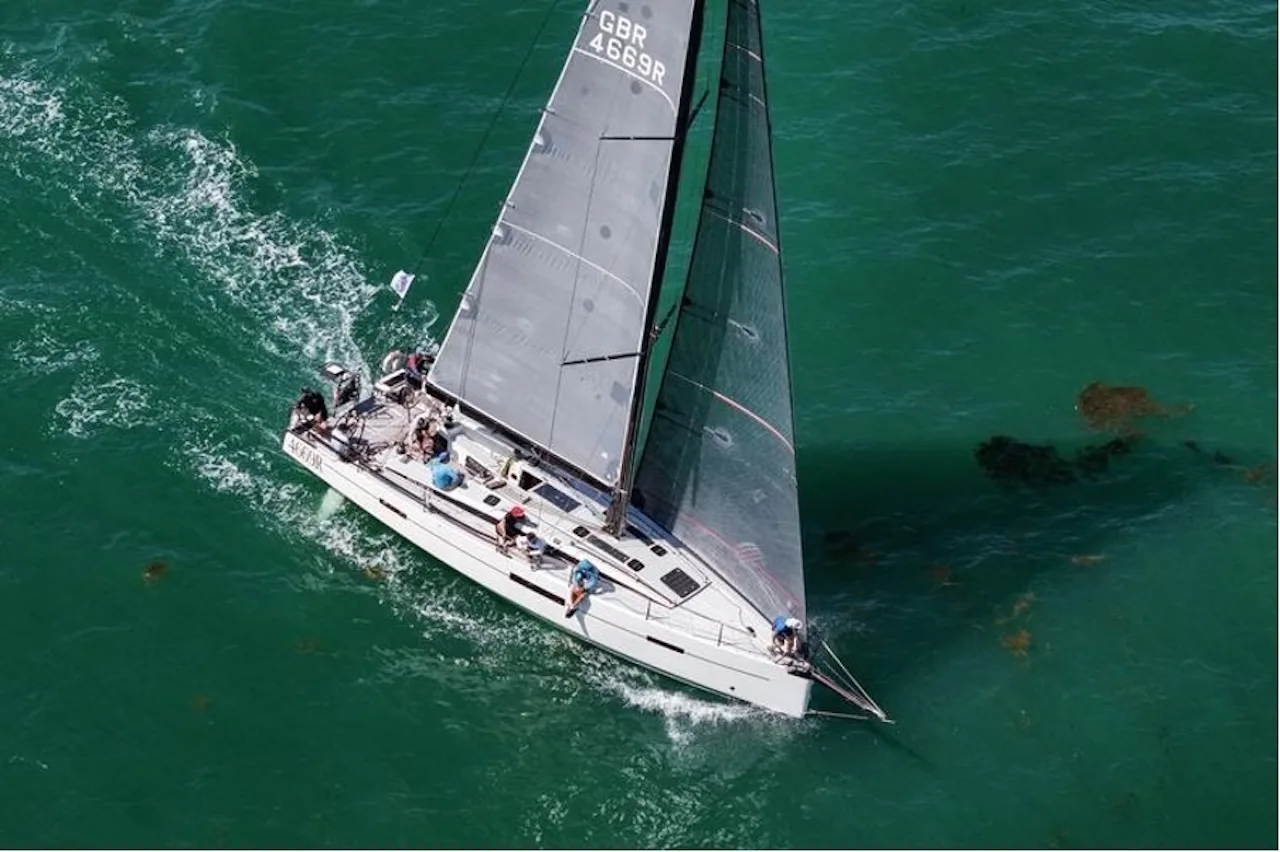
Pata Negra crossed the line just after 0200, Sam Hall's Lombard 46 completing the 1,805-nautical-mile course in 10 days, 11 hours, 36 minutes and 48 seconds. Valdo Dhoyer's French Volvo 60 Challenge Ocean followed a mere thirteen minutes and forty-one seconds later, close enough that the two crews could still see each other's navigation lights as they threaded the final approach to the Solent. Provisional victory in IRC One went to Pata Negra, a result earned not through one decisive breakaway but through ten days of small gains, small losses and a great deal of patience. Rich in offshore pedigree, Pata Negra needed little introduction among RORC regulars. Podium finishes in the RORC Transatlantic Race, the RORC Caribbean 600 and countless rounds of the RORC Season's Points Championship had already built her reputation, and the boat's name sits on the overall winner's board from 2018. What made this result different was the crew standing at the helm. Andrew and Sam Hall took the Lombard 46 around Britain and Ireland for the first time under their own stewardship, with 25-year-old Sam developing steadily into an accomplished offshore skipper under his father's watchful guidance.
"Well, that was a frustrating race," Andrew Hall admitted on the pontoon soon after finishing. Every corner the boat turned seemed to bring the wind round against them, he explained, and the low point arrived at Beachy Head, where the crew was forced to kedge for forty-five minutes rather than lose ground to the tide. Frustration, however, sat alongside genuine satisfaction. The course itself, Hall reflected, had been fascinating, offering little in the way of luck but a great deal in the way of proper sailing.
Sam Hall's assessment before the start proved prophetic. He had suggested that the fastest route around Britain and Ireland would belong to whichever boat suffered the fewest breakages, and Pata Negra did not escape entirely unscathed, absorbing sail damage that needed repair along the way. Such wear is simply part of a race of this length, he noted, pointing instead to the deeper challenge of the course itself. Offshore sailors usually settle into a rhythm over a long passage, yet the constantly shifting conditions around Britain and Ireland denied the crew that comfort throughout. Physically, he considered it manageable. Mentally, it had worn everyone down. Whether he would sign up again, Sam Hall left for another year to decide.
Fifty Years of Chasing the Same Coastline The race the Halls had just completed traces its origins back to 5 June 1976, when twenty-five boats first set out to test themselves against the full circumference of Britain and Ireland. Electron II claimed victory in that original non-stop division, while a separate staged race, calling at Crookhaven, Stornoway and Blyth, was won by Morningtown. The event settled into its now-familiar uninterrupted format in 1980, when Chica Tica II took both line and overall honours, before a brief return to staged editions in the early 1990s gave way permanently to the continuous circumnavigation sailors know today.
Half a century of results reads like a roll call of the sport's changing tastes. Incisor of Wight took the honours in 2000, Kingspan-Chieftain in 2006, Artemis Ocean Racing in 2010 and Varuna in 2014, each reflecting the design fashions of its era. Pata Negra's first overall victory in 2018 already placed the Lombard 46 among that select company, and Thursday's result, arriving eight years later under a new generation of Halls, added a second chapter that few boats in the fleet can claim.
What has changed least across those fifty years is the nature of the challenge itself. Britain and Ireland do not offer a single long ocean leg so much as a chain of entirely different problems strung together, tidal gates around headlands, wind shadows behind high ground, shipping lanes, exclusion zones and the unpredictable temperament of northern waters, all requiring a crew to reset its tactics again and again rather than settle into any single groove. That relentless variety is precisely what Sam Hall meant when he described the mental exhaustion of a course that refuses to let a crew relax. Behind Pata Negra and Challenge Ocean, the wider fleet continued to stream towards Cowes through Thursday and into the night, with rush hour building at Trinity Landing as boat after boat completed its own version of the same fifty-year test. Two Sun Fast 3300s, Kestrel and Sky Business - Game On, remained locked together fighting for both the IRC Two and IRC Two-Handed titles, their crews bound by a rivalry that began at the 2025 Offshore Double Handed World Championship. Further back, broken gear and stubborn birdlife added their own chapters to a race that has always produced as many memorable stories as results.
Pata Negra's win belonged, in the end, to patience rather than pace. Ten days of shifting wind, one enforced kedge and a rival never more than a few boat lengths away tested a young skipper as thoroughly as any race on the calendar could, and the Halls emerged from it with a result that connects one generation's achievement to the next.