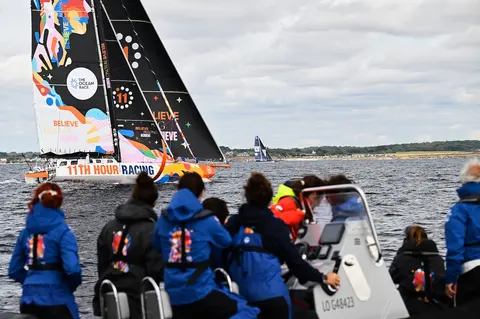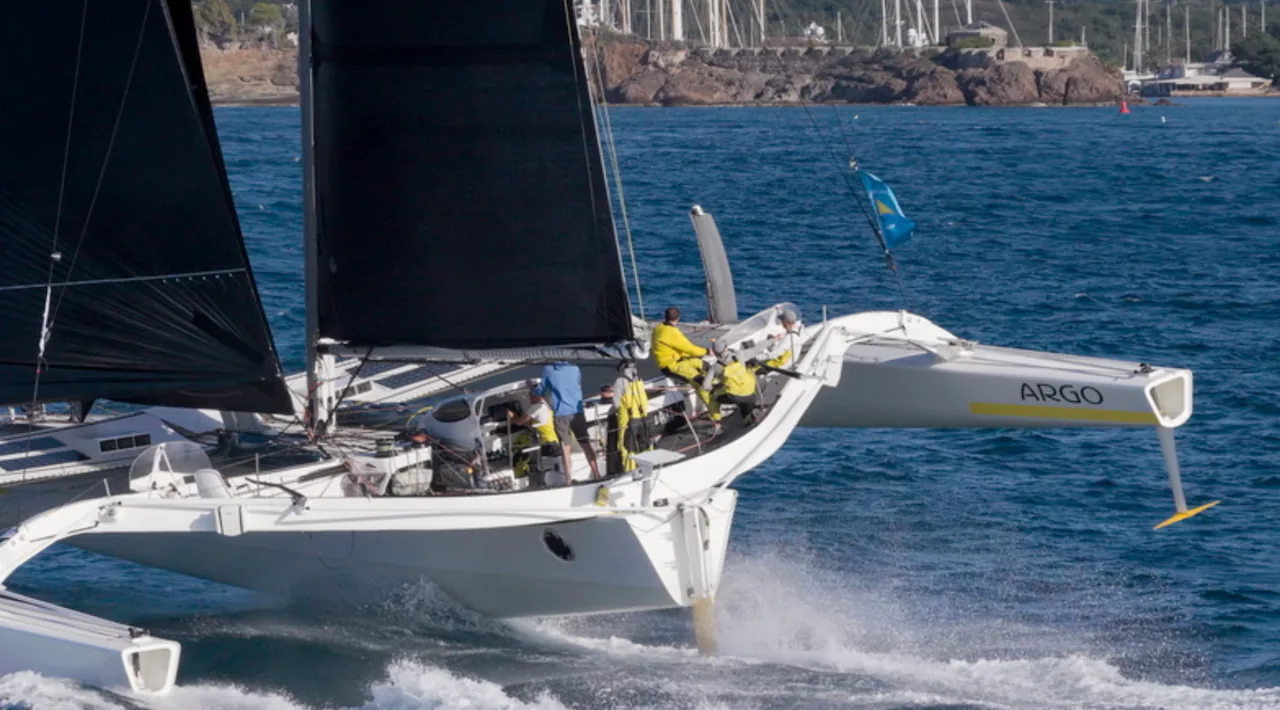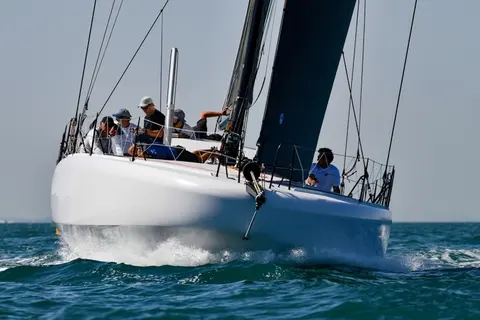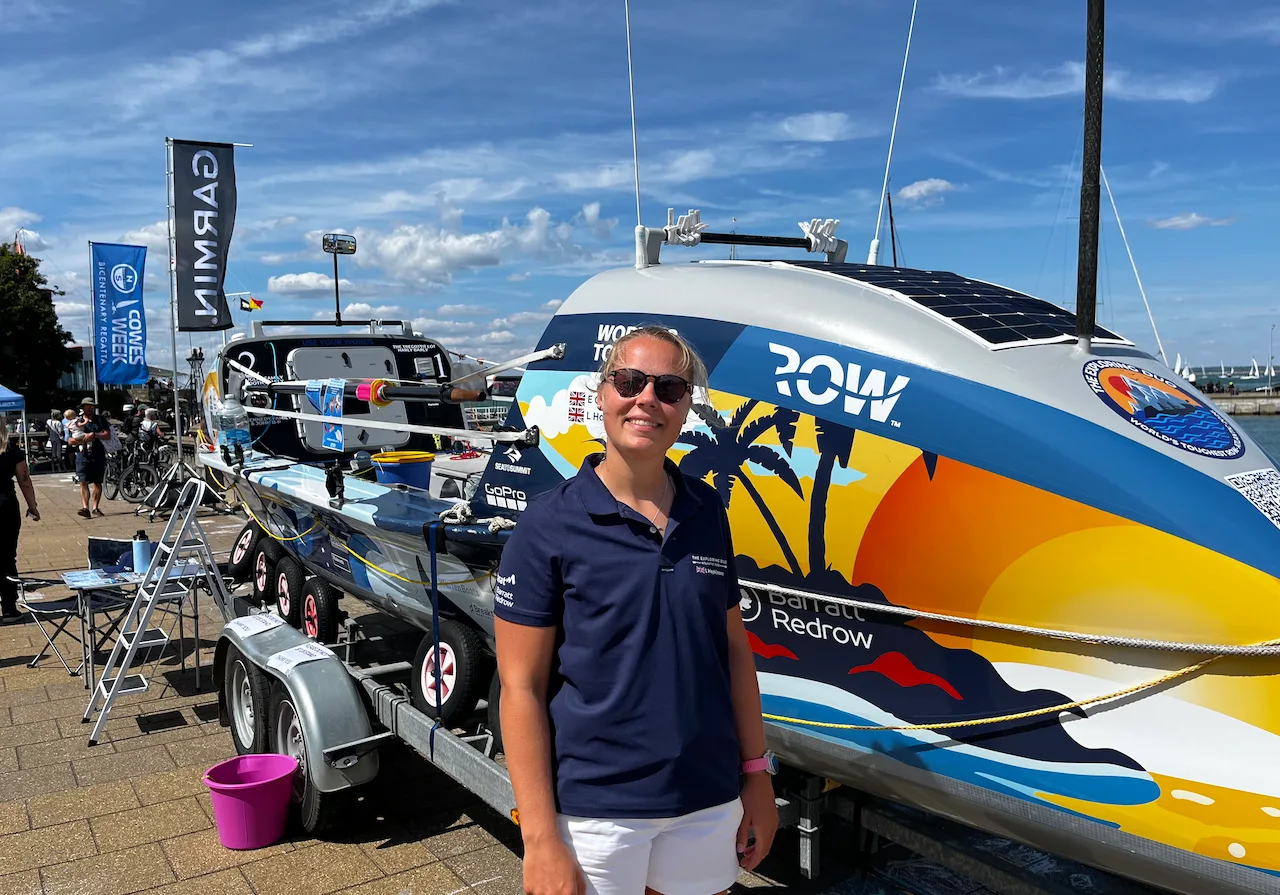
Standing proudly on Cowes Parade during Cowes Week, surrounded by gleaming racing yachts and the constant bustle of one of the world's most famous regattas, there was one craft that stopped people in their tracks. It wasn't a foiling racer or a classic yacht polished to perfection. Instead, it was a compact ocean rowing boat, built for survival rather than speed, and destined for one of the greatest endurance challenges on the planet.
It was there that I met Lottie Hopkinson-Woolley, one half of Exploring Duo, whose quiet confidence spoke volumes about the adventure that lies ahead. Beside her sat the boat that, in December 2026, will become both home and workplace as she and teammate Ethan Chapman attempt to row more than 3,000 miles across the Atlantic Ocean in the World's Toughest Row Atlantic.
There will be no sails to harness the trade winds. No engine to ease the workload. No support vessel following astern. Once they leave San Sebastin de La Gomera in the Canary Islands on 12 December 2026, the only way west is by pulling on the oars, twenty-four hours a day, until Antigua finally appears on the horizon.
It is a challenge that demands respect from everyone who understands the sea.
More Than a Race
Despite its competitive format, the World's Toughest Row Atlantic has never been solely about winning. Since the race was first established in 1997 as the Atlantic Rowing Race, it has become recognised as one of the ultimate tests of endurance, teamwork and mental resilience.
Originally conceived as a contest between a handful of adventurous crews, the event has grown into an internationally recognised ocean race attracting military teams, elite athletes, emergency service workers, adventurers and ordinary people determined to achieve something extraordinary.
The route follows the trade winds from the Canary Islands to Nelson's Dockyard in Antigua, covering approximately 3,000 nautical miles across one of the world's most unforgiving oceans.
Although favourable winds and currents help push the boats westwards, nothing about the crossing is easy.
Sleep comes in short bursts, often just ninety minutes at a time. Salt sores become constant companions. Equipment failures, storms, blistering heat and endless physical repetition test every crew to breaking point.
Perhaps the most remarkable statistic is that fewer people have rowed an ocean than have climbed Mount Everest.
That single fact explains why this race occupies such a special place within the world of endurance sport.
Lottie's Second Chance
For Lottie Hopkinson-Woolley, this Atlantic crossing represents something deeply personal.
Born and raised in London, she built a successful career as an executive assistant, developing the organisational skills, calm decision-making and adaptability that become invaluable when operating thousands of miles from land.
Her first attempt to become an ocean rower never happened.
Lottie had spent months preparing for an expedition across the Pacific Ocean before circumstances entirely beyond her control forced her to withdraw only weeks before departure.
Many people would have walked away.
Instead, she channelled the disappointment into a new goal.
The Atlantic became her second chance.
"This isn't simply about rowing across an ocean," she explains through the Exploring Duo campaign. "It's about finishing something I started and proving that setbacks don't have to define the ending."
That determination was immediately obvious when we spoke in Cowes.
Ocean rowing rewards resilience every bit as much as physical strength.
Experience at the Other Oar
If Lottie brings unfinished ambition to the partnership, Ethan Chapman contributes invaluable experience.
Based in Yorkshire, Ethan works as a paramedic while also serving with the Calder Valley Search and Rescue Team. His life has been built around helping people under pressure.
Growing up in the Lake District fostered an early love of the outdoors before mountaineering eventually led him towards bigger adventures.
In 2024 he completed his first Atlantic crossing as part of a three-person crew made up entirely of paramedics.
Like many ocean rowers, he famously declared afterwards that he would never climb back into another rowing boat.
The Atlantic, however, has a curious habit of calling people back.
Since completing that crossing, Ethan has travelled around Britain speaking about resilience, leadership and decision-making under pressure. Those lessons, forged thousands of miles from land, now form the foundation of this latest expedition.
Returning with experience transforms the challenge.
He knows what awaits.
More importantly, he knows he can survive it.
Life Between the Waves
Ocean rowing bears little resemblance to the rowing seen on rivers or Olympic courses.
Each crew member rows for two hours before handing over to their teammate.
That cycle repeats around the clock.
Meals consist largely of freeze-dried food.
Fresh water comes from a desalination system.
The tiny cabin offers little more than shelter from storms and somewhere to snatch precious sleep.
Crossing the Atlantic typically takes between 35 and 60 days, depending upon weather, currents and equipment reliability.
Navigation becomes a constant exercise in balancing speed with safety, while weather routing and energy management are every bit as important as physical strength.
This is where preparation matters.
Boats are equipped with satellite communications, emergency beacons and self-righting capability should they capsize, but the reality remains stark.
For much of the journey, the nearest assistance may be hundreds of miles away.
Rowing for Something Bigger
Exploring Duo are not chasing records alone.
Every mile they row will help raise money and awareness for three charities close to their hearts.
The British Heart Foundation continues its world-leading research into heart disease and lifesaving treatments.
The Calder Valley Mountain Rescue Team provides an entirely voluntary emergency rescue service across challenging terrain throughout Yorkshire.
The Seaview Sailing Trust, based on the Isle of Wight, opens the world of sailing to people of all ages and abilities, ensuring that disability is never a barrier to enjoying life on the water.
Supporting these organisations gives every stroke greater meaning.
Why This Challenge Matters
Events like the World's Toughest Row remind us that adventure still exists.
In an age of GPS, satellite communications and instant connectivity, there remains something wonderfully simple about crossing an ocean powered solely by human determination.
No technology can remove the need to keep rowing.
No shortcut exists between La Gomera and Antigua.
Every mile has to be earned.
Meeting Lottie during Cowes Week reinforced that reality.
Among some of the fastest racing yachts in the world sat one of the slowest craft preparing to leave Europe.
Yet few vessels on display carried a greater story.
When Exploring Duo leave the Canary Islands this December, they won't simply be chasing a finish line.
They'll be proving that courage isn't always measured in knots.
Sometimes it is measured in the willingness to pick up the oars again, hour after hour, day after day, until another continent rises from the sea.