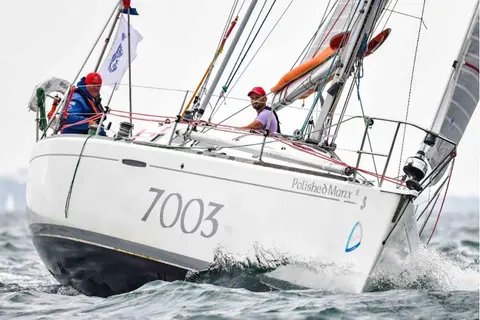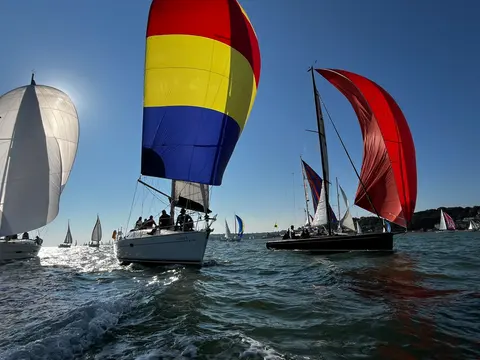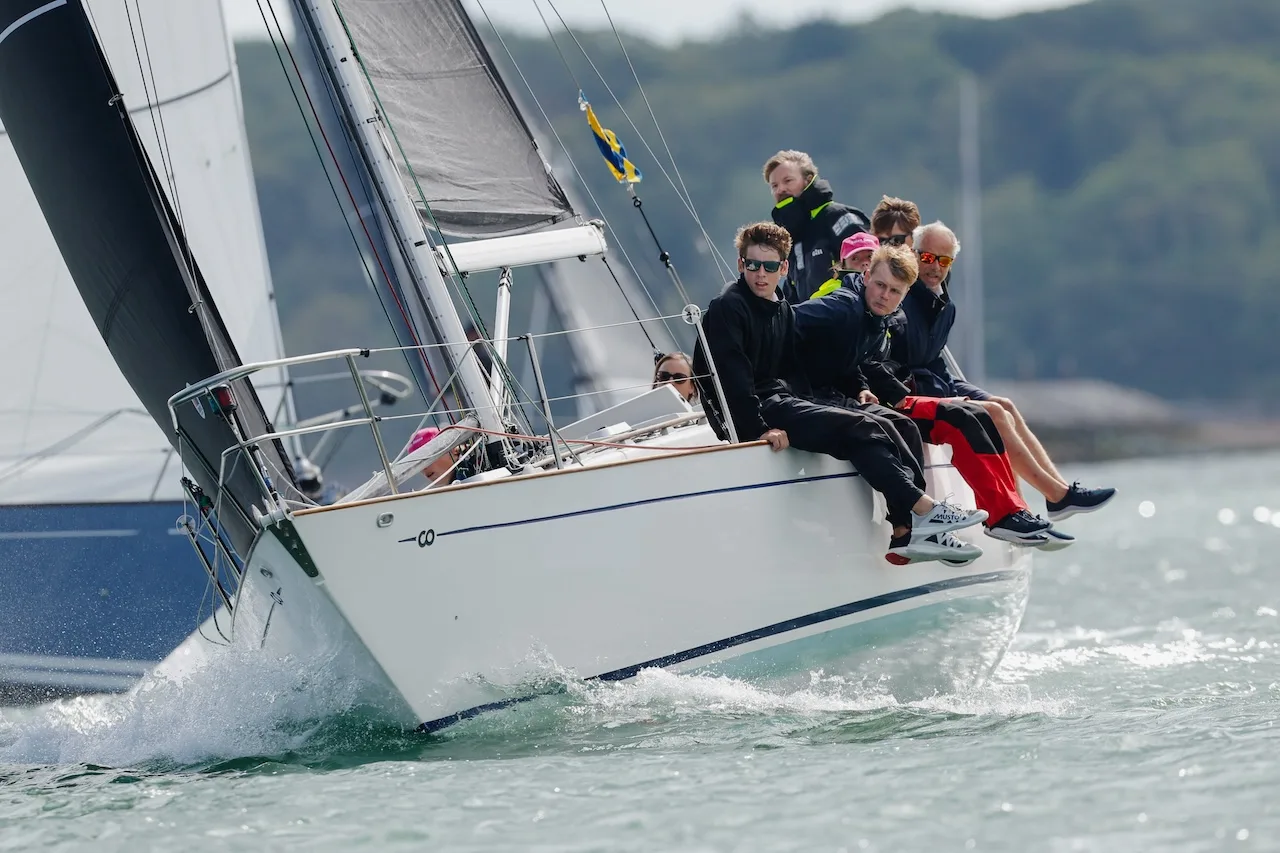
There are some sailing events you report on and others you simply enjoy being part of. North Sails Cowes Week 2026 certainly fell into the second category.
What a week it was.
Cowes seemed to have rediscovered something particularly special for its 200th anniversary. The weather was magnificent for much of the regatta, the town was buzzing from morning until late at night, the bars and restaurants were packed, the Parade was full of life and more than 5,000 sailors provided the familiar mixture of competition, conversation and occasional controversy that has always made Cowes Week unique. I thoroughly enjoyed the week. Perhaps the one best moment for non sailors came right at the end. After being absent in recent years, the famous Cowes Week fireworks returned, filling the night sky above the Solent and providing exactly the sort of finale this historic bicentenary deserved. Standing in Cowes watching those fireworks, it was difficult not to think about just how much history had passed across this little stretch of water.
From Seven Yachts to 641 Boats The story of Cowes Week stretches back to 1826, when the first organised races took place off Cowes. King George IV had helped establish the Royal Yacht Squadron and presented a cup for racing. That first gathering involved just seven yachts, sailing from a start off Cowes Castle. Nobody watching those early racing cutters could possibly have imagined what would follow. Over the next two centuries Cowes developed into one of the great centres of international sailing. Royal patronage helped establish its early prestige, yet the regatta gradually evolved beyond its aristocratic beginnings. Racing yachts changed. Sailmaking changed. Navigation changed. Professional crews arrived, rating rules came and went, and the Solent became home to generations of new one-design classes. Cowes Week survived two world wars and enormous changes in British society. What endured was the racing. By 2026, those original seven yachts had become a fleet of 641 boats across 43 classes, ranging from traditional Solent dayboats to powerful modern IRC racing machines. That diversity remains one of Cowes Week's greatest strengths.
The Solent Still Decides the Winners Modern weather forecasting may have removed some of the mystery from racing, but nobody has yet developed an app capable of making the Solent behave itself. During the week we had sunshine, light airs, fresh breeze, strong tides and one Wednesday when forecasts approaching 30 knots forced organisers to cancel racing for some of the smaller classes.Friday delivered something close to a perfect conclusion. Bright sunshine was joined by a reasonably early sea breeze and every class was able to race. After six days of calculating points, discussing discards and replaying tactical mistakes over drinks, Friday was no longer about positioning yourself for the final attack.
It was about winners. Cowes Combined Clubs had organised racing for 43 classes and an extraordinary 153 trophies were presented across class results and special categories. The prizegiving was predictably enthusiastic and perhaps slightly chaotic. It wouldn't really have been Cowes Week otherwise.
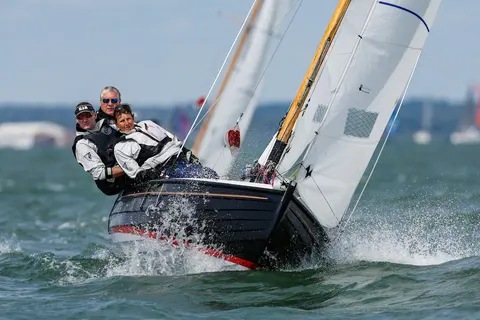
Lone Star Shines Brightest The outstanding overall performance came from Phil Lawrence, Nick Froud and David King aboard the XOD Lone Star. Winning a Cowes Week class is difficult enough. Producing the consistency required to become overall winner while racing against nearly 60 boats in one of the most competitive and tactically unforgiving fleets on the Solent is another matter altogether. The X One Design is hardly a newcomer to these waters. Designed by Alfred Westmacott and first raced in 1911, the XOD has become woven into the fabric of Solent sailing. These elegant wooden dayboats reward smooth boat handling, tactical patience and an almost intimate knowledge of local tides. Lawrence summed up Lone Star's week rather nicely. We were just blisteringly fast all week. Sometimes sailing really is that simple. His victory was particularly appropriate given a racing career stretching across five decades and demonstrated something Cowes Week repeatedly teaches us: old-fashioned consistency remains extraordinarily difficult to beat.
A Gold Cup for the Bicentenary The 200th anniversary needed a trophy of its own. Cowes Combined Clubs therefore introduced the Bicentenary Gold Cup, with scoring based on the opening three days so every one of the 641 entries had an opportunity to compete for it, including classes whose programmes did not extend across the full week. The inaugural winner was Andy Maskell's Contessa 33 High Spirit from Club Cruiser D. There is something rather pleasing about a Contessa taking such an important prize. Cowes Week may attract cutting-edge racing yachts and some of sailing's biggest names, but its foundations remain firmly rooted in club sailing, owner-driven boats and crews who simply love racing.
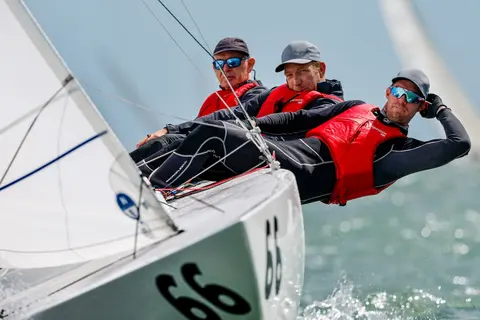
Classics Meet the Modern Generation Few events demonstrate sailing's extraordinary diversity quite like Cowes Week. One of the newest classes competing in 2026 was the RS21, a lightweight modern sportsboat designed around fast, accessible one-design racing. Crispin Winser's White Oryx emerged as class winner. Sitting almost at the opposite end of sailing's design philosophy were the Folkboats. The class returned to Cowes Week for the first time in half a century, bringing 25 of these unmistakable clinker-built yachts back onto the Solent. The Nordic Folkboat dates from the early 1940s and has become one of Europe's great enduring yacht designs. Nobody would mistake one for a modern planing sportsboat, yet put a fleet of Folkboats together and you get wonderfully close racing. Cy Grisley and Simon Evans aboard Gybe N' took the class victory. Seeing RS21s and Folkboats racing during the same regatta captured Cowes Week beautifully. One represents where sailing has been. The other points towards where it may be going. Both crews still desperately want to beat the boat alongside.
Beau Geste Dominates the Big Boats At the faster end of the fleet, one of the week's outstanding campaigns belonged to Karl Kwok's TP52 Beau Geste. The Hong Kong team dominated IRC Zero, producing six consecutive race victories and collecting both the historic Britannia Cup and the New Yacht Club Challenge Cup along the way. Such consistency is remarkable at Cowes. A TP52 might possess enormous performance potential, but the Solent has little respect for impressive specifications. One poor tidal decision or badly positioned tack can destroy minutes frighteningly quickly. Beau Geste avoided those mistakes and became one of the defining boats of the bicentenary regatta.
New Faces and Old Hands Cowes Week has always relied upon new sailors arriving to replace the generations before them. The Newcomers Trophy went to Christopher Bake aboard the beautiful classic Anteren in IRC Class Five. Young sailors were also recognised through Stoertebeker, the German IRC Zero campaign whose crew sailed the boat all the way from Kiel. They were rewarded as the top training boat for young sailors and also received the Sustainability Award for achieving the most carbon-free miles. Sailing to Cowes from Germany was impressive enough. Having to turn around and sail home again after a full week of Cowes Week racing might have made Saturday morning feel rather less glamorous.
Cowes Corinthian Takes the Team Honours Club rivalry has always been another important ingredient. The Solent Team Trophy, awarded for the best combined performance by three boats representing a yacht club, appeared to be heading towards the Royal Yacht Squadron during the week. Friday changed the picture. By the end of racing, Cowes Corinthian Yacht Club had done enough to take the trophy back to its clubhouse at the southern end of Cowes High Street. That local victory undoubtedly gave them something extra to celebrate that evening.
From Dusty P to Desperado Elsewhere, the scale of the fleet continued to underline just how broad Cowes Week remains. Richard Patrick's Dusty P claimed Performance Cruiser A, while Richard Loftus's magnificent Swan 65 Desperado finished second to Dusty P in the Performance Cruiser overall standings. Different boats, different generations and different ways of going sailing. The competition remained equally serious. That is perhaps Cowes Week's greatest trick. It can make the owner of a modest cruiser-racer feel just as invested in the day's result as the crew of a professionally campaigned racing machine.
Cowes Was Alive Again Racing tells only half the story. For seven days, Cowes itself felt transformed. The Parade was busy, with some excellent stands and plenty to explore between races. Restaurants were full, bars were overflowing with sailors and every table seemed to contain a crew explaining precisely where its race had gone wrong. Sail bags moved through the streets. Crews wandered around in team kit. Conversations switched effortlessly between tomorrow's forecast, today's protest and where everyone was meeting later. That atmosphere matters. A successful Cowes Week is not simply a collection of race results. It is a sailing festival that takes over an entire town. This year Cowes really did feel alive.
Fireworks Over the Solent Then came Friday evening. After the last races had been sailed, the protests settled and the silverware distributed, attention moved from the water to the sky. The return of the Cowes Week fireworks was wonderful to see. They had been missed.
For a normal Cowes Week their return would have been welcome. For the 200th anniversary they felt almost essential. Two centuries earlier, seven yachts had gathered off Cowes to race. In 2026, 641 boats and more than 5,000 sailors had come together to celebrate the same basic idea. Boats have become faster. Sails have become better. Navigation has moved from compass and chart to satellite positioning and electronic displays. The Solent, fortunately, remains capable of making fools of everybody. Perhaps that is why Cowes Week has lasted for 200 years. The regatta isn't really about the boats. It is about the people who keep coming back to race them. As the fireworks burst above Cowes on Friday evening and another remarkable week finally drew to a close, there could hardly have been a better way to celebrate that enduring love affair.
Happy 200th birthday, Cowes Week. Here's to the next hundred.