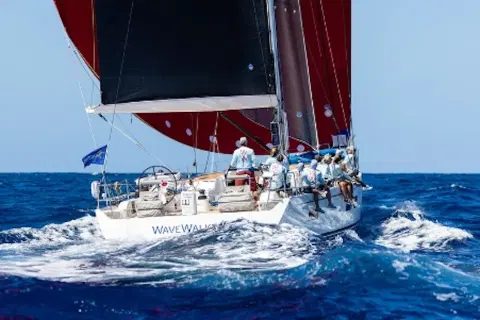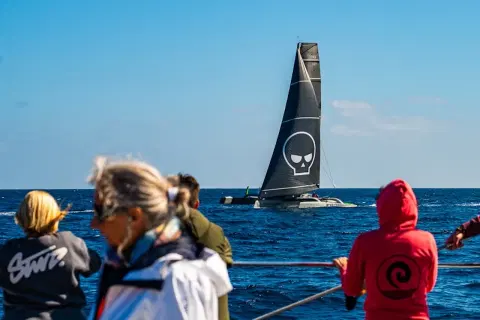
Three boats had fought around Britain and Ireland as though joined by an invisible rope, trading places through calms, Atlantic swells, northern headlands and the crowded approaches to Cowes. When the Class40 contest finally ended, the first boat across the line did not take the title, leaving the result to be settled beneath the quieter lights of a protest hearing.
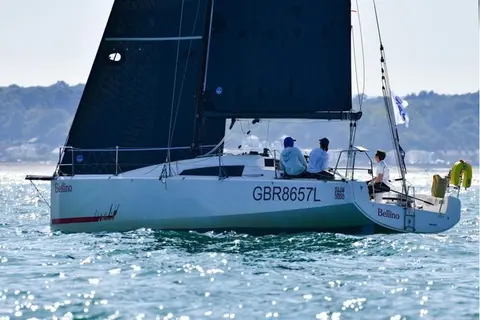
Pierre Le Boucher's Penfret reached Cowes first after 9 days, 29 minutes and 40 seconds of relentless racing. Greg Leonard's Swift followed 1 hour, 28 minutes and 54 seconds later, with Jon Tyrrell's Gambit less than eight miles astern.
The sailors aboard Penfret celebrated a remarkable passage, although they already knew that a protest was waiting ashore. The French boat had passed inside Bills Rocks during the long leg towards St Kilda, despite the course requiring the obstruction to be left on the prescribed side.
The hearing found that Penfret had not sailed the correct course. Victory in the Class40 division therefore went to Swift, crewed by Greg Leonard, Miranda Merron and Grald Veniard, while Daniel Jones Gambit, skippered by Jon Tyrrell, took second place.
It was a dramatic conclusion to one of the closest battles of the 2026 RORC Round Britain and Ireland Race. The lead had changed three times, all three boats had won individual sections, and the crews had remained close enough to see one another for much of the 1,805-nautical-mile circumnavigation.
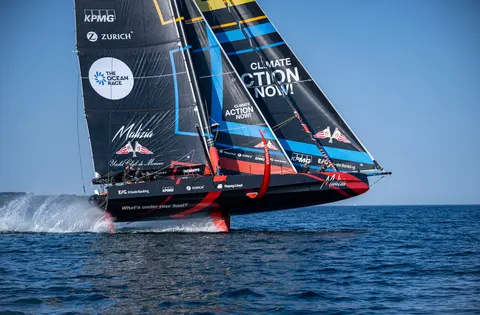
While the Class40 result was being decided, another radical offshore design had completed its own examination. Antoine Magr's Mach 50 Palanad 4 finished third on the water behind Johnny Vincent's Volvo 70 Pace and Jens Kellinghusen's Ker 56 Varuna 6.
Her elapsed time of 8 days, 1 hour, 44 minutes and 31 seconds placed the 50-footer second overall under IRC time correction at the conclusion of the official Day Ten report, with Varuna 6 third. The remaining smaller boats still needed to finish before every overall position could be formally settled.
Palanad 4 Faces the Ultimate Examination
The Round Britain and Ireland Race provided precisely the broad test that designer Sam Manuard and the Magr family required from Palanad 4. The yacht encountered winds approaching 30 knots, fast reaching conditions, heavy offshore water and six complete shutdowns when the breeze disappeared.
Such variety matters when assessing a radical yacht because speed in one narrow range of conditions proves relatively little. A genuine offshore racer must perform through light air, steep seas, headwinds and powerful downwind passages while remaining manageable enough for the crew to preserve the boat.
Only 13 months old, Palanad 4 had already sailed approximately 28,000 nautical miles. Her short but impressive record included overall victory in the RORC Transatlantic Race and the Aegean 600, together with success in IRC Zero at the RORC Caribbean 600.
The Round Britain and Ireland Race introduced a different combination of problems. Long ocean legs were mixed with tidal gates, coastal wind effects, restricted areas and the complicated navigation of the North Sea. A yacht could be magnificently fast in open water, then lose hours while trapped beneath a weak patch of breeze.
Magr took considerable satisfaction from racing closely against the larger Varuna 6. Palanad 4 caught the Ker 56 off Ireland and again around Muckle Flugga, where the broad scow bow could use the waves and favourable angles to generate its greatest advantage.
The result reinforced the idea behind the yacht without suggesting that development had finished. Every race reveals changes that could improve sail selection, weight distribution, systems and performance, particularly on a design that has covered so many miles in little more than a year.
Why the Scow Bow Works
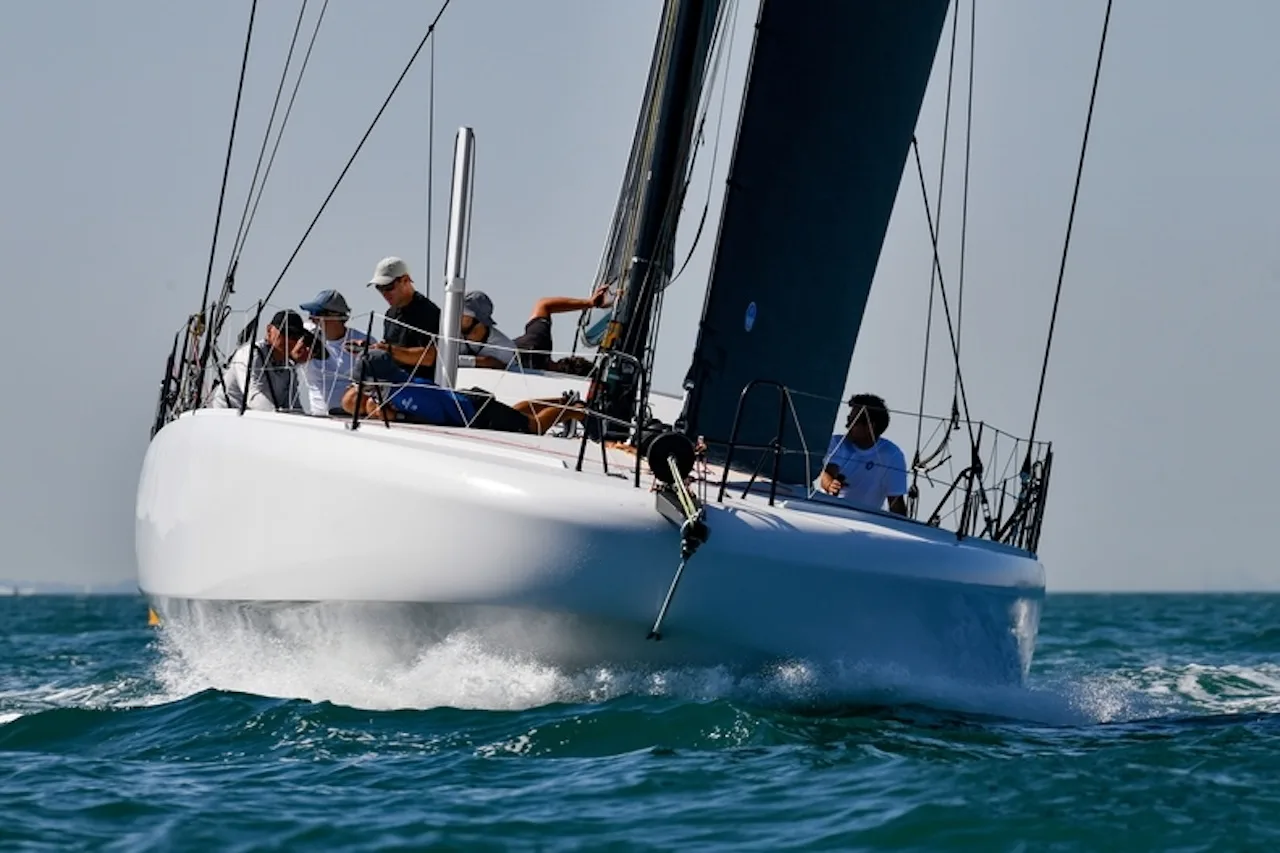
Traditional yacht design generally favoured a narrow bow intended to cut cleanly through the sea. Modern offshore scows turn much of that thinking on its head, using considerable volume and width forward to prevent the bow from burying when the yacht accelerates down waves.
The broad shape creates additional form stability and allows the boat to sail with a flatter, more powerful attitude. When pressed hard downwind, a conventional narrow bow can dig into the wave ahead, increasing drag and creating the risk of a violent deceleration. A scow bow supplies greater buoyancy forward and encourages the hull to remain on the surface.
That does not mean every broad-bowed yacht is automatically faster. The hull must work with the canting keel, daggerboards, sail plan, weight placement and steering characteristics. Poorly chosen angles or an unsuitable sea state can still reduce performance.
Sam Manuard developed his reputation through successful Mini, Class40 and IMOCA designs, where broad bows have become an increasingly familiar sight. His work helped push offshore racing away from narrow hulls that sliced through water towards powerful shapes designed to rise over it.
Palanad 4 is not a Class40, although the design thinking linking her to the three 40-foot racers behind was unmistakable. Both concepts seek sustained offshore speed through powerful hull forms capable of carrying sail area without becoming uncontrollable.
Eight Sections of Relentless Pressure
The Class40 contest began with Swift holding the smallest advantage as the fleet left the Solent and passed No Man's Land Fort. Four hundred miles later, the American entry remained ahead at Bull Rock, although only 15 minutes separated her from Penfret, with Gambit 45 minutes behind.
Those margins were barely significant in a race around Britain and Ireland. One delayed sail change, missed wind shift or poorly judged tidal gate could overturn the entire order.
The long 400-mile passage towards St Kilda produced the first major change. Penfret surged into the lead and opened an advantage of 1 hour and 15 minutes over Swift. Gambit trailed by 2 hours and 33 minutes, the largest gap the French leader established during the race.
That same leg contained the navigational error that would later decide the class. Penfret sailed inside Bills Rocks, situated roughly nine miles offshore, instead of following the required course around them.
The mistake provided an important reminder that offshore racing is governed by more than pure speed. A navigator must combine weather strategy with the exact wording of the sailing instructions, identifying every island, rock, mark, exclusion zone and boundary that forms part of the course.
Modern electronic charts make navigation more accurate, although they also fill the screen with enormous amounts of information. Fatigue, changing weather and constant tactical pressure can make one apparently simple instruction critically important.
Gambit Fights Back in the North
The 160-mile leg towards Muckle Flugga belonged to Gambit. Tyrrell's crew produced the fastest passage of the three and moved back into second, reducing Penfret's advantage to 51 minutes. Swift dropped to third, 1 hour and 4 minutes behind the leader.
Muckle Flugga marked the northern turning point, but the long passage south through the North Sea created another distinct race. Wind farms, shipping routes, oil and gas installations and exclusion zones forced the navigators to balance boat speed against a maze of hard boundaries.
By Holm Approach Buoy, Swift had recovered second place and trailed Penfret by 1 hour and 15 minutes. Gambit had slipped to two and a half hours behind, creating the widest recorded separation between the three yachts.
The battle compressed dramatically after Holm Approach. Swift reduced the French boat's lead to 26 minutes, while Gambit recovered more than an hour and brought herself back into contention.
Across the eight measured sections, Penfret was fastest on four. Swift and Gambit each produced the leading time on two, showing that no boat dominated every condition.
After nine punishing days, all three were close enough to see one another on the approach to the Solent. The sight of a rival's sails can be both encouraging and tormenting after so many miles because it provides a visible target while preventing any psychological escape from the contest.
Human Power Inside a Modern Machine
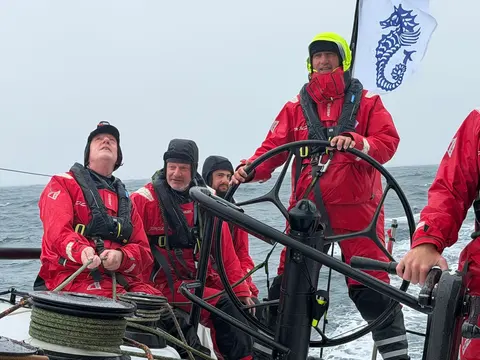
Class40 yachts look thoroughly modern, although the physical work aboard them remains decidedly traditional. Powered winches and hydraulic sail-handling systems are prohibited, leaving every hoist, trim, reef and manoeuvre dependent upon human strength.
With only three sailors aboard Swift, the watch system could offer little complete rest. Someone needed to steer, another had to trim and the third might sleep, navigate or prepare the next sail. A significant manoeuvre quickly brought the entire crew back on deck.
Large reaching sails generate substantial loads, especially when a modern Class40 accelerates into the high teens. Moving those sails through the boat, packing them and preparing the next change becomes a brutal physical routine.
Greg Leonard described a body gradually consumed by the effort, with hands, arms, chest and stomach muscles all suffering as the miles accumulated. The pain was balanced by the satisfaction of looking at the completed track and recognising that every mile had been achieved through wind, sail and human effort.
The crew included two sailors with considerable offshore experience. Miranda Merron completed the 2020-21 Vende Globe and has raced repeatedly across the Atlantic, while Grald Veniard brought further Class40 knowledge to a team equipped for both speed and endurance.
Their victory was secured in the hearing room, although it had been earned through more than nine days of remaining close enough to take advantage when the course error was considered. A protest cannot create a competitive position that was never achieved on the water.
Penfret Takes Value from Disappointment
Le Boucher was understandably disappointed after losing the result, yet the French skipper looked beyond the immediate outcome. The race had provided invaluable preparation for the Route du Rhum, the celebrated solo transatlantic contest from Saint-Malo to Guadeloupe.
Every possible wind angle appeared during the circumnavigation, giving the team extensive information about sail crossovers, autopilot settings, trim and the structural behaviour of the boat. Such data becomes particularly important before a solo race, where the skipper must make decisions without another sailor on deck.
The final night delivered one of the hardest tests, with approximately 20 knots of wind and repeated tacking. A Class40 sail change performed by three people is exhausting, while the same operation becomes even more demanding for a lone sailor crossing the Atlantic.
Penfret may have lost the official result, but she demonstrated competitive speed by leading across half the measured sections and crossing the Cowes finish line first. The lesson concerning the prescribed course was painful, although offshore racing has always punished small navigational errors with disproportionate severity.
Half a Century Around the Islands
The first RORC Round Britain and Ireland Race began on 5 June 1976, attracting 25 boats across two divisions. Electron II won the non-stop contest, while Morningtown prevailed in a separate race that included stops at Crookhaven, Stornoway and Blyth.
The event became entirely non-stop in 1980, when Chica Tica II secured line and overall honours. Staged editions returned in 1992 and 1994, although the modern race developed into an uninterrupted circumnavigation starting and finishing in Cowes.
Its recent overall winners illustrate the range of designs capable of succeeding under IRC. The list includes Incisor of Wight in 2000, Kingspan-Chieftain in 2006, Artemis Ocean Racing in 2010, Varuna in 2014, Pata Negra in 2018 and the double-handed JPK 1010 Jangada in 2022.
Class40 has also become an important part of the modern race. Phil Sharp's Imerys Clean Energy established the class record of 8 days, 4 hours, 14 minutes and 49 seconds in 2018. The slower 2026 finishing times reflected the shutdowns and changing conditions encountered around the course rather than any lack of speed among the latest-generation boats.
The official RORC Day Ten report confirmed Swift as the Class40 winner and Gambit as runner-up following the hearing.
More Than a Shape on a Drawing Board
Two stories came together in Cowes. Palanad 4 completed another significant offshore race and strengthened the case for a radical concept that combines scow-bow power with competitive IRC performance. Swift survived nine days of match racing before taking a class victory shaped by persistence, tactical pressure and close attention to the course.
Naval architecture will continue changing the outward appearance of offshore yachts, while stronger materials, better weather information and more advanced instruments will allow sailors to press harder.
The essential examination remains much older. Crews must still read the wind, protect the boat, obey the course and maintain concentration when their bodies have reached the point of exhaustion.
Palanad 4 proved that bold thinking can travel quickly around Britain and Ireland. The Class40 contest proved that the fastest route only counts when it is also the correct one.