Cowes Week 2026: Two Days That Had Almost Everything
By the fifth morning of Cowes Week, the early-week enthusiasm has usually been replaced by something more serious. Crews know where they stand. The bruises have appeared. Wet sailing kit has developed a personality of its own, while conversations over breakfast increasingly involve points, discards and the boat that absolutely should have tacked earlier yesterday. At North Sails Cowes Week 2026, there was something else hanging over proceedings: weather.
This was the bicentenary edition of one of sailing's great regattas, yet after 200 years the Solent remained firmly in charge. Days five and six demonstrated precisely why Cowes Week has survived for two centuries. One day brought the threat of almost 30 knots and forced organisers to reshape the programme. The next produced light, patchy north-westerlies and strong cross tides that turned the Solent into an enormous tactical chessboard. Some sailors flourished. Others discovered that Cowes has an extraordinarily efficient way of turning a good scorecard into an interesting one.
Two Hundred Years, Same Unpredictable Solent Cowes Week traces its beginnings to 1826, when seven yachts gathered for a race off Cowes under the patronage of the Royal Yacht Club, later to become the Royal Yacht Squadron. The racing yachts of that period bear little resemblance to the TP52s, Cape 31s and modern IRC racers competing today. Weather forecasting, sailcloth, navigation and boat design have changed beyond recognition. One thing has not. Nobody has found a way of making the Solent predictable. Tide squeezes between the Isle of Wight and mainland England, accelerating through channels and curling around banks and headlands. Add commercial shipping, dozens of racing classes and a breeze affected by two shorelines and Cowes becomes a place where local knowledge can be every bit as valuable as raw boatspeed. That was abundantly clear on Wednesday.
The Big Breeze Was Coming Race officials had a difficult decision before racing even began on North Sails Race Day. Forecasts suggested winds approaching 30 knots later in the afternoon, so Principal Race Officer Phil Warwick and his team brought the programme forward, aiming to have competitors safely back ashore by around 2pm. For the smaller White Group keelboats, conditions meant no racing at all. The larger yachts went racing. Their prize was one of the most famous pieces of silverware at Cowes.
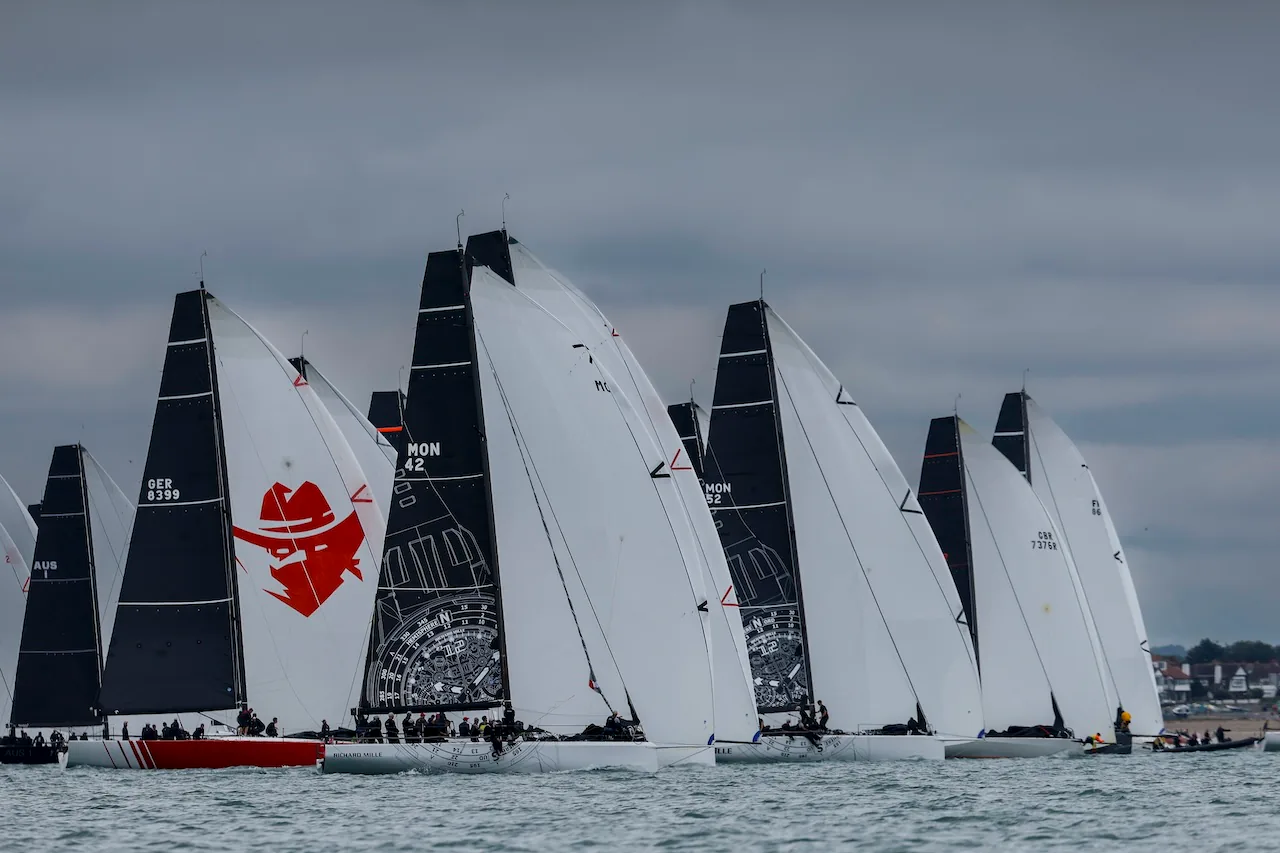
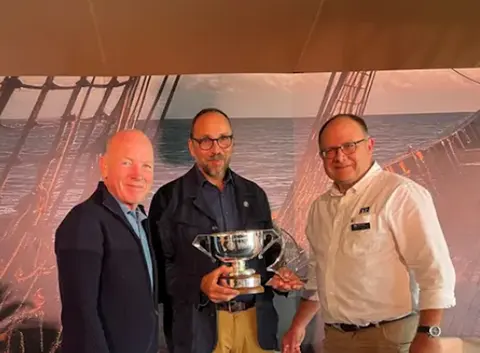
Beau Geste Claims the Britannia Cup The Britannia Cup was presented by King George VI in 1950 and traditionally rewards the leading performance among the regatta's larger racing yachts. Recent Cowes Weeks have brought IRC Zero, IRC One and the Cape 31s together to contest the trophy, producing a fascinating handicap battle between very different designs. Wednesday's long beats west against the tide favoured the powerful TP52s. Four filled the first four positions. At the front was Karl Kwok's Beau Geste, the Hong Kong TP52 that had already established itself as one of the outstanding campaigns of Cowes Week 2026. The cannon fired, the fleet went west and Beau Geste did what she had been doing with impressive regularity all week: she won. For Kwok and his international crew, lifting the Britannia Cup added another significant chapter to a campaign with decades of top-level international racing behind it. Yet they weren't finished. Twenty-four hours later Beau Geste was back for more.
Moving Day Becomes a Game of Tidal Chess Thursday was Royal Navy Day and what golfers would call Moving Day. With just one racing day remaining, there was little room left for recovering from mistakes. The forecast suggested a respectable north-westerly. Warmer-than-expected conditions instead left holes in the breeze while the tide built strongly from the west. Suddenly horsepower mattered rather less. Reading the water mattered considerably more. Eight dayboat classes racing from the committee vessel in Osborne Bay were sent around 12-to-15-mile courses taking them across the Bramble Bank and Southampton Water. The larger boats starting from the famous Royal Yacht Squadron line stretched their legs westwards towards Lymington. It was classic Cowes Week territory. One side of a course could make you look inspired. Five minutes later the same decision could make you wonder why you had ever taken up sailing. Beau Geste Does It Again For Beau Geste, Thursday brought another major prize. The New York Yacht Club Challenge Cup, another of Cowes Week's prestigious trophies, went to Karl Kwok's TP52. More remarkable was the team's IRC Zero scorecard. Six races. Six victories. At an event where tide, traffic and tactical complications routinely upset even the best professional campaigns, six consecutive bullets represented an exceptional display of consistency. Beau Geste had become one of the defining boats of the bicentenary regatta.
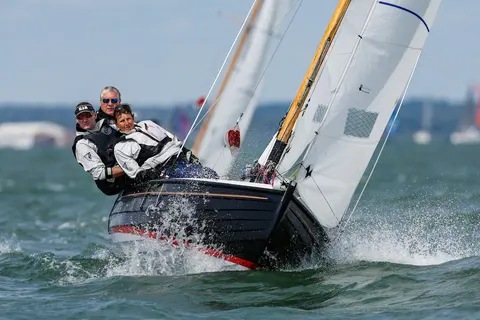
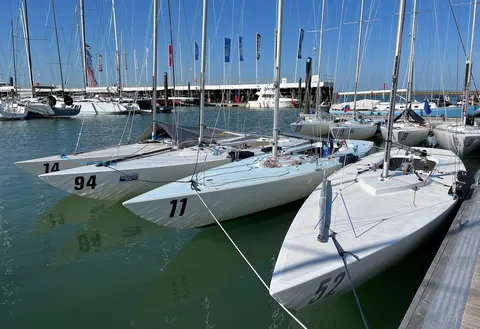
Lone Star Takes Control of the XODs The X One Design fleet provides a very different kind of Cowes Week theatre. These elegant wooden dayboats have been part of Solent racing for generations, with the class dating back to 1911. Winning among nearly 60 of them requires patience, starting skill and an almost instinctive understanding of Solent tide. Going into Thursday, Lone Star, sailed by Phil Lawrence, David King and Nick Froud, was fighting reigning champions Astralita. Then came the moment that can change an entire regatta. Astralita's Tim Copsey, John Tremlett and Fraser Graham were disqualified for being over the line at the second start following an earlier general recall. Lone Star responded with another second place. That was enough to secure the Captains' Cup with a day to spare. Lawrence, a former Royal Lymington Yacht Club Commodore and now Race Director of The Ocean Race, and his crew had remained inside the top two throughout the week. In a 59-boat XOD fleet, that consistency was outstanding.
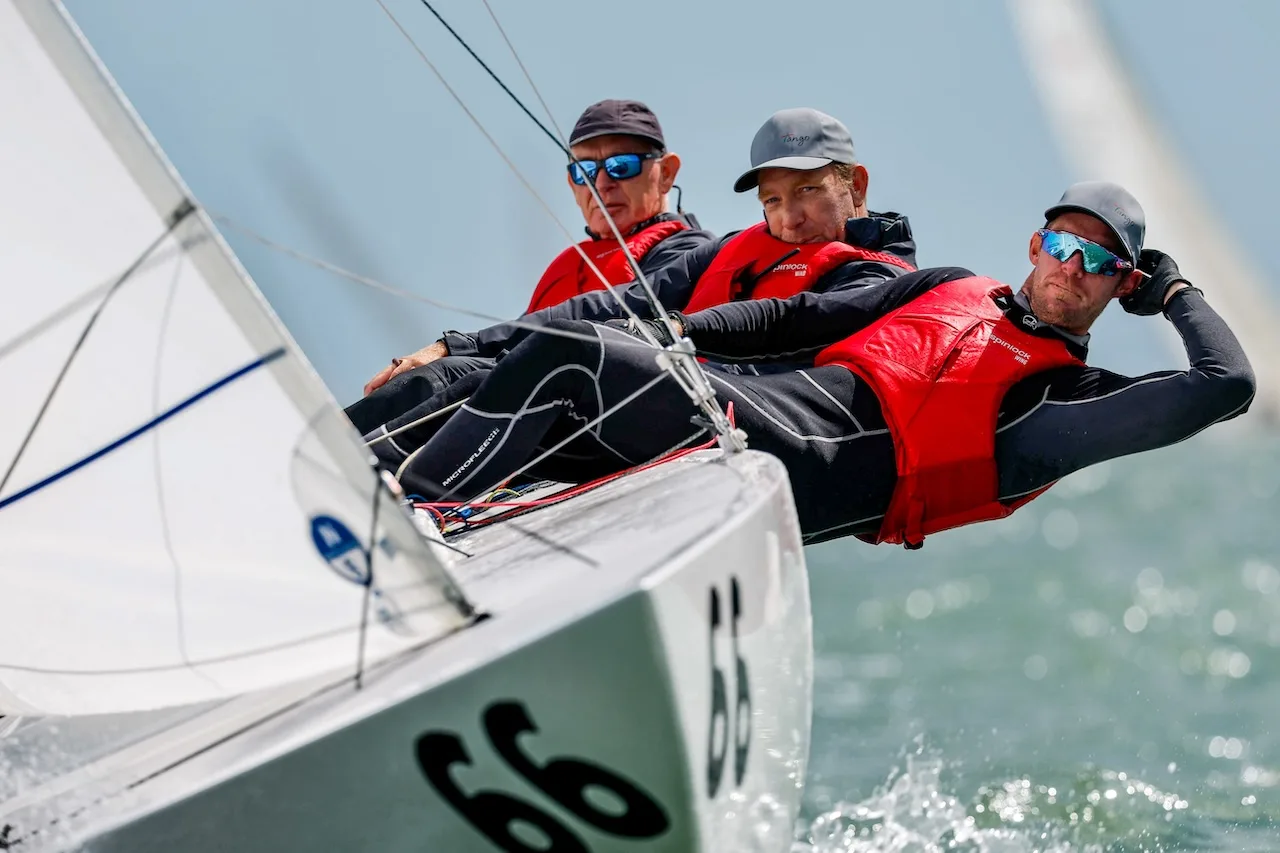
Etchells Battle Goes Down to the Wire Elsewhere, little separated the leaders. Australian Chris Hampton aboard Tango had edged ahead of double world champion Andy Beadsworth and his team in the Etchells. Once discards entered the calculations, the pair were effectively level. That changed the tactical equation. Winning races remained important, although avoiding disaster became equally valuable. Sometimes a championship is no longer about beating 20 boats. It becomes about beating one.
Sir Ben Ainslie Joins the Action There was plenty of star quality on the Solent too. Sir Ben Ainslie raced with sailors from his Athena Pathway youth programme, taking the next generation of high-performance competitors into the fresh Cowes conditions. Their presence fitted particularly well with the bicentenary celebrations. Cowes Week's history matters, but its survival depends upon the sailors who will race here during the next 20, 30 or 50 years. Young competitors from the Scaramouche Sailing Trust provided another example, bringing youngsters from inner-city backgrounds into sailing and introducing them to possible careers in the marine industry.
Old Classes, Serious Racing The beauty of Cowes Week has always been that the biggest trophy isn't necessarily producing the most intense racing. The Sigma 33, once Cowes Week's largest class, remains fiercely supported. Toby Gorman's Stan The Boat had been untouchable, collecting six bullets and securing an unassailable advantage. Sam Laidlaw's Quarter Tonner BLT produced an equally impressive six consecutive victories and looked well placed for Black Group honours. The Swallows had returned to help celebrate the bicentenary, while Portsmouth's Victory fleet provided its customary combination of close racing and enthusiastic shoreside entertainment. North Sails Cowes Week would somehow feel incomplete without them.
A New Trophy for 200 Years A bicentenary deserved something special. Cowes Combined Clubs created the Bicentenary Gold Cup, calculated using results from the opening three days and an overall scoring system designed to give competitors throughout the regatta a chance of winning. The inaugural trophy went to Andy Maskell's High Spirit from Performance Cruiser D. There was something wonderfully appropriate about that result. Cowes Week may attract Olympic champions, international professionals and some extremely expensive racing yachts, yet its heart remains the club sailor. The sailor who prepares the boat all winter. The family crew. The owner who still paints the bottom. The crew who argue about the tide over breakfast before racing one another as hard as anyone on the Solent.
One Day Remained By Thursday evening, some championships had effectively been decided. Others remained beautifully unresolved. That is how Cowes Week should approach its final day. After nearly two centuries of racing, the regatta continues to succeed because it refuses to become only one thing. There are TP52s chasing historic silverware and XODs fighting for inches at the start. There are world champions, youth sailors, Corinthian crews and boats whose designs were familiar on the Solent long before many of today's competitors were born. Wednesday brought the threat of 30 knots. Thursday brought holes in the breeze and awkward tide. Friday would undoubtedly bring something else. The yachts have changed enormously since those first seven boats gathered off Cowes in 1826.
Fortunately, the Solent hasn't become any easier. That remains the point.