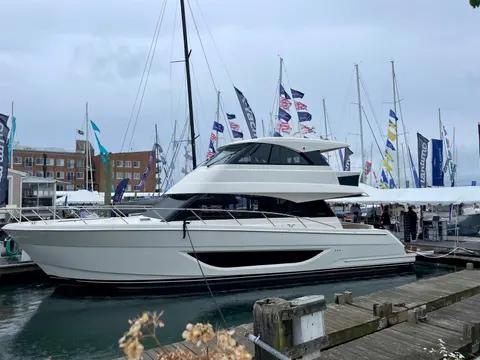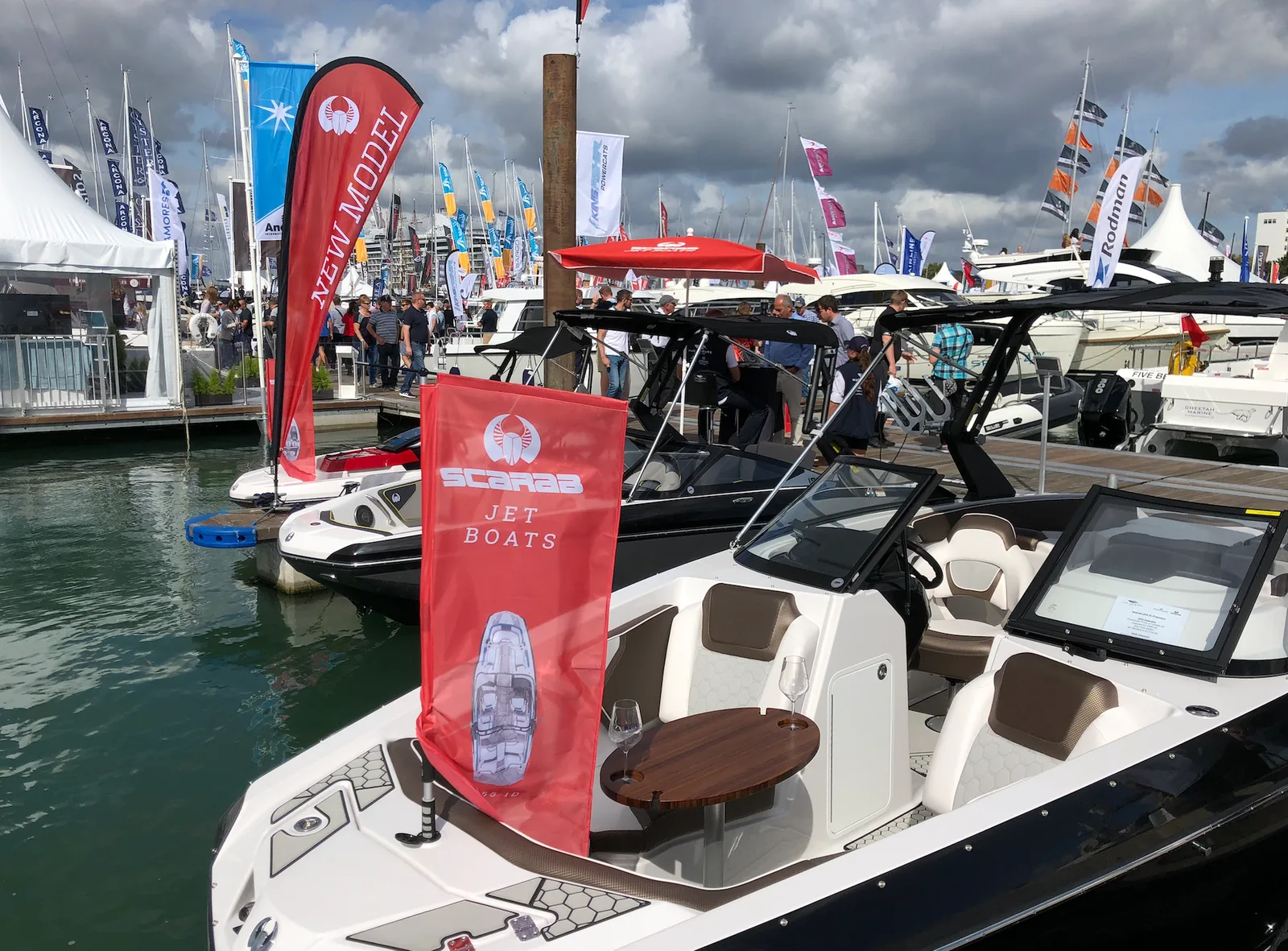
There are few better signs that the British sailing season is beginning to turn towards autumn than the forest of masts appearing beside Mayflower Park. The Southampton International Boat Show 2026 has opened its gates, and for ten days the waterfront has become home to everything from paddleboards and traditional wooden craft to ocean-going yachts and a 27.1-metre Sunseeker.
Running from 18 to 27 September, this is the 57th Southampton International Boat Show, with more than 500 watercraft gathered across the site and over 250 boats occupying what organisers describe as Europe’s largest purpose-built show marina. More than 550 marine brands were confirmed for the 2026 event, giving visitors rather more to investigate than can sensibly be squeezed into a single afternoon.
That enormous range has always been part of Southampton's appeal. This is not simply a showroom for people contemplating the purchase of another yacht. It is one of those rare marine gatherings where somebody considering their first paddleboard can wander a few hundred yards and find themselves standing beside a multi-million-pound motor yacht.
Opening day illustrated the point rather neatly. The largest boat at the 2026 show is the Dorset-built Sunseeker 90 Ocean, measuring 27.1 metres. Organisers placed it alongside a paddleboard from Rockley Watersports, which is celebrating its 50th anniversary this year. One represents a particularly luxurious method of going to sea; the other requires little more than a board, paddle and sufficient balance to avoid an early bath.
Somewhere between those two extremes sits most of the boating world.
New yachts arrive in Southampton For serious boat watchers, one of the strongest reasons for visiting this year's Southampton Boat Show is the number of new models making their first appearances. More than 25 World, UK and Show boat debuts are being presented during the event, supported by more than 20 launches of new marine equipment, technology and gear. Manufacturers represented among the new-boat line-up include Fairline, Princess, Arcona, Delta, Dragonfly, Hallberg-Rassy, J/Boats, J/Composites, Nautitech and several others.
Sailors have some particularly interesting boats to inspect.
The Nautitech 41 Type S is receiving its world debut in Southampton, bringing a performance-orientated approach to cruising-catamaran design. Fountaine Pajot's FP44 is making its UK debut, while the J/40 is also appearing for the first time in Britain. The latter combines the performance heritage associated with J/Boats with the accommodation and handling expected of a modern offshore cruiser.
These launches tell us something about where modern sailing is heading.
Cruising sailors increasingly expect boats that can be handled by smaller crews without surrendering performance. Catamarans continue their march into mainstream European cruising, while designers are attempting to reconcile the demands for greater accommodation, easier handling and faster passage-making. Walking around Southampton's pontoons allows those competing philosophies to be examined within a few hundred yards of one another. It is considerably more revealing than comparing photographs on a computer screen.
A boat show with water underneath it
Southampton possesses one enormous advantage over many international marine exhibitions: the boats are actually floating. There is something important about stepping aboard a yacht while it moves gently against its fenders. Cockpit heights suddenly become meaningful, boarding arrangements can be judged properly and the relationship between deck, pontoon and water becomes obvious.
Better still, visitors do not necessarily have to remain on the pontoon.
The show's Try-a-Boat programme gives people the opportunity to head onto Southampton Water aboard sailing yachts, powerboats and RIBs. Elsewhere, Rockley Watersports is running activities on The Lake, including dinghy sailing, kayaking and paddleboarding, while visitors can even try scuba diving in the Dive Tank. These activities are included within the show ticket.
That matters because boat shows should not merely be about selling boats.
The long-term health of sailing depends upon getting new people onto the water, particularly those who did not grow up in sailing families or yacht clubs. A youngster who spends twenty minutes wobbling around on a paddleboard this weekend may eventually become a dinghy sailor, yacht owner or offshore racer.
Every sailing career starts somewhere.
Serious boats with stories to tell. Several vessels at Southampton carry rather more history and purpose than the polished production yachts surrounding them.
Visitors can step aboard selected attraction vessels including Helen Mary R, named the 2026 ASTO/MCA Sail Training Vessel of the Year, and the 1928 gaff ketch Tectona. Also present is Clipper RX, the next generation of ocean racing yacht developed for the Clipper Round the World Yacht Race.
The RNLI is the show's Charity of the Year for 2026, bringing both a Shannon-class all-weather lifeboat and the new Atlantic 85 Mk4 to Southampton. Visitors can meet RNLI personnel, examine the boats and pick up practical advice about staying safe on the water. For anyone interested in seamanship rather than simply shiny gelcoat, those boats deserve time.
Racing comes into the marina
Saturday 26 September will bring another ingredient when six identical J/70s contest the Key Yachting J/70 Invitational Cup. The one-day knockout event should provide the sort of close-quarters racing for which the J/70 has become known. Identical boats also strip away many of the usual excuses. Boat speed, crew work, starting and tactical judgement become very visible when everyone is working with essentially the same equipment.
It will provide a useful reminder that Southampton is not merely displaying boats as static objects. Many of the yachts sitting quietly alongside the pontoons ultimately exist for precisely the opposite reason: to leave the marina.
Sailing knowledge alongside the boats
A boat show becomes far more interesting when there are people worth listening to, and the 2026 programme includes more than 110 talks, demonstrations and workshops. Among those appearing are Sir Robin Knox-Johnston, Pip Hare, Tom Cunliffe, Monty Halls, Jazz Turner and the Maclean Brothers, the latter appearing following their Pacific Ocean rowing achievement.
That is quite a collection of sea miles gathered in one place.
For sailors, hearing people discuss what happens when plans meet weather, fatigue, equipment failures and the realities of the ocean can often be more valuable than another hour examining chartplotters. Modern electronics are remarkable. Experience remains rather harder to download.
Old skills have not disappeared
One of the more encouraging elements of the 2026 show is the expanded Wooden Boat Stage, where visitors can watch traditional maritime skills including steam bending, ropework, sailmaking, paddle making, deck laying and figurehead carving.
A new Wooden Boat Stage Afloat takes some of that story onto the marina itself, bringing visitors close to traditional and classic craft.
There is a pleasing contrast here.
Elsewhere around the show, manufacturers are demonstrating sophisticated electronics, onboard energy management, electric systems and new communications equipment. More than 20 technology and equipment debuts are scheduled for Southampton this year, covering areas including communications, energy management, climate control, charging and watersports equipment.
A few minutes away, somebody is shaping timber using techniques recognisable to generations of boatbuilders.
Boating needs both worlds.
A show with history behind it
Southampton's boat show has survived because it has changed with boating itself.
The first show was staged in 1969, beginning a relationship between Britain's marine industry and Southampton that has continued for more than half a century. The boats seen along the pontoons today would have appeared almost impossibly sophisticated to visitors wandering the early exhibitions.
Fibreglass production transformed yacht ownership, reliable diesel engines changed cruising, GPS revolutionised navigation and modern electronics have put radar, AIS, detailed charting and weather information onto displays that fit comfortably beside the helm.
Yet the fundamentals have changed surprisingly little. People still come to Southampton to look at boats, argue cheerfully about boats, climb aboard boats they cannot afford and occasionally persuade themselves that the boat they already own would be vastly improved by something they discovered on an exhibition stand.
That may be why the show continues to matter.
Southampton Water provides the proper backdrop
The show is open from 10am until 6pm daily, with late-night activity at The Shipyard continuing until 9pm on Fridays and Saturdays. The final Sunday closes at 4.30pm. Adult online tickets start at £29, while accompanied children aged 15 and under enter free. There are Spitfire flypasts scheduled over Southampton Water during the opening weekend, live music, food and evening entertainment, meaning visitors who have finally exhausted their appetite for winches and engine rooms need not immediately head home.
The boats, however, remain the real attraction.
A boat show ultimately trades in something more powerful than specifications. Every yacht on those pontoons represents the possibility of somewhere else. It might be Cowes on a summer evening, Cherbourg after a night crossing, the West Country after beating down the Channel or an Atlantic landfall after weeks at sea.
For ten September days, those possibilities gather together beside Southampton Water.
Some visitors will leave carrying brochures. Others will leave with new waterproofs, an electronic gadget they did not know they needed or the uncomfortable knowledge that they have fallen in love with another boat.
The fortunate ones may simply leave wanting to go sailing.
That is probably the best thing a boat show can achieve.