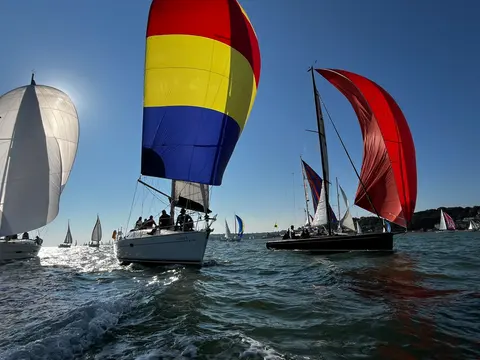
There are some places where a boat show feels as though it has been temporarily dropped into the surroundings. Newport is not one of them.
Here, boats belong.
They sit against a waterfront whose history is inseparable from sailing, yacht racing and the sea. Masts rise above the buildings, varnished timber gleams between showers and the harbour has that unmistakable atmosphere of a town which understands that boats are considerably more than expensive objects tied to pontoons.
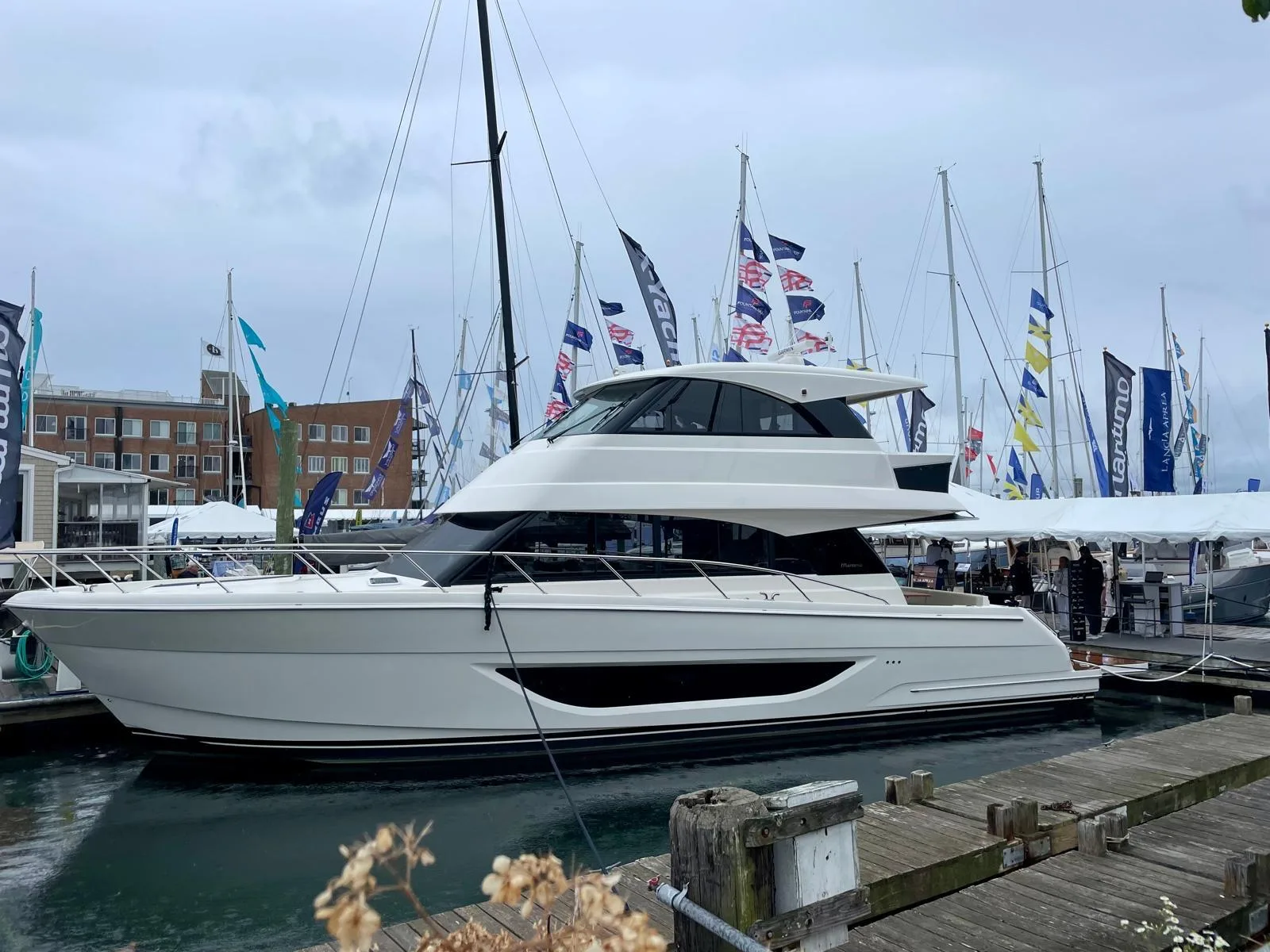
For the 2026 Newport International Boat Show, held from September 17 to 20, the weather occasionally appeared determined to remind everyone that boating does not always arrive with blue skies and a cold drink. Rain swept across the show, waterproofs appeared and the pontoons acquired that familiar shine sailors know rather well. Our photographs from Newport captured the scene perfectly: grey New England skies, wet decks, forests of flags and some very tempting machinery sitting alongside the docks. It hardly seemed to matter.
The Newport International Boat Show spread across more than 17 acres and seven interconnected waterfront sites, running through Newport Yachting Center, Hammetts Hotel, Perry Mill Wharf, Bowen’s Wharf, Bannister’s Wharf and Market Square. Sailboats, motor yachts, brokerage boats, equipment manufacturers and marine businesses effectively took over a substantial chunk of downtown Newport. That geography is one of Newport's great advantages. This isn't an exhibition hall where boats sit beneath artificial lights. You walk along real docks with real water underneath them. Step away from the show and you are immediately back among the restaurants, old buildings and streets of Newport.
A sailing town with history in its wake For British sailors, Newport carries a particularly evocative name. Long before today's boat-show banners appeared along the waterfront, Newport had established itself as one of the centres of American yachting. The New York Yacht Club maintained its famous Newport base at Harbour Court, while Rhode Island became synonymous with yacht building, racing and some of the greatest contests in sailing. Most famously, Newport was the American home of the America's Cup for more than half a century. From 1930 until 1983, the Cup was defended off Newport, creating an extraordinary chapter in sailing history. The great J-Class yachts raced here before the Second World War, followed later by the 12 Metres that became inseparable from the Newport story. Names such as Enterprise, Rainbow and Ranger belong to the earlier era. Later came Columbia, Weatherly, Constellation, Intrepid, Courageous and Freedom. Dennis Conner's defeat aboard Liberty in 1983 finally ended Newport's long run as the Cup's defending venue when Australia II, skippered by John Bertrand, famously took the trophy away from the New York Yacht Club. The America's Cup moved on. Newport's relationship with serious sailing did not. That heritage gives the modern Newport International Boat Show something difficult to manufacture: authenticity.
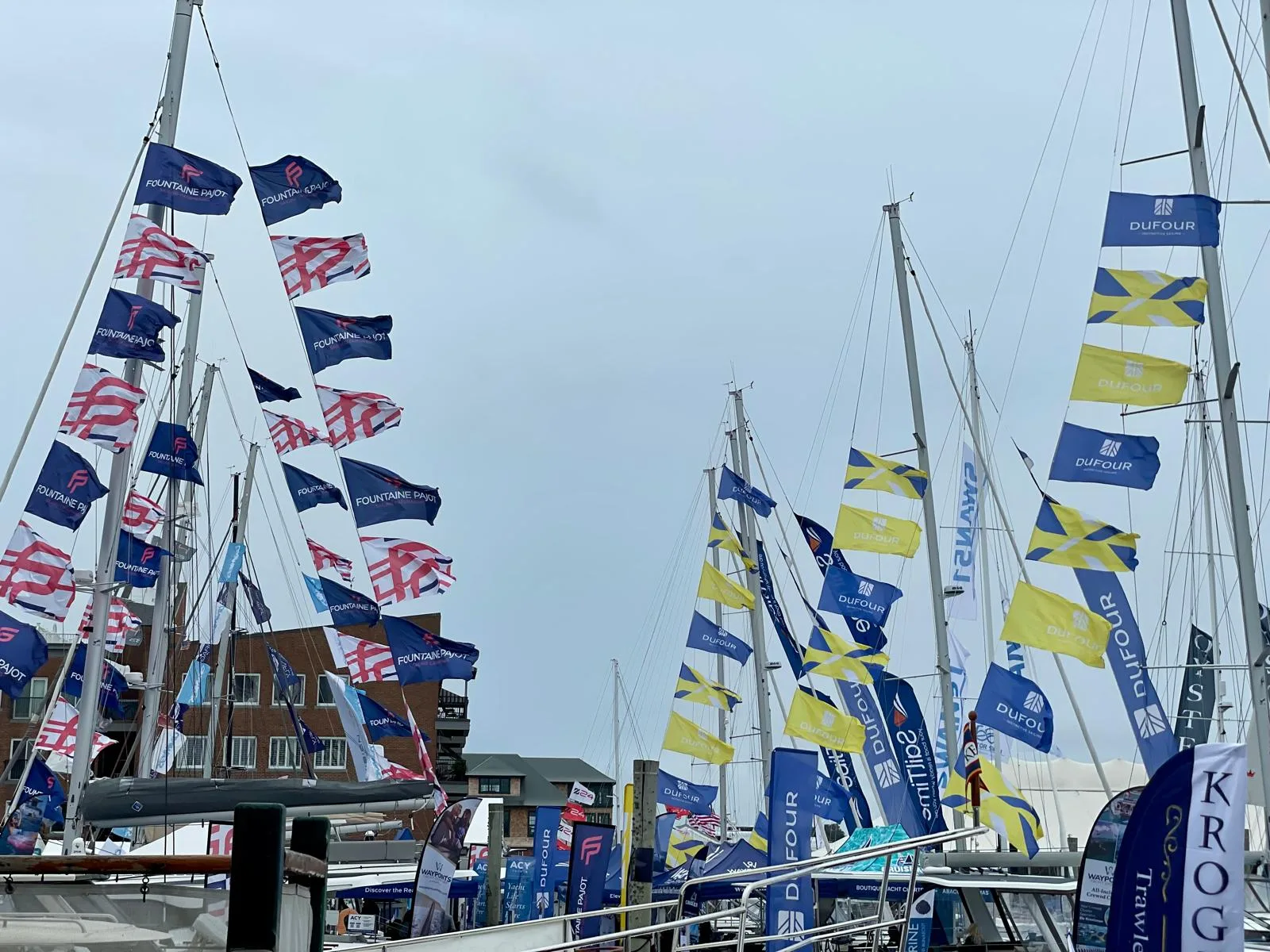
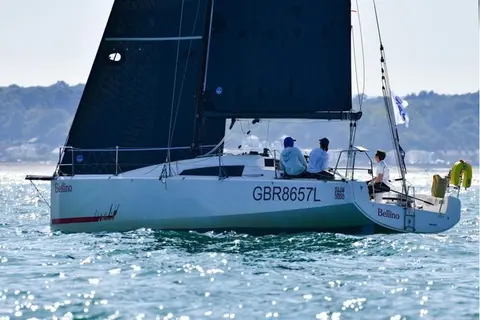
Boats, boats and rather more boats Walk the Newport docks in 2026 and the variety was striking. There were serious cruising yachts and multihulls alongside powerful motorboats, elegant New England-style craft, inflatables, tenders and brokerage yachts. The official show directory included names familiar to European sailors, among them Dufour and Fountaine Pajot, whose flags provided some welcome colour against the grey September sky. Elsewhere there were boats that appeared designed for crossing oceans and others seemingly intended for crossing the bay to lunch in considerable comfort. That mixture is important. Modern boat shows can sometimes become luxury exhibitions with a little boating attached. Newport still manages to retain the sense that people are there because they actually enjoy being on the water. Some will be searching for their next cruising yacht. Others are comparing engines or electronics. A few are almost certainly engaged in that dangerous pastime known to sailors everywhere: climbing aboard something substantially outside the budget and quietly working out how to justify it. The brokerage section added another dimension. The show specifically expanded its collection of brokerage yachts, with boats of up to around 100 feet displayed north of Bannister's Wharf and around Perry Mill. Our photographs show some of that traditional American character particularly well — dark blue hulls, generous quantities of varnished timber and boats which look perfectly at home against a New England dock.
Newport's new ideas New boats are only half the story at a modern show. The Newport for New Products Awards have become an important part of the event, concentrating attention on boats and equipment making their US debut. The programme brings together marine-industry judges and publications including Cruising World, Sailing World, Yachting, Soundings, Passagemaker, Power & Motoryacht and SAIL. The 2026 award for Best New Boat Overall went to the Hood 42 from Lyman-Morse Boatbuilding, a boat whose styling deliberately draws on the golden age of American dayboats while incorporating modern construction and equipment. Perhaps that tells us something about Newport itself. Marine technology is advancing rapidly. Electronics are becoming cleverer, propulsion is changing, onboard systems are increasingly integrated and designers continue searching for more space, speed and efficiency. Yet sailors still respond to a beautiful sheer line and a boat that simply looks right. Some things resist software updates.
More than a floating showroom Newport also made a noticeable effort to put seamanship alongside salesmanship. The programme included practical docking tuition, 90-minute on-water training sessions and technical courses covering subjects such as electrical troubleshooting, cable sizing, crimping and gelcoat repair. The Cruisers Classroom offered sessions on navigation, weather, maintenance, safety, diesel engines, anchoring and boat handling. A new Fishing Village for 2026 added demonstrations, tackle and electronics displays, seminars and a 50-foot casting pond, broadening the show beyond the traditional yacht and powerboat audience. That may not have the glamour of a gleaming new yacht, although it reflects something important about boating. Eventually, somebody has to know what they're doing. Beautiful joinery and enormous navigation screens are lovely things to have. Knowing how to bring the boat alongside when the wind is blowing you off the pontoon remains rather useful.
Rain is part of the game The photographs sent to Old Sea Dogs from Newport show a rather different boat-show atmosphere from the traditional marketing image. There are no impossibly blue skies. Instead, there are wet pontoons, water droplets, grey clouds and visitors wandering between boats while the weather does what coastal weather frequently does. Somehow it suits Newport. A harbour looks different in the rain. Colours deepen, varnish shines and the flags become brighter against a slate-grey sky. Perhaps more importantly, people continue looking at boats. Anyone seriously considering owning one is going to encounter rain eventually. Possibly sooner than expected. Newport even chose Big Weather Gear featuring Henri-Lloyd as the show's official outerwear sponsor for 2026, which proved particularly appropriate when the weather arrived.
The attraction of Newport There are larger boat shows in the world and there are shows where the yachts are bigger, the sunshine more dependable and the hospitality considerably more extravagant. Newport offers something else. It has history under its feet. Walk those wet docks and it isn't difficult to imagine the 12 Metres heading out towards the racecourse, or the crews and designers who once arrived here determined to defend or capture the America's Cup. Today's boats are different. Carbon fibre, sophisticated electronics, enormous multifunction displays and increasingly complex onboard systems would have seemed like science fiction to sailors from Newport's earlier racing years. The reason people gather around them hasn't changed very much. We still want to see what's new. We still peer into engine rooms, run a hand along the woodwork, inspect cockpits and stand at helms imagining where we might go. Most of us eventually walk back down the passerelle without buying the boat.
Probably just as well. Yet every now and again, one particular yacht makes somebody stop, turn around and climb aboard for a second look. That is when boat shows become dangerous. Newport has been encouraging that sort of behaviour for a very long time. Rain or no rain, the 2026 Newport International Boat Show showed that America's sailing capital has lost none of its ability to make sailors dream.