What the race is
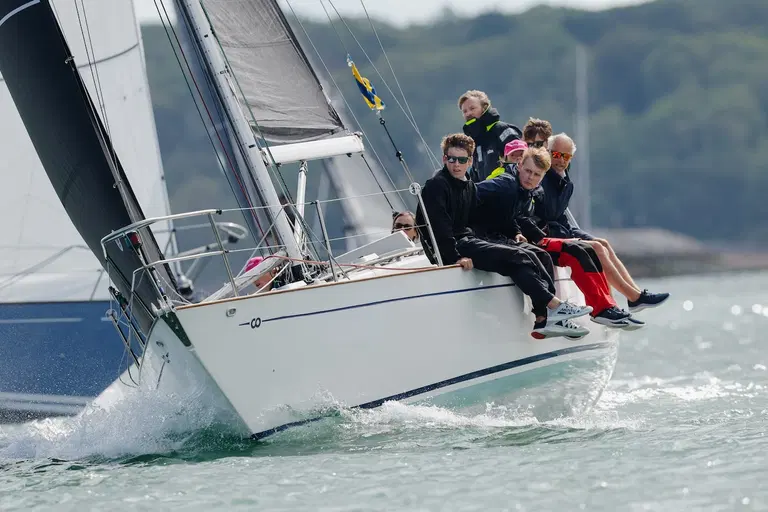
The Rolex Fastnet Race is an offshore yacht race organised by the Royal Ocean Racing Club (RORC). The official race site describes it as the race upon which the RORC was founded in 1925, and as having grown into the world's largest offshore race by entry.
Race documents, entry information and news are published at rolexfastnetrace.com and via RORC channels.
Next edition date
The official Rolex Fastnet Race site states that the 2027 race starts on 24 July 2027. Organiser materials also refer to race village activity in the days around the start; confirm village dates and berthing notices on the official site closer to the event.
Course
According to the official site, the 52nd edition sets sail from Cowes with the finish in Cherbourg-en-Cotentin, France, on a course of 695 miles. The finish is in Cherbourg for a fourth time.
The published route starts off the Royal Yacht Squadron line at Cowes, leaves the Solent through the Needles Channel, follows the southern English coast westward, rounds Land's End, crosses the Celtic Sea to round Fastnet Rock off south-west Ireland, then returns on a largely reciprocal course, rounding the Isles of Scilly before finishing at Cherbourg.
How to follow and watch
The start off Cowes is the principal shore spectacle for UK audiences. Finish coverage concentrates on Cherbourg-en-Cotentin. Official tracking and race news are published through RORC / Rolex Fastnet Race channels.
Cowes Week and Round the Island hubs on Old Sea Dogs cover other Solent fixtures in the same summer period; SailGP's Portsmouth event dates can overlap the Fastnet window in some seasons — check each organiser's calendar rather than assuming a combined timetable.
Related Old Sea Dogs stories that mention the Fastnet Race are listed automatically below.
History
The Fastnet Race was first sailed in 1925 and is bound up with the founding of the Royal Ocean Racing Club. The classic course leaves the Solent, rounds the Fastnet Rock off Ireland’s south-west coast, and finishes in southern England — historically Plymouth, and in recent editions Cherbourg. Rolex has been title partner of the modern Rolex Fastnet Race.
The Fastnet Challenge Cup is awarded to the yacht with the best corrected time under IRC. Line honours goes to the first monohull (and, separately, leading multihulls) to finish. The rock itself remains the race’s defining offshore mark; fleet sizes in the Cherbourg era have climbed past four hundred boats, from 30-footers to IMOCAs and Ultime trimarans.
The 1979 Fastnet is the darkest chapter in ocean-racing history. A severe storm tore through the fleet in the Celtic Sea; fifteen competitors died, dozens of yachts were abandoned, and the rescue services mounted one of the largest peacetime operations of their kind. The inquiry that followed reshaped offshore design, stability standards, safety equipment and race organisation worldwide.
Course records have tumbled as maxis and foiling multihulls arrived. On the Cowes–Cherbourg course, MACIF (Charlie Dalin) set the monohull mark of 2 days 7 hours 16 minutes 26 seconds in 2023; Ultime SVR Lazartigue (François Gabart) set the multihull mark of 1 day 8 hours 38 minutes 27 seconds the same year. Double-handed crews have repeatedly won overall — including Alexis Loison with his father Pascal on Night and Day in 2013, and again with Jean-Pierre Kelbert on Léon in the 2025 centenary edition.
Past winners
Recent Rolex Fastnet Race editions (biennial) with monohull line honours and Fastnet Challenge Cup (IRC overall) winners, as published on the official past-winners page.
| Year | Monohull line honours | Fastnet Challenge Cup (overall) |
|---|---|---|
| 2025 | Black Jack 100 — Tristan Le Brun (Remon Vos) | Léon (JPK 1050) — Alexis Loison & Jean-Pierre Kelbert |
| 2023 | MACIF (IMOCA) — Charlie Dalin | Caro (Botin 52) — Max Klink |
| 2021 | Skorpios (ClubSwan 125) — Fernando Echavarri | Sunrise (JPK 11.80) — Tom Kneen |
| 2019 | Rambler 88 — George David | Wizard (VO70) — David & Peter Askew |
| 2017 | Rambler 88 — George David | Lann Ael 2 (JND 39) — Didier Gaudoux |
| 2015 | Comanche — Jim Clark & Kirsty Hinze Clark | Courrier Du Leon (JPK 10.80) — Géry Trentesaux |
| 2013 | Esimit Europa 2 — Igor Simcic | Night and Day (JPK 10.10) — Pascal & Alexis Loison |
| 2011 | Abu Dhabi (VO70) — Ian Walker | Rán 2 (JV72) — Niklas Zennström |
| 2009 | ICAP Leopard — Mike Slade | Rán 2 (JV72) — Niklas Zennström |
| 2007 | ICAP Leopard — Mike Slade | Chieftain (Cookson 50) — Ger O’Rourke |
| 2005 | Maximus — Charles St Clair Brown / Bill Buckley | Iromiguy (Nicholson 33) — Jean-Yves Château |
| 2003 | Alfa Romeo — Neville Crichton | Nokia Enigma — Charles Dunstone |
| 2001 | Stealth — Giovanni Agnelli | Tonnerre de Breskens — Piet Vroon |
Competitor notes
Offshore safety, training and eligibility rules are set in the Notice of Race and RORC prescriptions for the year. Crews should read those documents in full rather than relying on a summary hub.
Solent start logistics overlap with other July traffic: ferry routes, racing fleets and spectator craft. Plan berthing early if staying in Cowes before the gun.
Frequently asked questions
When is the Rolex Fastnet Race 2027?
The official race site states a Cowes start on 24 July 2027. Confirm village and document dates on rolexfastnetrace.com.
What is the 2027 course?
According to rolexfastnetrace.com, the 52nd edition runs from Cowes, rounds Fastnet Rock, and finishes in Cherbourg-en-Cotentin on a 695-mile course.
Who organises the Fastnet Race?
The Royal Ocean Racing Club (RORC).
Where should I check for entry and safety rules?
The Notice of Race and RORC prescriptions on the official Rolex Fastnet Race site.