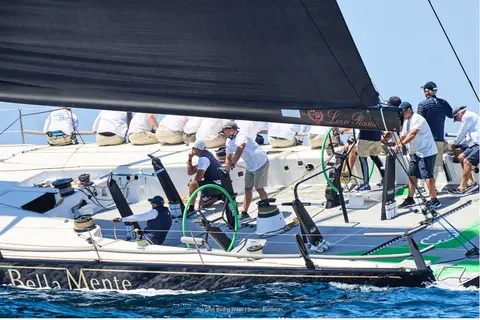
A £1.9 million yacht is among roughly £50 million of assets frozen after the CPS won its second-ever Unexplained Wealth Order against two British nationals known as Mr X and Ms X.
Boats have a habit of turning up wherever the authorities go looking for hidden money, and the latest case to send British readers to their search engines is no exception. On 23 October the High Court granted the Crown Prosecution Service an Unexplained Wealth Order and an Interim Property Freezing Order against two British nationals and their associated companies, freezing assets the CPS valued at around £50 million: a yacht worth approximately £1.9 million, a bank account holding around £2.6 million, eight vehicles worth approximately £600,000, and several properties in England, France, Spain and Portugal.
The order came out of a joint investigation by the CPS Proceeds of Crime Division and the North West Regional Organised Crime Unit into the laundering of international illicit funds in the United Kingdom, and the pair now have three months to show that the money used to buy the assets was lawfully obtained. "They are now legally required to prove how they obtained their wealth, or risk having their assets seized," said Adrian Foster, Chief Crown Prosecutor for the Proceeds of Crime Division. The CPS is careful to add that these are civil proceedings with a lower standard of proof than a criminal trial, and that Mr X and Ms X have not been charged with or convicted of any criminal offence.
What makes the tool unusual, and the reason it has caught the public eye, is that it turns the usual order of things on its head. Normally the state must win a conviction before it can take back the proceeds of crime; under the Proceeds of Crime Act 2002, as the CPS explains, an Unexplained Wealth Order instead obliges the owner to explain where the money came from, and if they cannot or will not, the prosecutors can apply for a Civil Recovery Order and take the assets without any conviction at all. It is, in the CPS's own description, an investigative tool rather than a final order, but one with a very sharp edge, and the CPS says its Proceeds of Crime Division has obtained 16 Civil Recovery Orders over property worth more than £11 million in the last four years.
Why a yacht, every time? Partly because a boat is a large, portable, glamorous lump of value that can be bought abroad, moored abroad and moved at short notice, and partly because the registers, berthing contracts and brokers' files that surround it leave exactly the kind of paper trail investigators love to follow. The same instinct runs through the very different, sanctions-driven cases of recent years, from the seized superyacht Tango to Sailing Yacht A, whose Italian custodians are still wrestling with who pays to keep her afloat, and it is a reminder that a boat is often the easiest asset of all for a court to put its finger on.
For the ordinary owner, the lesson is less dramatic but still worth noting. Anyone buying a boat, particularly a used one bought privately or through an overseas company, should expect brokers and banks to ask more questions about the source of funds than they once did, and should keep the bill of sale, registration papers and payment records together and safe. A tidy file costs nothing and, as Mr X and Ms X are now discovering, three months is not long to find the paperwork if someone in a wig asks for it.