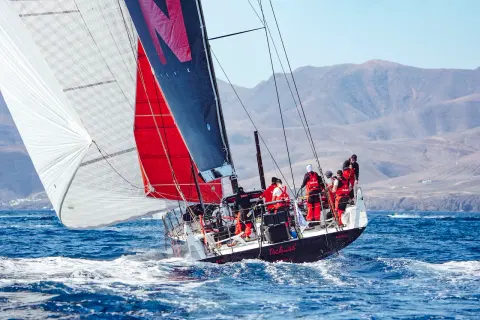
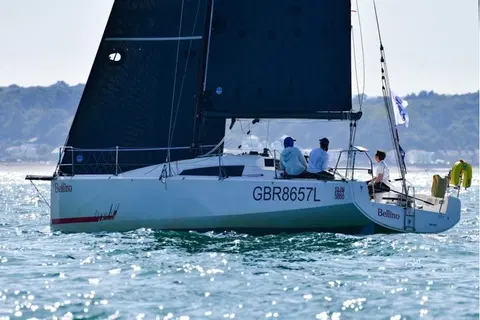
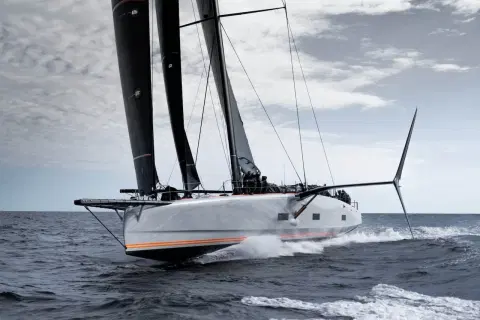
For most spectators, the RORC Transatlantic Race began with a starting cannon, colourful sails disappearing over the horizon and another fleet setting course for the Caribbean.
Those who have prepared an ocean racing yacht know differently.
The race had already begun weeks, and in many cases months, before a single dock line was slipped.
It began quietly in the boatyards.
It began beneath travel lifts.
It began inside engineering workshops where mechanics dismantled hydraulic systems, riggers climbed masts one final time and navigators studied weather charts stretching thousands of miles across the Atlantic Ocean.
Most of all, it began in Marina Lanzarote.
When the fleet departed on 10 January 2027 for Antigua, each crew carried far more than food, sails and spare parts.
They carried months of preparation, thousands of hours of work and the confidence that only careful planning can provide before committing to 3,000 nautical miles of open ocean.
That has become one of the defining characteristics of the Royal Ocean Racing Club's Transatlantic Race.
The Atlantic rarely forgives shortcuts.
A Partnership Built Over More Than a Decade
The relationship between the Royal Ocean Racing Club and Calero Marinas has grown steadily over thirteen editions of the race.
During that time, Marina Lanzarote has become much more than a convenient departure point.
It has evolved into one of Europe's most respected preparation bases for offshore racing campaigns.
Each winter, yachts arrive from across Europe and beyond.
Maxi yachts berth alongside Class40s.
State-of-the-art multihulls share the pontoons with double-handed campaigns preparing for their first Atlantic crossing.
Professional race teams work only a few metres from Corinthian sailors fulfilling lifelong ambitions.
Despite the diversity of boats and budgets, every crew shares one objective.
Leave Lanzarote knowing their yacht is ready for whatever the Atlantic decides to deliver.
Jos Juan Calero, Chief Executive Officer of Calero Marinas, spoke proudly of the long-standing partnership with the Royal Ocean Racing Club.
Years of investment have transformed Marina Lanzarote into a facility capable of supporting some of the world's most sophisticated racing yachts while simultaneously showcasing the island as one of Europe's leading destinations for sailing, sport and sustainable nautical tourism.
That investment has also benefited the local community, bringing international racing to the island and reinforcing Lanzarote's growing reputation as a year-round centre for ocean sport.
Where Ocean Racing Campaigns Come Together
Walking through Marina Lanzarote during race week offered a fascinating insight into modern offshore racing.
There were no grandstands.
No roaring crowds.
No dramatic countdown clocks.
Instead, there was quiet concentration.
Engineers disappeared beneath hulls carrying toolboxes.
Sailmakers inspected every stitch.
Weather routers compared forecasts.
Crew members loaded provisions designed to last almost three weeks.
Containers arrived.
Spare parts were unpacked.
Rigging crews worked high above the pontoons.
Everywhere there was purpose.
Every task, however small, could ultimately decide whether a campaign succeeded or failed somewhere in the middle of the Atlantic.
Located in the heart of Arrecife, Marina Lanzarote proved perfectly suited to that final preparation.
Its deep-water berths accommodated everything from record-breaking trimarans to performance cruising yachts.
Technical specialists were close at hand.
Equipment could be delivered efficiently.
Restaurants, supermarkets, hotels and transport links sat only minutes away.
Lanzarote Airport offered straightforward international connections, allowing crew changes and last-minute arrivals without unnecessary complication.
Those practical details rarely make headlines.
They frequently determine whether an offshore campaign begins smoothly.
Preparation Wins Ocean Races
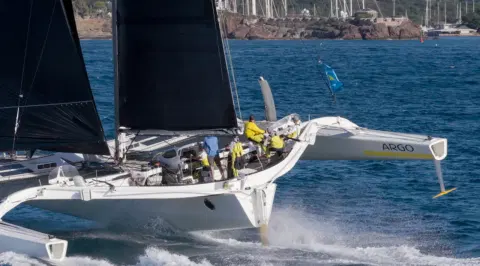
One of the finest recent examples came from Jason Carroll's MOD70 Argo.
Before the 2026 race, the spectacular trimaran spent almost three months based in Lanzarote undergoing an exhaustive refit.
Nothing escaped inspection.
The mast.
Foils.
Appendages.
Hydraulic systems.
Winches.
Bearings.
Structural components all underwent detailed examination using non-destructive testing techniques, allowing engineers to identify issues invisible to the naked eye.
Project Manager Chad Corning described the work as controlling every variable possible before heading offshore.
That philosophy paid handsome dividends.
Argo crossed the Atlantic faster than any multihull before her, establishing a new race record between Lanzarote and Antigua.
The lesson extended well beyond one winning yacht.
Ocean races are seldom won by luck.
They are won through preparation.
Whether aboard a seventy-foot trimaran or a modest double-handed racer, confidence offshore begins with meticulous work alongside the dock.
World-Class Facilities for World-Class Campaigns
Supporting such ambitious programmes requires facilities capable of handling the largest and most technically advanced racing yachts afloat.
Marina Lanzarote has steadily developed exactly that capability.
Its impressive shipyard includes an 820-tonne travel lift, more than 20,000 square metres of hard-standing, deep-keel pits and lifting equipment capable of handling superyachts, maxi racers and large multihulls.
Campaign offices.
Container storage.
Engineering workshops.
Specialist contractors.
Everything needed for an international offshore campaign exists within easy reach.
One further advantage has become increasingly attractive.
Refit and maintenance costs remain significantly lower than many comparable facilities in northern Europe, allowing teams to devote more of their budget to racing rather than infrastructure.
Lanzarote's Atlantic Advantage
Long before organised yacht racing existed, the Canary Islands served as a staging post for ships preparing to cross the Atlantic.
Trade winds carried merchant vessels westwards for centuries.
Modern racing yachts continue to follow remarkably similar routes.
That geographical advantage remains one of Lanzarote's greatest assets.
Consistent winter sunshine.
Reliable trade winds.
Direct Atlantic access.
Mild temperatures.
Exceptional sailing conditions throughout the European winter.
Little wonder so many professional teams now choose the island as a training base.
Away from the marina, crews discovered an island built around outdoor sport.
Cyclists climbed volcanic roads.
Surfers chased Atlantic swells.
Triathletes trained throughout the winter.
Kiteboarders and windsurfers took advantage of Lanzarote's dependable breezes.
Elite sport has become woven into the island's identity.
More Than a Marina
One of the most impressive aspects of Marina Lanzarote has never been its engineering capability.
It has been the atmosphere.
Schoolchildren visited the boats.
Local residents met crews from around the world.
Restaurants filled with sailors discussing weather forecasts over dinner.
The pre-race gala dinner brought competitors together before the serious business of crossing an ocean.
Those moments reminded everyone that offshore racing has always been about more than competition.
It is about people.
Friendships.
Shared experience.
Mutual respect.
Every Atlantic crossing begins with anticipation.
Every crew wonders what lies ahead.
Every sailor leaves knowing the ocean will eventually expose any weakness.
Preparation cannot guarantee success.
It can ensure that when the trades finally fill the sails and Lanzarote disappears beyond the horizon, the crew can focus entirely on sailing rather than worrying about what they forgot to do ashore.
That confidence may prove Marina Lanzarote's greatest contribution to the RORC Transatlantic Race.
For thirteen editions, it has quietly become the place where Atlantic dreams stop being plans and start becoming reality.