IMOCA Roared Back to Life as the 1000 Race Opened the 2026 Globe Series
There is no easing yourself gently back into solo offshore racing. Not in an IMOCA. Not after the Vendée Globe.
And certainly not when your first job of the new season is to disappear into the North Atlantic for a thousand miles of cold fronts, tactical traps and sleep deprivation.
That was the reality facing seven skippers as the 2026 IMOCA Globe Series opened from Port-la-Forêt with the start of the 1000 Race — a compact but demanding offshore contest stretching north to the Fastnet Lighthouse before diving south again into the Bay of Biscay.
In reality, it is a brutal reintroduction to life alone at sea aboard some of the most advanced offshore racing machines ever built.
Back Alone After the Vendée Globe
For several skippers, the race marked far more than the start of a new championship.
It marked a return to solo sailing after months away from the intensity of single-handed offshore competition.
The last time many of them had raced alone offshore, they had been somewhere in the Southern Ocean trying not to destroy themselves or their boats in the middle of the night.
Different race. Different weather. Same pressure.
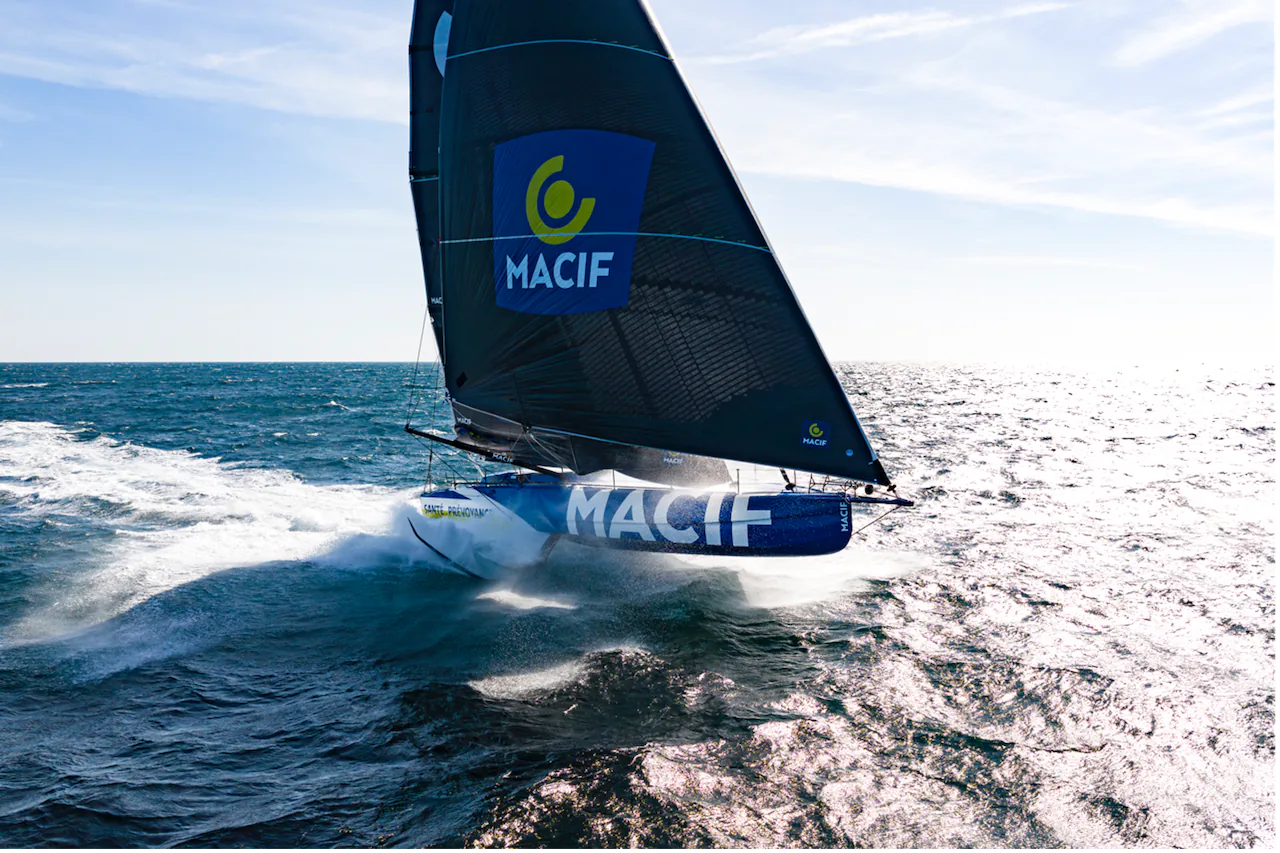
Sam Goodchild returned aboard the formidable MACIF Santé Prévoyance — the 2023-launch foiler that carried Charlie Dalin to victory in the last Vendée Globe.
That alone changes expectations.
When you step aboard the fastest boat in the fleet, nobody asks whether you are competitive.
They ask whether you can win.
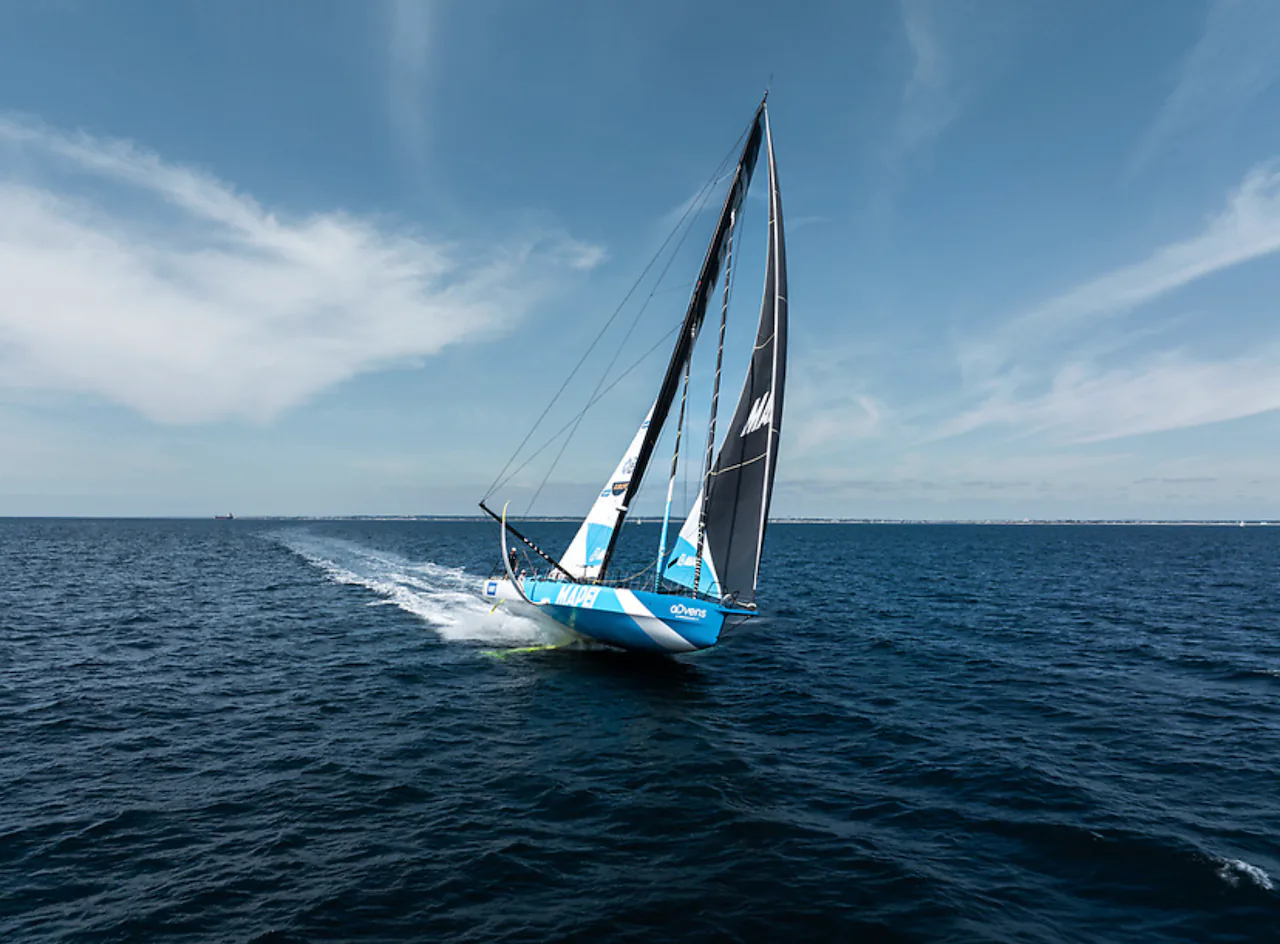
One of the most watched sailors on the dock was Violette Dorange. After capturing attention during the Vendée Globe aboard a daggerboard IMOCA, Dorange stepped into an entirely different world for 2026 — taking control of the foiling IMOCA previously raced under the Initiatives Cœur campaign. And that changes everything.
They are more violent. More physical. More unstable. More mentally demanding.
At full speed, these boats do not feel like displacement yachts anymore.
They feel like aircraft trying to escape the ocean.
For Dorange, the 1000 Race represented the first proper opportunity to begin understanding exactly what this new machine could do offshore.
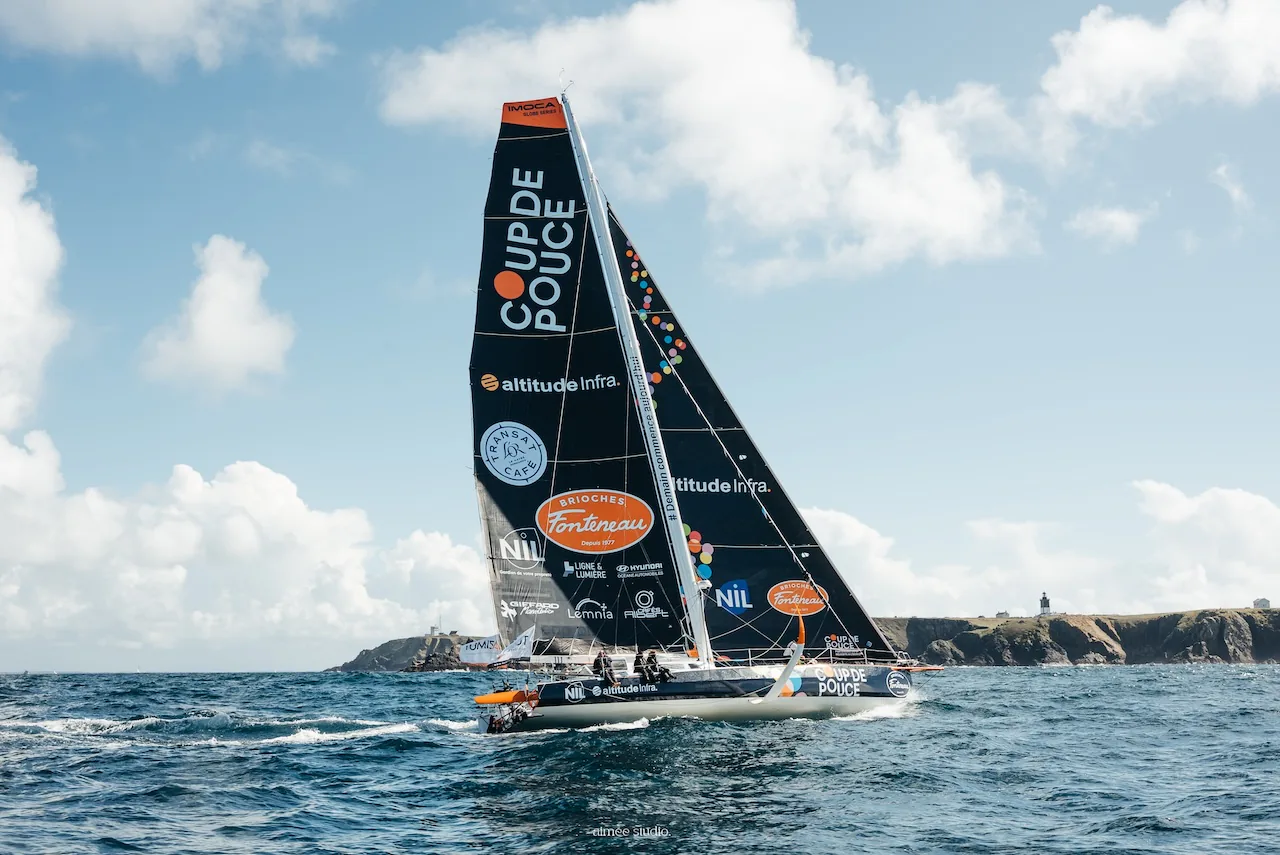
The race also marked a major transition point for a new generation of sailors stepping into solo IMOCA competition for the first time. And there are few bigger jumps in sailing. One moment you are racing Class40s or Figaros. The next you are managing a 60-foot carbon missile capable of crossing oceans at 30 knots. Corentin Horeau arrived with serious solo pedigree after winning the 2023 Solitaire du Figaro, but the move into IMOCA racing aboard MACSF represented an entirely new level of complexity and intensity.
Meanwhile Nicolas d’Estais began his own IMOCA journey aboard Café Joyeux after building experience in the fiercely competitive Class40 fleet. And then there was Francesca Clapcich. Known globally for her crewed offshore racing campaigns, particularly in The Ocean Race, Clapcich now stepped into one of sailing’s loneliest environments:
No crew. No rotation. No backup.
Just the skipper, the weather files and the boat.
The Bay of Biscay Never Gives Anything Away The course itself may not carry the mythology of Cape Horn or the Southern Ocean, but sailors know the Bay of Biscay can become deeply unpleasant very quickly. Especially early season. Especially alone. And especially aboard foiling IMOCAs still being dialled in after major winter refits.
The return south would become a game of managing Atlantic systems, compression zones and fatigue. Because in offshore racing, the miles themselves are rarely the real problem.
A New IMOCA Cycle Begins
The 2026 season also marked the beginning of a fresh competitive cycle for the IMOCA class. The 2025 calendar had leaned heavily toward double-handed and fully-crewed racing.
Now the focus swung sharply back toward solo performance. That matters.
Because solo racing remains the soul of IMOCA. Yes, the class has expanded into crewed events and global spectacles, but the psychological heart of the fleet is still rooted in the idea of one sailor alone against the Atlantic. And the 1000 Race reminded everyone of that immediately.
The seven-skipper line-up featured a fascinating mix of experience, transition and ambition:
Arnaud Boissières – April Marine Élodie Bonafous – Association Petits Princes – Quéguiner Francesca Clapcich – 11th Hour Racing Violette Dorange – Initiatives Cœur Nicolas d’Estais – Café Joyeux Sam Goodchild – MACIF Santé Prévoyance Corentin Horeau – MACSF
The 1000 Race does not have the fame of the Vendée Globe. No massive village. No helicopters hovering overhead. No global television circus.
Where new boats are tested. Where reputations quietly form. Where mistakes still hurt. And where skippers rediscover what solo sailing actually feels like once the shoreline disappears.
Cold coffee. Wet charts. Twenty-minute naps. And the Atlantic waiting patiently for somebody to get something wrong.
Exactly as offshore racing should be.