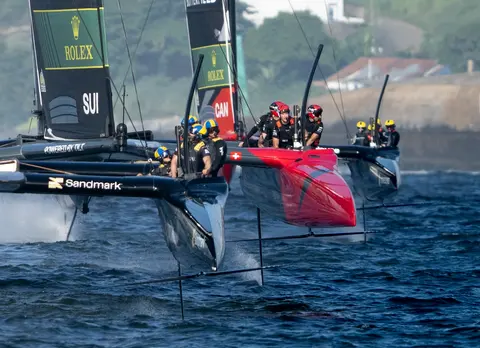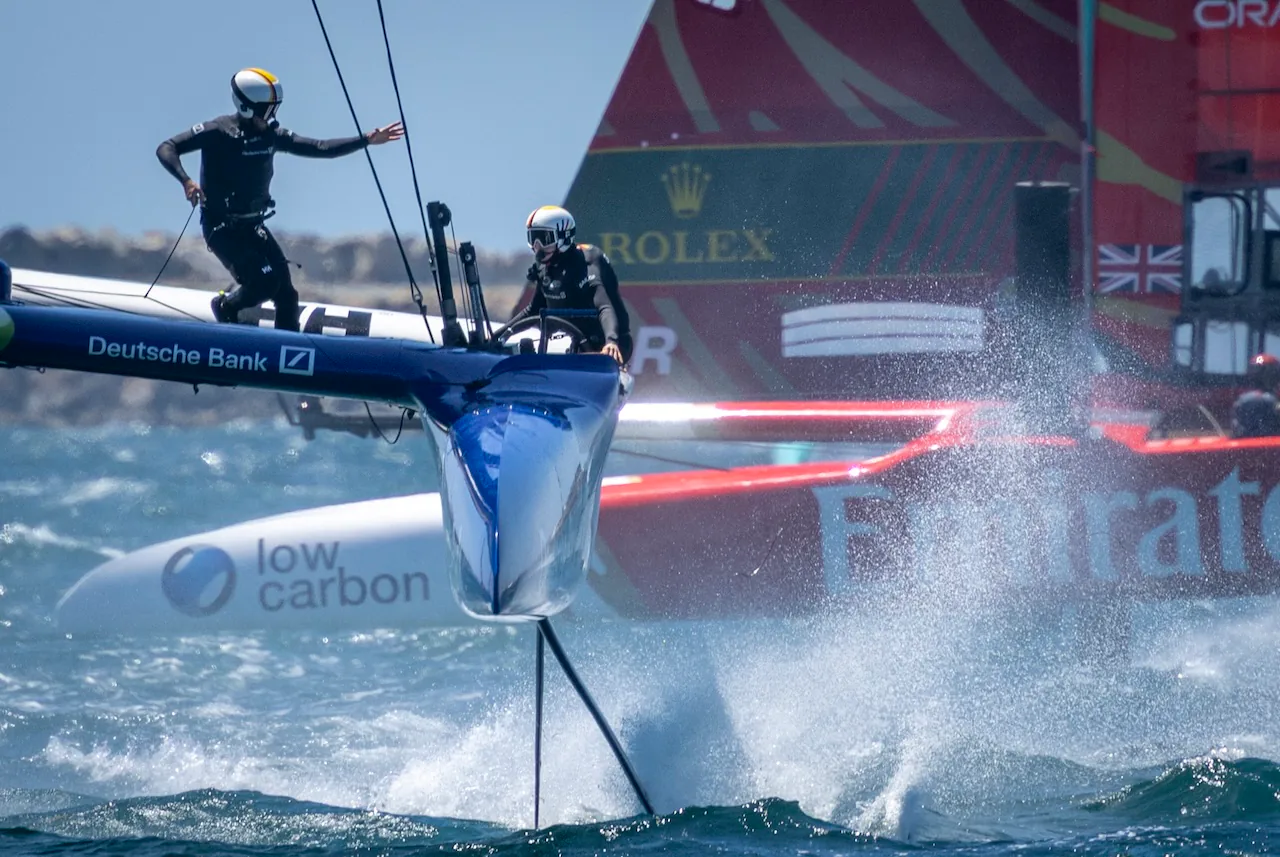
Few places in world sailing make high-performance racing look as outrageously fast as Bermuda Great Sound. Flat water. Clean breeze. Foiling catamarans flying at motorway speeds just metres from shore. When the Rolex SailGP Championship returned to Bermuda for the fifth event of the 2026 season, the atmosphere already felt charged before a single F50 hit the racecourse.
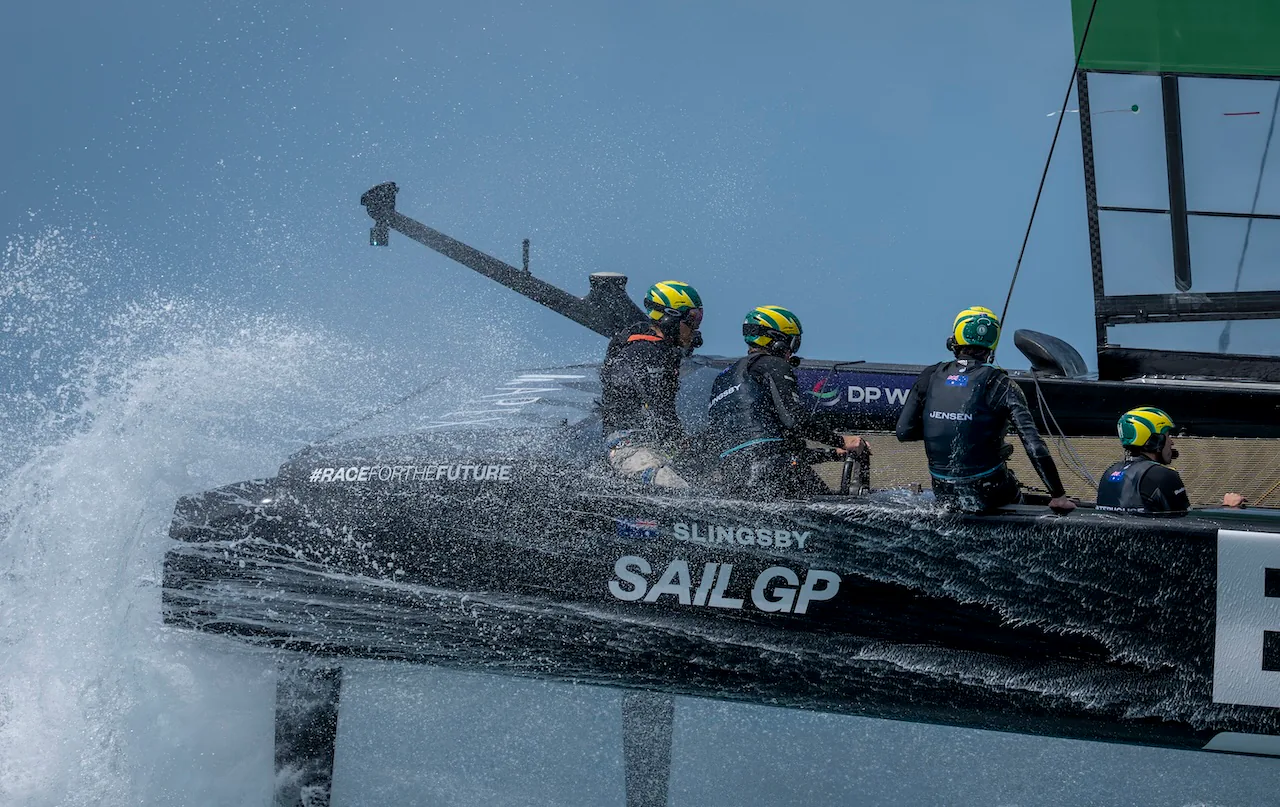
The championship table had tightened. Crews had shifted. Pressure had increased. Nobody arrived in Bermuda comfortable. That was especially true for the BONDS Flying Roos, who entered the event leading the overall standings after a commanding performance in Rio. Australia held a seven-point advantage over the chasing pack, but even three-time SailGP champion Tom Slingsby knew Bermuda would be different. Because on the Great Sound, outright boat speed rarely guarantees survival. Everybody is fast there. Very fast.
Bermuda has always exposed the finer details inside SailGP. The Great Sound removes excuses. There are no massive ocean swells masking mistakes. No chaotic sea states disrupting foil stability. No hiding behind raw horsepower. The water is so flat the boats operate close to their absolute limits almost continuously. That changes everything. Tiny tactical errors become brutally expensive. Bad starts get punished instantly. One missed manoeuvre can bury an entire race. Slingsby understood that perfectly heading into the weekend, acknowledging that Bermuda would likely come down to pure racing skill rather than technical performance differences between teams. He was right. Because when every F50 is fully lit up and foiling cleanly at nearly 100 kilometres per hour, the margins become microscopic.
Few teams entered Bermuda carrying more frustration than Emirates GBR. After a disastrous last-place finish in Rio, British driver Dylan Fletcher arrived focused on restoring consistency rather than chasing heroics. That mattered. SailGP seasons are not won through occasional brilliance alone. They are built through relentless consistency across wildly different conditions and venues. Fletcher’s focus centred heavily on starts, communication and teamwork — the areas that often separate podium finishers from teams left staring angrily at the replay screen afterwards. Especially in Bermuda. Because once the fleet compresses at high speed near the boundaries, races become unforgivingly tactical.
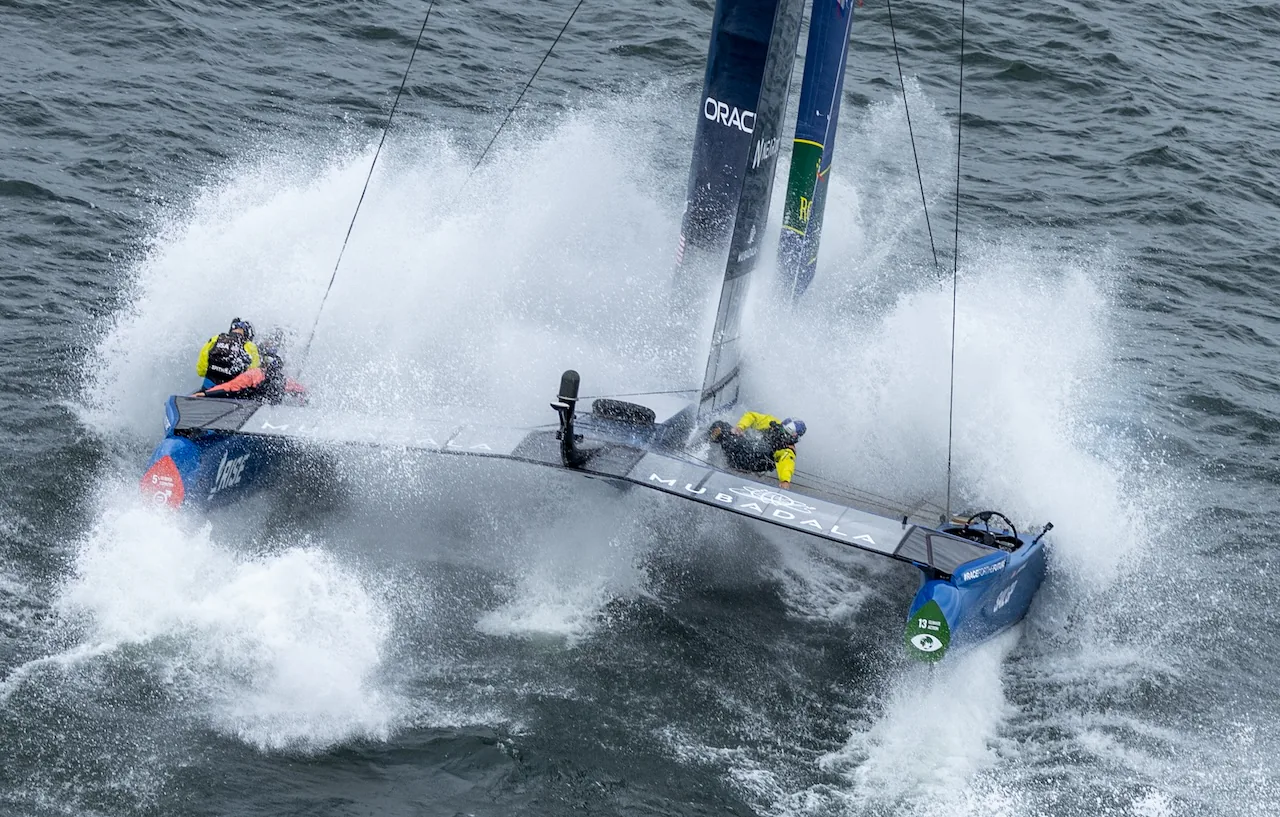
The opening day produced exactly the kind of conditions SailGP teams dream about. Stable breeze. Dead-flat water. Perfect foiling pressure. The F50s looked completely unleashed. Phil Robertson of Red Bull Italy described the conditions as ideal for pushing the boats to their limits. And that was obvious from the shoreline. The boats spent huge periods locked fully airborne, slicing across the Great Sound with almost frightening stability. At those speeds, every crossing feels violent. Distances vanish instantly. Closing speeds become absurd. Mistakes happen faster than crews can process them. Which is why SailGP remains such compelling viewing when conditions line up like Bermuda delivered on Saturday.
Sunday changed the script entirely. The breeze softened. Pressure became patchy. The easy rhythm of high-speed foiling disappeared and the fleet suddenly found itself fighting a far more tactical racecourse. That shift mattered enormously. SailGP often looks straightforward in strong breeze because the boats remain consistently airborne. Lighter conditions create uncertainty. Foils drop. Pressure lines split. Decisions become riskier. The Great Sound stopped rewarding pure aggression and began rewarding patience, timing and adaptability. And that is where championship campaigns can quietly unravel. Because consistency becomes far harder when conditions stop behaving predictably.
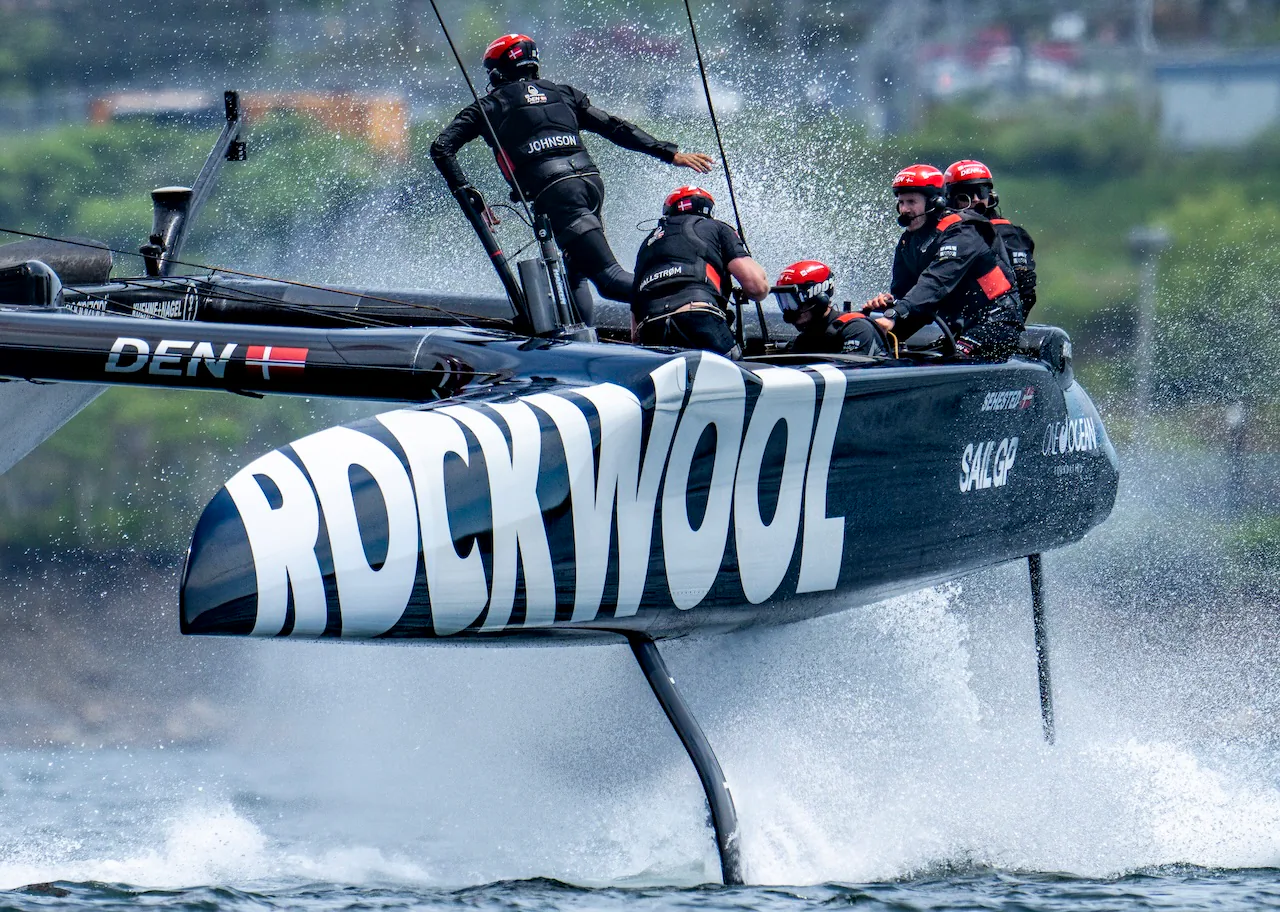
The Bermuda event also arrived amid significant movement across the SailGP fleet following the absence of New Zealand SailGP Team. The Black Foils remained sidelined after suffering major damage earlier in the season, triggering a fascinating reshuffling of talent between teams. Liv Mackay once again joined DS Automobiles Team France, while legendary wing trimmer Glenn Ashby stepped in for the injured Leigh McMillan. Meanwhile Marcus Hansen joined ROCKWOOL Racing as the Danes searched for momentum in the standings. Crew continuity matters enormously in SailGP. These boats operate at such extreme speed that communication becomes almost instinctive inside successful teams. Every late reaction costs metres. Sometimes races.
More than 5,000 spectators packed the sold-out Race Stadium at Morgan’s Point across the weekend, proving once again why Bermuda remains one of SailGP’s strongest venues. The shoreline proximity transforms the racing into something uniquely visceral. Fans do not simply watch these boats. They feel them. The acceleration. The spray. The strange silence when the foils fully engage. Then the sudden roar as an F50 rips past at terrifying speed. Nathan Outteridge of Artemis SailGP Team highlighted exactly that dynamic, noting how close the boats race to shore in Bermuda. From a spectator perspective, few sailing events in the world currently match it.
One of the quieter but more interesting storylines came from Switzerland SailGP Team. Driver Sébastien Schneiter arrived in Bermuda carrying renewed optimism following the team’s new partnership with luxury travel brand Explora Journeys. After a difficult start to the season, the rebrand appeared to inject fresh confidence into the Swiss programme. Sometimes in professional sport, momentum matters psychologically as much as technically. Especially in SailGP, where confidence can directly influence how aggressively teams attack starts and crossings.
Bermuda reminded everybody why SailGP works best when the conditions let the boats fully breathe. The Great Sound turned the fleet loose. The racing became faster, tighter and more unforgiving with every heat. Some teams arrived chasing momentum. Others arrived trying to stop the bleeding. By the end of the weekend, one thing felt increasingly clear: The 2026 SailGP championship was no longer settling into a predictable hierarchy. It was becoming a fight. A proper one. Exactly what foiling catamaran racing should look like when the breeze is up and the pressure starts climbing inside the fleet. Because at 50 knots, everybody looks calm from the shore. On board is usually another story entirely.