
Mach 50 Palanad 4 Wins IRC Zero After 600 Miles of Tactical Pressure Around the Caribbean Islands









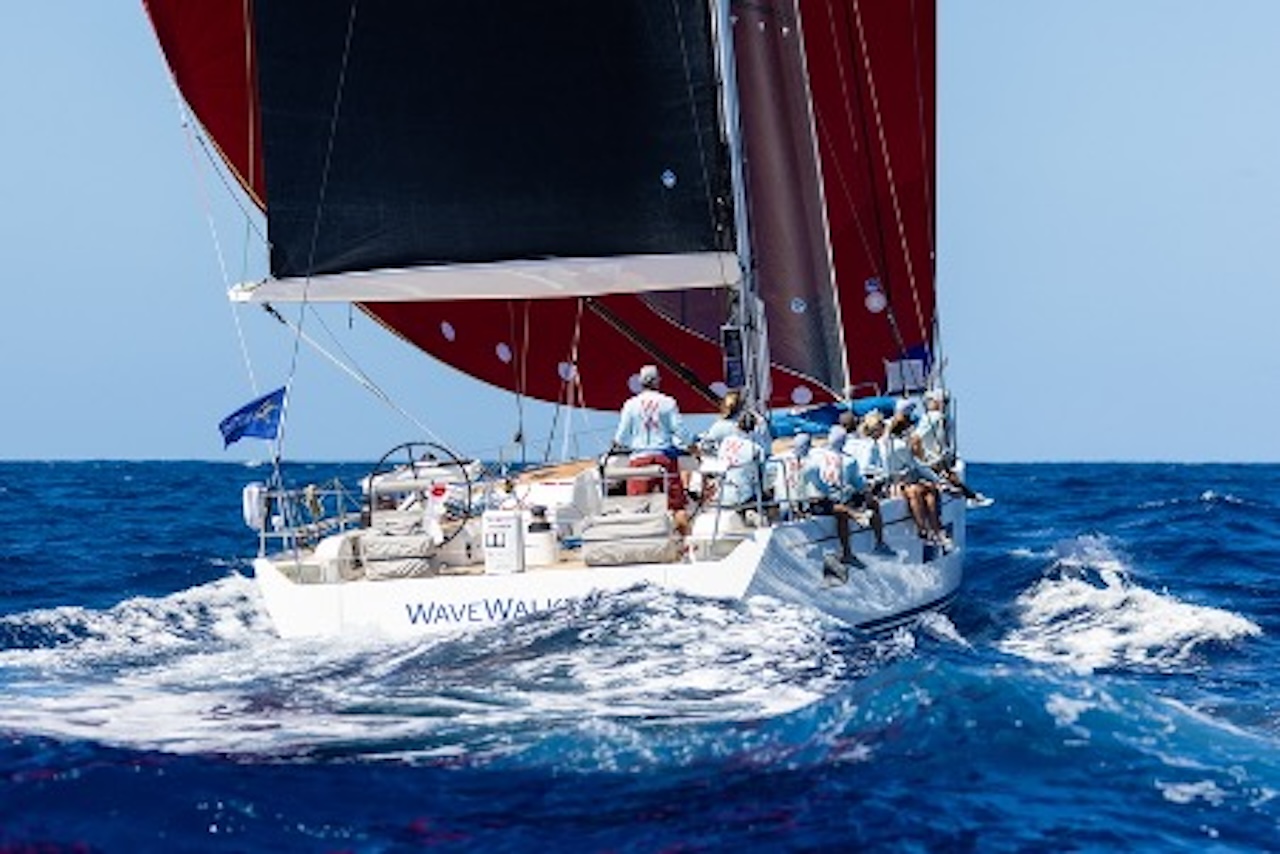
Behind them, James Neville’s Carkeek 45 Ino Noir finished second after a bold tactical gamble on the final leg that nearly turned the race on its head. Niklas Zennström’s Carkeek 52 Rán completed the podium after a relentless week of close racing.
Throughout the race, IRC Zero delivered one of the most compelling contests in the fleet, with Palanad 4, Ino Noir, Rán, and Frederic Puzin’s Daguet 5 locked in a tactical duel that stretched from Antigua to Barbuda and down through the northern Caribbean islands.
The final result was only decided on the last miles of the final beat back to Antigua.
This year’s edition of the Caribbean 600 unfolded very differently from recent races.
Instead of the classic reaching angles associated with the trade winds, the breeze settled further to the south-east, turning much of the course into a VMG race.
Navigator Will Harris recognised the pattern early.
“Probably about 60 percent of the race was upwind or tight reaching,” he explained. “That completely changes the way you approach the course.”
For the Mach 50 Palanad 4, a boat known for its reaching speed, the conditions demanded discipline rather than outright dominance.
“It was intense,” said Magre. “Constant manoeuvres, constant sail changes. We never really settled into a normal watch rhythm.”
The race also began with an early setback. Shortly after the start, a halyard issue dropped their J1 headsail.
“It wasn’t the best beginning,” Magre admitted. “We lost over a mile.”
But offshore races of this scale are rarely decided in the opening hours. The French team recovered steadily through precise navigation and consistent boat handling across the northern island chain.
Guadeloupe: The Tactical Turning Point
As so often happens in the Caribbean 600, the lee of Guadeloupe became the pivotal moment.
At night, with land shadows and unstable breeze bands disrupting the fleet, Ino Noir elected to diverge from the pack.
Navigator Juan Vila explained the thinking.
“We could see on the tracker that the boats ahead were going very slowly. So we made a plan.”
The decision was to sail one to two miles further offshore, seeking a different pressure band.
“In Guadeloupe you have to make your call and cross your fingers,” Vila said.
This time the gamble paid off.
Ino Noir gained significantly through the transition, compressing the fleet and bringing the IRC Zero podium back into contention.
Downwind Speed — and Trouble Near Barbuda
From La Désirade toward Barbuda, Ino Noir found impressive downwind speed.
“We were flying 18 to 20 knots,” Neville said.
However, the breeze eased more than forecast and the boat encountered an unexpected problem.
“We got tangled in fishing gear near Barbuda which cost us time.”
Despite the setback, the British team remained firmly in the fight as the fleet approached the final leg of the race.
A Bold Final Move Near Redonda
With roughly 35 miles remaining and the fleet approaching Redonda, Ino Noir made another aggressive tactical decision.
Rather than following the rhumb line toward Antigua, the team sailed significantly north to avoid a large squall line blocking the course.
“We weren’t planning to go that far north,” Vila explained. “But there was a big cloud on our line.”
The choice was between sailing long to the south in lighter air or detouring north to stay in pressure.
They chose north.
For a period, the decision appeared inspired. The boats ahead slowed while Ino Noir kept moving, and corrected time calculations tightened dramatically.
For a moment, IRC Zero looked within reach.
“It was a bit of a battle of the Carkeeks,” Neville said.
But ultimately the gains were not enough to overturn Palanad 4’s accumulated advantage.
Where Palanad 4 Won the Race
While Ino Noir made bold tactical moves, Palanad 4 built their victory through consistency across every leg of the course.
Certain angles proved particularly decisive.
“About 120 degrees true wind angle in 20 knots — that’s where we’re very strong,” Harris explained.
On those reaching legs the Mach 50 delivered serious pace.
“That was sublime,” Magre added.
Crucially, Palanad 4 also performed well on the heavier upwind sections late in the race.
“The windier it gets, the better we go upwind.”
Across 600 miles, the team maintained a high level of execution.
“We didn’t sail perfect,” Magre admitted. “But we were on point most of the time.”
In offshore racing, that is usually enough.
A Victory With Personal Meaning
For skipper Antoine Magre, the win carried deeper significance than a class trophy.
“My father couldn’t race with us this time,” he said. “We lost my uncle last week.”
The victory in IRC Zero was dedicated to his memory.
In a race defined by relentless pressure, constant manoeuvres and tight tactical margins, Palanad 4 held their nerve.
In the Caribbean 600, that often makes all the difference.