

Construction Begins on Major South Marina Expansion at Nanny Cay, Tortola









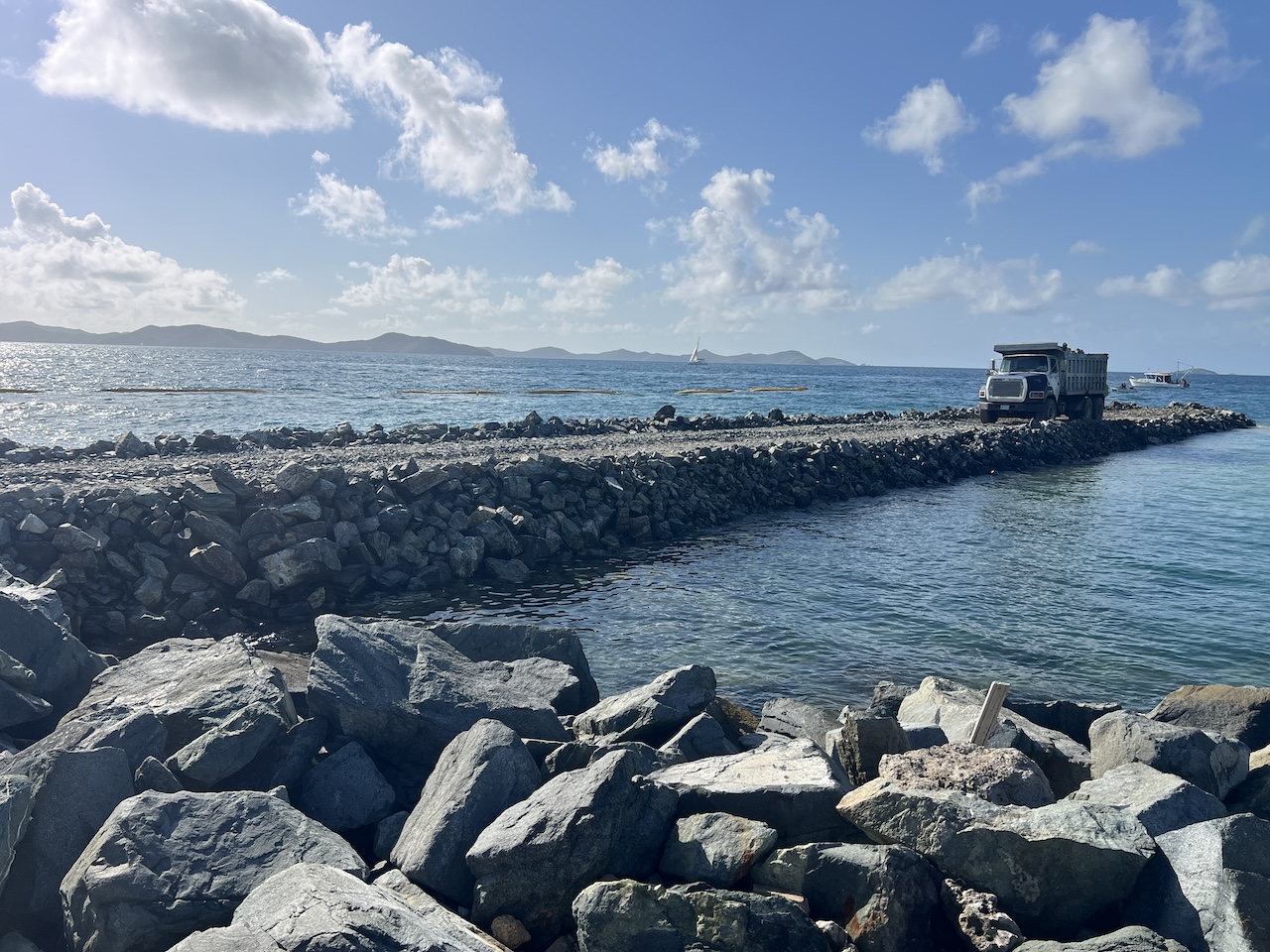
For decades, Nanny Cay has been a working marina first and a resort second — practical, well-placed, and respected by cruising sailors and charter fleets alike. This new development signals something bigger: a response to the rapid evolution of the Caribbean fleet itself.
Catamarans are getting wider. Multihulls are getting heavier. Megayachts are getting more complex. And the infrastructure required to support them has to evolve.
A New South Marina for the Modern Fleet
At the heart of the expansion is a new 112-slip South Marina, engineered to accommodate the latest generation of performance catamarans and large sailing yachts now arriving in the region. With beam allowances designed for 60, 70 and even 80-foot multihulls, the facility reflects a simple truth: the Caribbean charter and private ownership markets have shifted decisively toward larger platforms.
To support that growth, Nanny Cay is installing a custom 150-ton travel lift, one of the widest in the region at 44 feet. The lift is specifically configured for wide-beam catamarans, complementing the existing 50-ton and 70-ton Marine Travelifts already operating in the boatyard.
The message is clear: haul-out capability must match the boats now crossing the Atlantic.
The existing marina currently accommodates 302 yachts, with 110 monohulls in the Outer Marina and 192 vessels in the Inner Marina (or catamaran equivalents). The expanded yard and marina will increase both flexibility and throughput — critical in a region where hurricane season preparation and post-season recommissioning define the calendar.
Phased Development Through 2028
To minimise disruption to ongoing operations, construction has been divided into two overlapping phases, scheduled for completion by the end of 2028.
Phase I focuses on maritime infrastructure:
Construction of a new breakwater (armour wall) to protect the South Marina
Land reclamation
Expansion of the existing boatyard
Installation of the 150-ton haul-out facility
Phase II shifts attention landside:
A new beach and beach bar
Two-level restaurant with panoramic views across the Sir Francis Drake Channel
Regatta and event village with stage and dining areas
Retail and commercial spaces
A Marine Hub incorporating the Royal BVI Yacht Club youth programme and the HLSCC Marine Training Centre
Concierge facilities, gardens, walkways, and expanded parking
This is not simply a marina extension. It is a mixed-use waterfront redevelopment aimed at strengthening Nanny Cay’s role as a regional hub.
More Than Slips and Steel
The resort already includes a 52-bed hotel, 32 waterfront townhouses, retail outlets, chandlery, and multiple dining venues. The expansion builds on that base — not replacing it, but scaling it.
The addition of marine training facilities and youth sailing infrastructure signals long-term thinking. The Royal BVI Yacht Club’s youth programme will gain improved storage and launch facilities, reinforcing the development’s integration into the local sailing ecosystem rather than isolating it as a standalone luxury enclave.
Official Groundbreaking
The official groundbreaking ceremony took place on 31 October 2025, attended by senior government officials including Premier and Minister of Finance Dr. Natalio D. Wheatley, Governor Daniel Pruce, and Deputy Premier Julian Fraser. Their presence underscored the project’s economic significance to the British Virgin Islands, where marine tourism remains a cornerstone of the economy.
The Bigger Picture
The Caribbean marina landscape is becoming increasingly competitive. Facilities that once comfortably handled 45-foot monohulls are now being asked to service 70-foot catamarans with complex systems and serious displacement.
Nanny Cay’s expansion is a strategic answer to that shift.
The breakwater will shelter more tonnage. The yard will lift heavier boats. The marina will berth wider beams.
And if the plans are executed as drawn, Tortola’s south coast will host one of the most technically capable marina complexes in the region.
For cruising sailors, charter operators, and megayacht programmes alike, that matters.
Salt in the air. Steel in the water. The next phase begins.