Once the lines are slipped, the value will show in the choices made on deck, at the harbour office, in the club launch and among the crews trying to turn news into something useful afloat.
The Yacht Club was founded in 1815 for Members to meet twice a year to dine and share their mutual interest in yachting. Until 1825 the Club held its annual Cowes meetings at several local hostelries.
The Medina Hotel at East Cowes, home of the annual regatta ball, was most favoured; it was also near the Customs House where the Club's first Secretary was a Customs Officer. In 1824 it was decided to investigate providing a coffee room for the Club and a committee was set up comprising Lord Yarborough, The Hon W Hare, Sir George Thomas, James Weld Esq and Henry Perkins Esq.
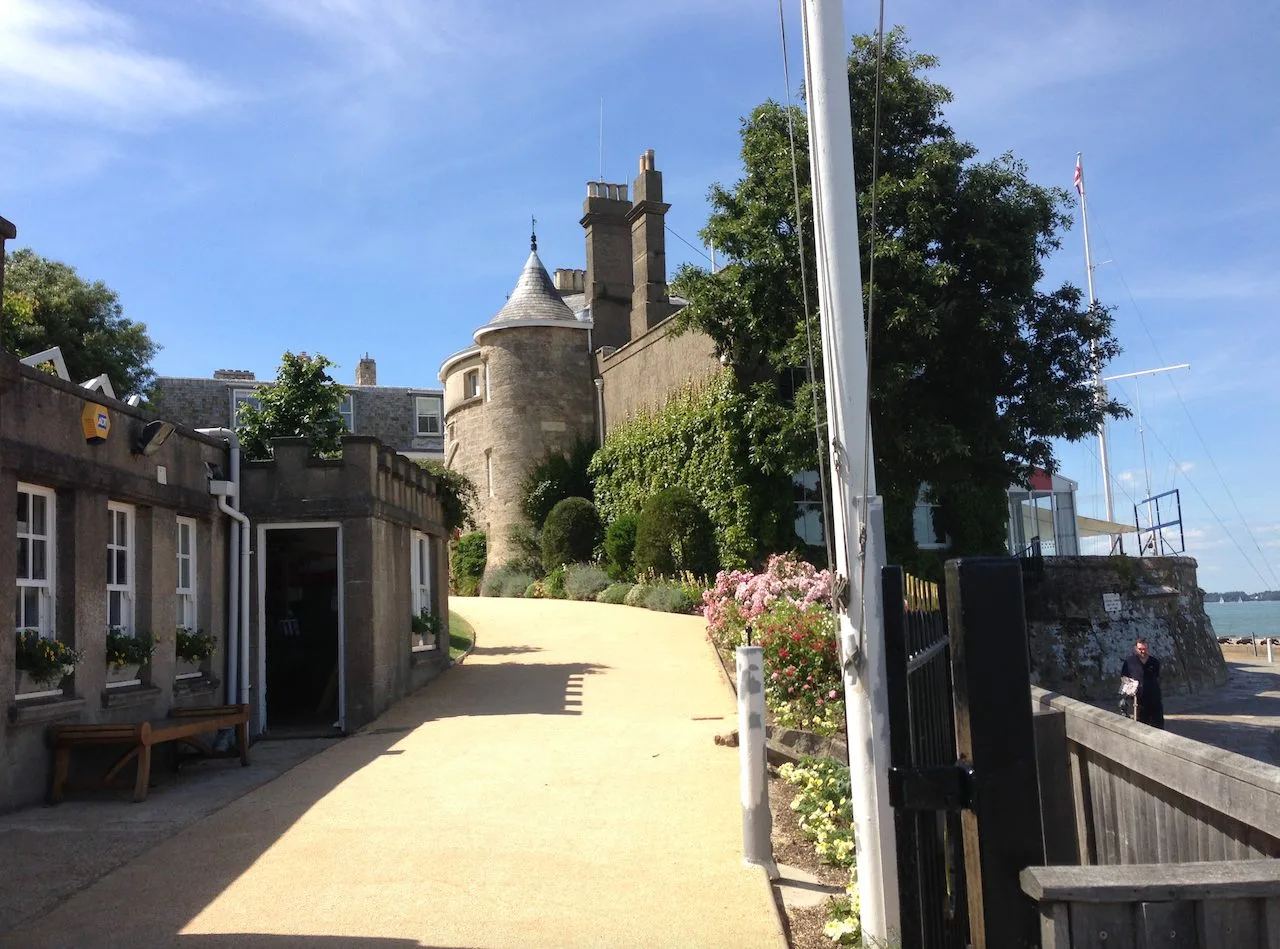
The result was the Club's first premises 'Parade House', leased from Mrs Sarah Goodwin in 1825. This building was on The Parade across the road from the Castle; it later became the Gloster Hotel and has since been replaced by the Gloster Apartments.
Once the Club had premises trustees and a committee were required, once it started its yacht racing programme in 1826 stewards (forerunner of the Yachting Committee) were necessary also. The first mention of a Commodore is in the Club Minutes of 18th June 1822.
A tradition of parading the yachts as part of the Regatta had begun in 1814 but the 1822 Minutes record that on the 1st and 3rd Mondays of each month [i.e. through the summer], Club yachts would assemble in Cowes Roads for the purpose of sailing together under the directions of a Commodore to be appointed for the day. A further Minute, a month later, suggests this had not worked quite as planned, stating 'the original proposition of assembling the vessels had been made with a far different view from that of racing and shewing superiority of sailing'.
The Marquis of Anglesey and Stephen Challen Esq were the first Commodores for the day in 1822. In 1823 it was the Hon Charles Anderson Pelham who led the Club yachts to Plymouth, taking the salute as Commodore; in 1824 he led them again to the West Country and across to Cherbourg.
In 1825 he had no yacht but is still referred to as Commodore in the local and yachting press. The Club Minutes have no record of such a permanent appointment but by 20th September 1826 they too are referring to him as 'our Commodore'.
His 351 ton Falcon, launched in 1826, became the Club's flagship. In September 1827 Lord Belfast was appointed Vice Commodore.