

Fischer and Péquin Crowned 49er Champions at Lanzarote International Regatta









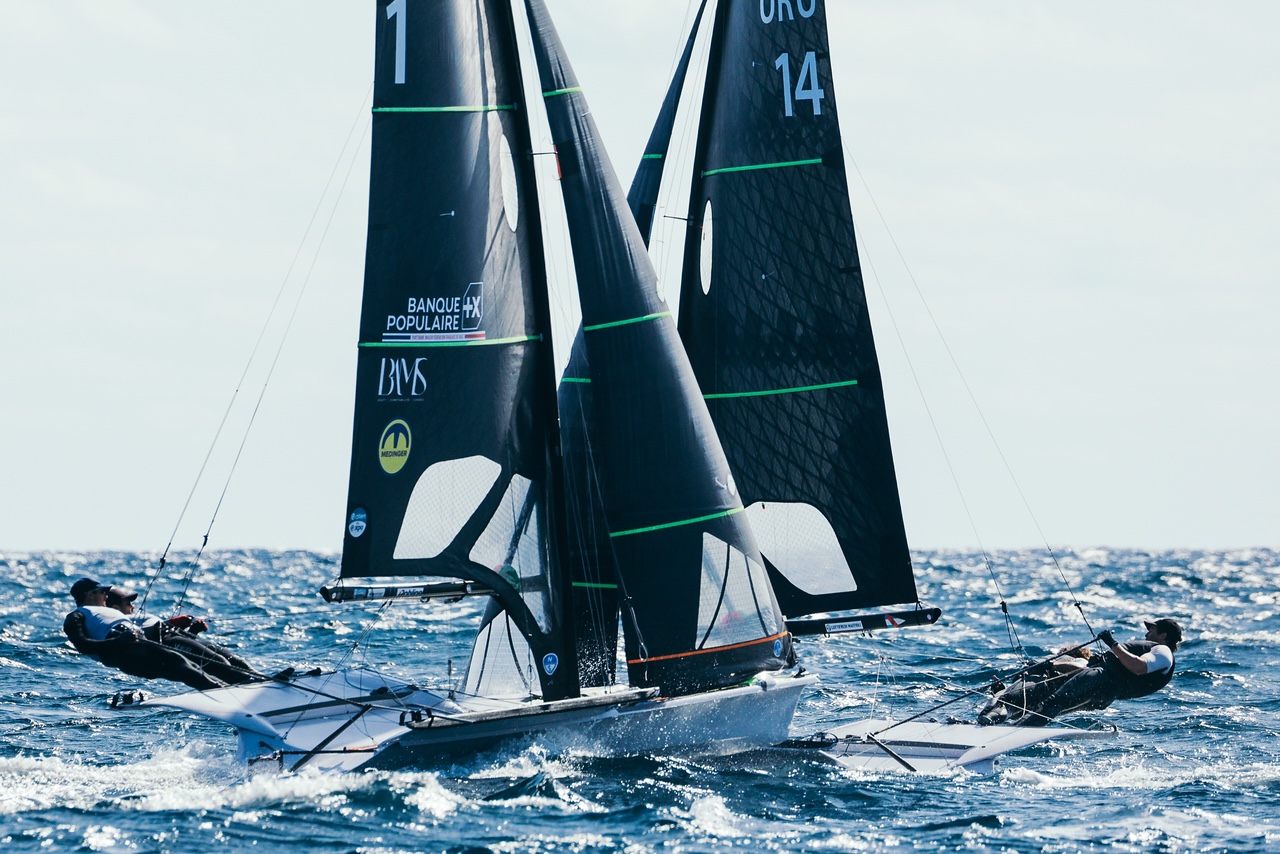
Lanzarote International Regatta crowns Fischer and Péquin after demanding Olympic test
Across a full week of competition, the regatta delivered exactly what sailors value most at this stage of the Olympic cycle: volume, variety, and pressure. From heavy-air planing conditions and Atlantic swell to medium breezes and a tactically demanding light-wind finale, Lanzarote once again proved why it has become one of Europe’s most reliable winter proving grounds for elite sailing.
A complete regatta in every sense
In the 49er fleet, consistency was king. Sixteen races were completed across the series — a rare achievement that underlined both the commitment of the Race Committee and the suitability of the venue. The result was a championship that rewarded adaptability, boat handling, and decision-making rather than single standout performances.
By the final day, the regatta had entered its most delicate phase. A west-southwesterly breeze of just 7–8 knots replaced the stronger conditions seen earlier in the week, compressing the fleet and placing a premium on clean starts, lane discipline, and tactical patience. It was a classic Lanzarote finish: subtle, technical, and unforgiving.
Fischer and Péquin: consistency under pressure
For Erwan Fischer and Clément Péquin, the lighter air changed nothing. The French pairing delivered the calm, methodical sailing that had defined their week, sealing overall victory and returning to the top step of the podium in Marina Rubicón for the second time in two years.
Their previous triumph here came in 2024 during the 49er World Championship. Winning again in 2026 only reinforced their strong connection with the venue — and their ability to perform across a full performance spectrum.
“We are very happy to be back in Lanzarote this winter,” said Péquin. “It’s a fantastic place to sail, and winning this regatta here is something very special for us.”
Fischer pointed to adaptability as the deciding factor.
“We focused on being as consistent as possible all week,” he explained. “We sailed in very different conditions — strong breeze and waves, then lighter air and short chop on the final day. That’s what makes this regatta so complete and so demanding.”
Tight battles across the podium
Behind the winners, the margins remained narrow. Lucas Rual and Emile Amoros (FRA) claimed second place after a week-long duel at the front of the fleet, while Richard Schultheis and Fabian Rieger (GER) rounded out the podium, completing a tightly fought championship defined by depth and speed.
Across the Olympic classes — including ILCA 6 and ILCA 7 — the regatta once again fulfilled its role as a cornerstone event in the winter training calendar, blending race mileage with genuine competitive pressure.
Lanzarote’s role in the Olympic pathway
Organised by Marina Rubicón and supported by Turismo Lanzarote, Lanzarote Sports Destination, the Cabildo of Lanzarote, and Yaiza Town Council, the regatta continues to grow in stature. Its strength lies not just in organisation, but in geography: reliable breeze, open water, and race areas that expose weaknesses quickly.
For sailors building toward major championships and future Olympic cycles, Lanzarote remains a place where results must be earned — not gifted.
As fleets now disperse to the next training blocks and early-season regattas, one thing is clear: those who perform here carry momentum forward. And for Fischer and Péquin, Marina Rubicón has once again proven fertile ground.