
The Ocean Race 2027 — Where Offshore Sailing Meets Its Ultimate Reckoning









The destination: Auckland.
The distance: 14,000 nautical miles. The message: this is not a warm-up — this is the real thing.
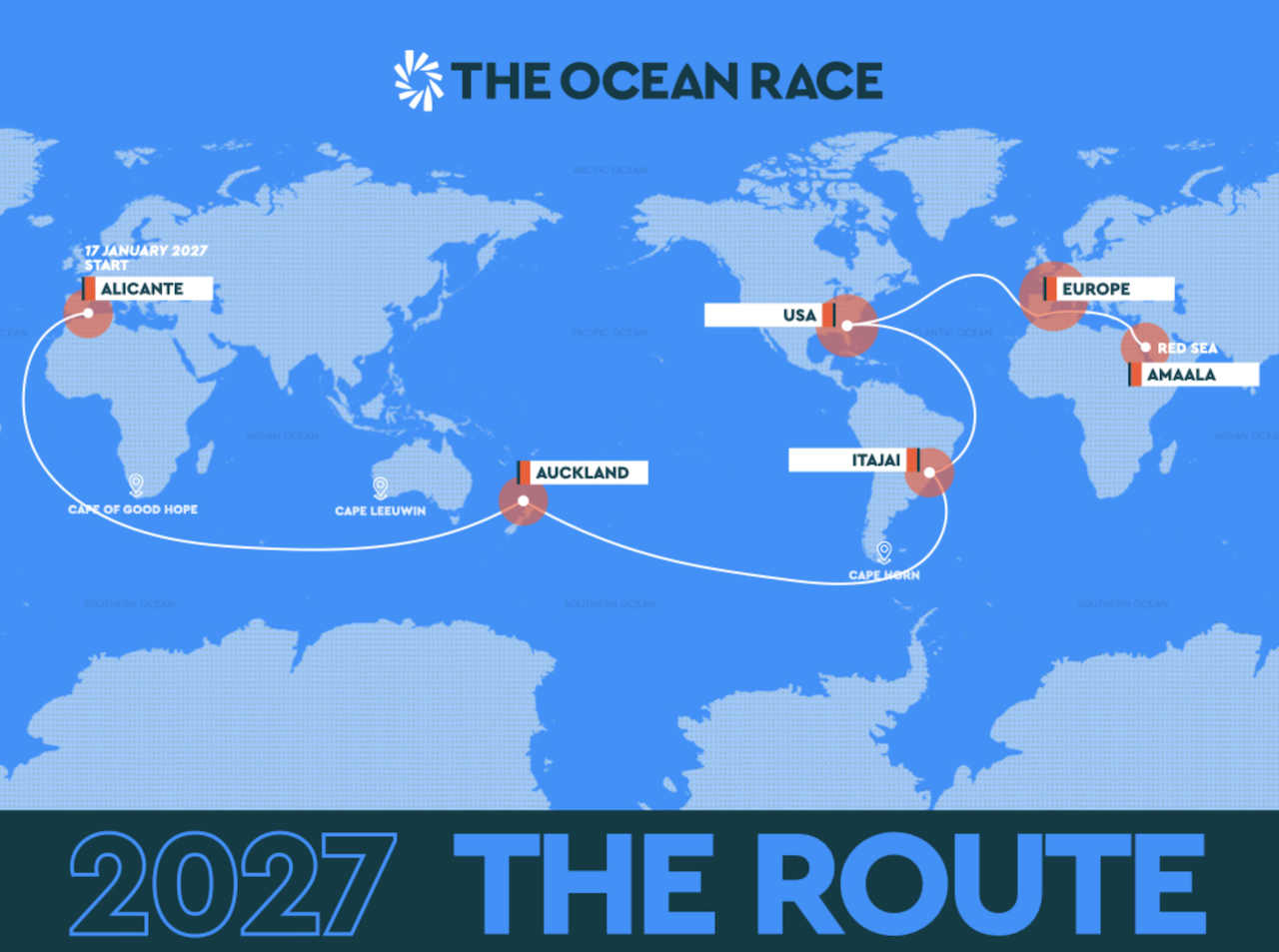
From the Mediterranean start line, the fully-crewed IMOCA fleet will race south through the Atlantic, round the Cape of Good Hope, across the Southern Ocean, and into the Pacific — all in one colossal opening leg. It is a passage that will test navigation, engineering, psychology and teamwork long before the race rhythm has a chance to settle.
“As it has for more than 50 years, The Ocean Race represents the pinnacle of professional offshore sailing,” said Richard Brisius, Race Chairman. “The 2027 edition raises the bar once again. The opening leg to Auckland is a statement of intent — this is offshore racing at its most extreme and most thrilling.”
A start that defines the race
The opening leg alone would stand as a lifetime achievement for most sailors. For The Ocean Race, it is merely the beginning.
Team Malizia skipper Boris Herrmann captured the sentiment felt across the fleet. “This is an amazing way to start The Ocean Race — an epic leg that takes us halfway around the world. This is what we love: time at sea, racing against the best, taking on big challenges. This is where you learn about yourself and your teammates, and forge bonds that last a lifetime.”
Alicante once again serves as the Puerto de Salida, hosting the start for the sixth consecutive edition — more than any other city in race history. For the Valencian Community, the connection runs deeper than sport.
“It is very exciting to see the fleet set sail from Alicante once again,” said Marián Cano, Regional Minister for Innovation, Industry, Trade and Tourism. “As the Puerto de Salida for this monumental leg, we will showcase our maritime heritage, our international outlook, and our commitment to ocean health and education.”
Alicante Mayor Luis Barcala echoed that pride: “The Ocean Race gives our city enormous international visibility and economic impact. But it also carries a social and educational mission that reaches far beyond the finish line.”
Return to the City of Sails
For the sailors, there are few arrivals that carry the weight of Auckland. Known worldwide as the City of Sails, it will host the race for the 12th time, welcoming the fleet to a place steeped in offshore legend — from Sir Peter Blake to Grant Dalton, Mike ‘Moose’ Sanderson, and Peter Burling.
“This leg between Alicante and Auckland is going to be incredible,” said Kojiro Shiraishi, skipper of DMG MORI Sailing Team. “Crossing the Equator, entering the Southern Ocean, all in a single fully-crewed leg — it’s hugely challenging and dynamic. With a new boat, experience and preparation will be everything.”
Former race winner Mike Sanderson summed up the emotional pull: “Racing into New Zealand was always a highlight. You knew you were arriving somewhere with a deep connection to the sport.”
New Zealand’s leaders are equally enthusiastic. Tourism Minister Louise Upston promised “a warm Kiwi welcome after an epic leg,” while Auckland Mayor Wayne Brown highlighted the lasting benefits of hosting one of sailing’s greatest spectacles.
A truly global race
From Auckland, the fleet will head to Itajaí, one of the race’s most passionate stopover ports, before returning to the Northern Hemisphere. Further stopovers in the United States and Europe will be confirmed, before a dramatic Mediterranean phase, transit through the Suez Canal, and a Grand Finale sprint to AMAALA on the Red Sea — a bold new finishing destination that underscores the race’s global ambition.
The ultimate proving ground
Sailed aboard the world’s fastest fully-crewed offshore boats — the IMOCA class — The Ocean Race remains the most physically and mentally demanding team event in sport. Weeks at sea, relentless competition, and conditions ranging from equatorial calms to Southern Ocean violence leave no hiding place.
“There is no racing quite like The Ocean Race,” said Rosalin Kuiper. “You’re racing with and against the best sailors in the world, on the best boats, in the hardest conditions imaginable. It’s the absolute pinnacle of offshore sailing.”
The 2027 edition reinforces the race’s commitment to mixed-gender crews, with every team carrying at least one female sailor at all times — not as a gesture, but as a statement about performance at the highest level.
Closer than ever before
Technological advances will bring fans closer to the action than ever. The OnboardLive system, trialled during The Ocean Race Europe, will provide near-constant connectivity between boats, race HQ and audiences worldwide — delivering raw, unfiltered insight into life on board.
Racing for the Ocean
Beyond the competition, The Ocean Race continues to lead on sustainability through its Racing for the Ocean programme. As teams circle the planet, they also act as ambassadors and data collectors, carrying scientific instruments to measure ocean health, microplastics and climate indicators in some of the world’s most remote waters.
The Race’s global ocean education programme — already active in 90 countries — will expand further ahead of 2027, translated into 18 languages, reaching millions of young people worldwide.
“We race on the ocean, but we also race for the ocean,” said Lucy Hunt, Ocean Impact Director. “Our sailors witness the ocean’s beauty and fragility firsthand. That gives our platform real power — and real responsibility.”
The countdown begins
With the start now less than a year away, anticipation is building fast. Teams are training, boats are evolving, and the route is sharpening into focus.
Fourteen thousand miles. One opening leg. No easing in.
The Ocean Race 2027 is coming — and it will ask everything.