
Runners & Riders Ready for the 2026 RORC Transatlantic Race from Lanzarote to Antigua









Lanzarote to Antigua | Start Sunday 11 January 2026
The stage is set in the Canary Islands. On Sunday 11 January 2026, the RORC Transatlantic Race will once again send a diverse and compelling fleet westward from Marina Lanzarote, launching 21 teams on a 3,000-nautical-mile Atlantic crossing to Antigua.
Organised by the Royal Ocean Racing Club in association with the International Maxi Association and the Yacht Club de France, the race is both an early-season cornerstone and a statement event in the global offshore calendar. Supported by Calero Marinas and the Antigua and Barbuda Tourism Authority, the 2026 edition blends elite performance, Corinthian ambition and genuine ocean adventure.
Start day: precision before the horizon opens
The fleet will assemble off Arrecife, with monohulls starting at 12:30 UTC, followed by multihulls at 12:40. All competitors must round a turning mark off Puerto Calero before committing to the open Atlantic. From there, the fleet fans out into trade-wind tactics, routing decisions and the long, disciplined work of offshore racing.
Crews from 19 nations will line up across cutting-edge monohulls, high-performance multihulls, performance cruisers and smaller offshore racers. At the sharp end, elapsed-time contenders may finish in under a week; at the other, smaller boats will embrace the full Atlantic rhythm over two weeks or more.
The prize that matters: IRC Overall
While line honours grab headlines, the beating heart of the race is the RORC Transatlantic Race Trophy, awarded to the IRC overall winner. Since the inaugural edition in 2014, IRC has proven its levelling power — smallest to largest boats have all claimed the top step. Strategy, rating efficiency, crew work and endurance matter as much as raw speed.
Palanad 4, a new scow-bow, canting-keel 50-footer, arrives with intent. Owner Antoine Magre knows how to win, having tasted success with Palanad 3 in this race and at the Rolex Fastnet. “The goal is simple: go as fast as possible,” says Magre. “Focused crew, smart weather calls, and exploiting the boat’s strengths.”
Veteran navigator Juan Vila (aboard Ino Noir) underlines the appeal: “A January trade-wind Atlantic is very special for any navigator.” Over this distance, every system and decision is exposed.
Multihull line honours: speed at the edge
At the front of the multihull fleet, the spotlight falls on MOD70 trimarans Argo and Zoulou. For more than a decade, MOD70 duels have defined the race’s outright speed narrative — fast, physical and unforgiving.
“It’s an exhilarating experience to travel that fast for 3,000 miles,” says Jason Carroll (Argo), contesting his third edition. Ned Collier Wakefield (Zoulou) expects a tight fight: “If it turns into a downwind drag race, we’ll be glued together. Two years of refining foils, rake and balance has closed the gap.”
Monohull line honours: power with pedigree
On the monohull side, history looms large. Previous winners such as Lucky have set formidable benchmarks. This year, eyes turn to Raven, the radical Baltic 111. Though already Atlantic-tested, 2026 marks her first competitive transatlantic. Project manager Klabbe Nylof is clear-eyed: “This race is about consistency, resilience and learning how the whole system works under pressure, day after day.”
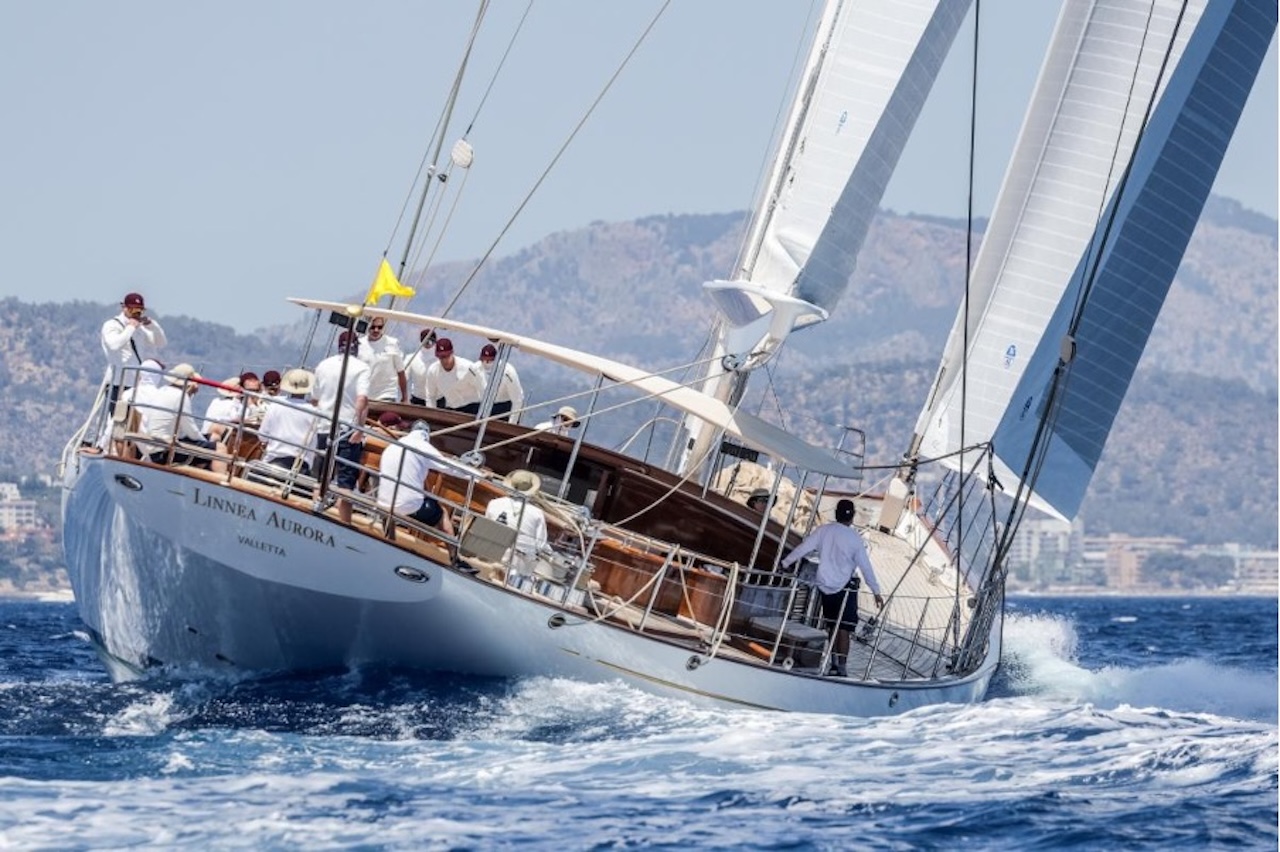
Racing under IRC and for the Superyacht Class Trophy are the fleet’s largest boats: Be Cool and Linnea Aurora. The Swan 128 Be Cool brings refined power and the ability to rack up big daily miles with civilised offshore living. Linnea Aurora, a Hoek-designed 128-footer launched in 2024, pairs classic elegance with modern performance, having already shown her pedigree with inshore success at the Superyacht Cup Palma 2025. Together, they demonstrate how the race has become a proving ground for superyachts that want to race the Atlantic, not merely cross it.
The human fleet
Beyond trophies and speed graphs lie the stories that give the race its depth. Ari Huusela and Annika Paasikivi on the Finnish Sun Fast 3300 Stimmy sail with a philosophy that transcends results: “Enjoy the sailing and finish safely.” Family legacy drives Andrew & Sam Hall (Jackknife) and Xavier & Alexandre Bellouard (Maxitude). Youthful curiosity powers teams like Walross 4, where a largely student crew embraces the Atlantic as classroom and crucible.
Antigua beckons — and records too
Finishing in Antigua opens a fresh chapter and a real chance at new elapsed-time records for both monohulls and multihulls. It also provides a natural bridge into a Caribbean campaign, with the RORC Nelson’s Cup Series and the RORC Caribbean 600 following in February. Few preparation pathways sharpen a crew like a hard Atlantic crossing straight into a 600-mile classic.
The race ahead
As the fleet prepares to depart Marina Lanzarote on 11 January 2026, anticipation is high. Whether chasing outright speed, IRC supremacy, or a deeply personal crossing, the 2026 RORC Transatlantic Race promises competition, camaraderie and the kind of miles that leave a mark long after Antigua’s palms come into view.