
RP42 Rikki Secures IRC One Victory in One of the Closest Battles of the Caribbean 600









Nine Minutes on the Clock: Rikki’s Triumph in IRC One
Few classes in the RORC Caribbean 600 were as tightly contested as IRC One in the 2026 edition.
After nearly three days and 600 miles of offshore racing through the Caribbean islands, the final standings were decided by a margin of just nine minutes and thirty-two seconds on corrected time — one of the closest class outcomes of the race.
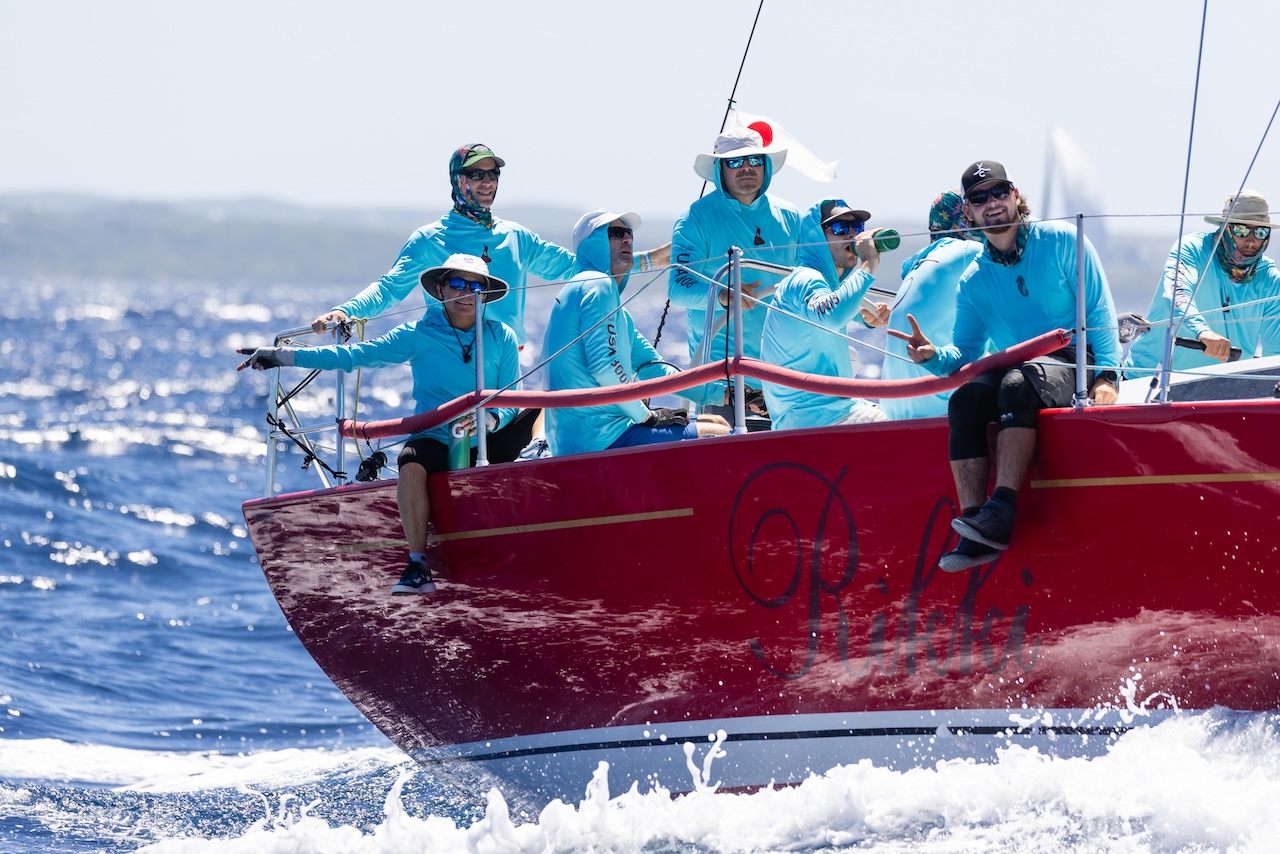
At the centre of that battle was Bruce Chafee’s RP42 Rikki (USA), which crossed the finish line in Antigua in 2 days 21 hours 51 minutes 30 seconds elapsed time. When the IRC calculations were complete, Rikki had done enough to secure victory.
Second place went to Xavier Bellouard’s Lift 45 Maxitude (FRA), which claimed line honours for the class but fell short on corrected time.
Third place belonged to Woody Cullen’s Swan 58 WaveWalker (USA), which finished the race in 3 days 00 hours 30 minutes 11 seconds.
It was classic Caribbean 600 racing — a contest defined not only by speed, but by navigation, timing and tactical judgement around the islands.
Rikki: Precision Over 600 Miles
Victory in the Caribbean 600 rarely comes easily, and for Rikki’s navigator Suzy Leech, the race carried its own psychological challenge long before the fleet left Antigua.
This was her first Caribbean 600, and one part of the course had been playing on her mind from the start.
The notorious Guadeloupe wind shadow.
“I’d heard so much about that section of the race,” Leech admitted. “The whole time I was worried about it — especially behind Guadeloupe.”
The towering volcanic island is famous for disrupting the trade winds. Boats entering its lee can find themselves slowed dramatically while competitors just miles away continue at full speed.
Many Caribbean 600 races have been decided there.
For Rikki, the moment proved decisive.
“We were able to escape on a great puff and left our competition literally miles behind us,” Leech said. “That’s when I finally took a breath and thought — we survived.”
Preparation Years in the Making
For skipper Bruce Chafee, the victory represented the culmination of years of preparation rather than a single successful race.
“A lot of the preparation started well before this race,” Chafee explained. “Maybe even two years ago when we first came to the Caribbean 600.”
The RORC Nelson’s Cup Series, held in Antigua just days before the main race, proved a valuable final test.
“The Nelson’s Cup was a great proving ground. Everything went smoothly and it showed us that our preparation was working.”
That preparation extended beyond the water. Moving a race boat across the Atlantic is no small undertaking.
Rikki’s campaign involved shipping the yacht from Rhode Island in the middle of winter, assembling the crew in Antigua and preparing the boat for a week of high-intensity offshore racing.
A Deep and Competitive Fleet
The depth of the IRC One fleet added to the pressure.
“We’re fortunate that this class has a lot of boats around the 42-foot size,” Chafee said. “We came here for the competition.”
Boats like Maxitude, WaveWalker, Jackknife, and Afazik Impulse ensured that the class remained tightly contested from start to finish.
In offshore racing terms, there was no room to relax.
Every island rounding mattered.
Learning from the Best
For Leech, one of the most rewarding aspects of the race was competing against some of the sport’s most experienced navigators.
Among them was Alexis Loison, navigating aboard Maxitude.
“Every single day I learn something new,” Leech said. “If I don’t learn something new, then it’s a wasted day.”
The Nelson’s Cup series played a crucial role in refining Rikki’s performance.
“It allowed us to get our calibrations almost spot on. Being able to race properly before the Caribbean 600 was really important.”
She also admitted that sometimes the best tactical information comes from observing competitors.
“It’s not bad to glance around occasionally and see what the bigger boats ahead of you are doing.”
The Culture of Team Rikki
If one word defines the Rikki programme, Chafee says it is simple.
Team.
“My primary job is to bring the team together — the boat, the resources, the tools they need to perform.”
That culture has created a crew that thrives under pressure.
“We’re dinghy sailors at heart,” Chafee said. “We love pushing the boat and racing hard.”
The atmosphere onboard reflected that approach.
“And we never stopped laughing,” Leech added. “It was just so much fun.”
That combination of professionalism and enjoyment is often the hallmark of successful offshore teams.
A Race Won by Small Margins
The final margin of nine minutes and thirty-two seconds after 600 miles illustrates just how competitive IRC One proved in this year’s race.
In offshore racing, that margin is effectively nothing.
One missed wind shift.
One slow sail change.
One poorly timed island rounding.
Any of those moments could have changed the result.
Instead, Rikki combined preparation, precision navigation and consistent boat speed to secure the class victory.
The Caribbean 600: Still One of the World’s Great Offshore Races
For many sailors, the RORC Caribbean 600 remains one of the most compelling races in offshore sailing.
The course weaves through 11 Caribbean islands, combining high-speed trade wind sailing with complex tactical decisions around volcanic terrain and shifting wind shadows.
The result is a race that rewards both speed and judgement.
For Rikki, the formula worked perfectly.
A well-prepared boat. A confident crew. And one perfectly timed puff off Guadeloupe.
After 600 miles, it was enough.