

RYA Publishes 2026 Portsmouth Yardstick List as Data-Driven Era of Club Racing Continues









If you race dinghies in the UK — from puddle to open water — this matters.
The Royal Yachting Association has officially released the Portsmouth Yardstick (PY) Numbers for 2026, and clubs across the country are already updating their results sheets.
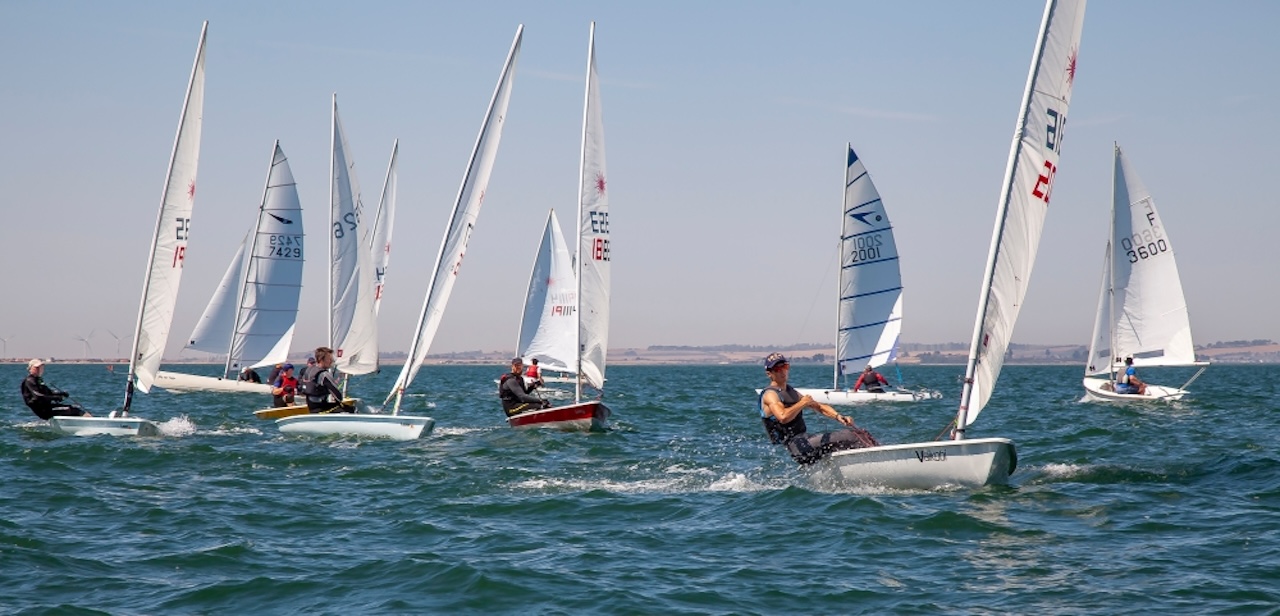
For most grassroots sailors, Portsmouth Yardstick isn’t theory. It’s the quiet system working behind every corrected result on a Sunday afternoon. It allows Lasers, Wayfarers, RS boats, Solos and everything in between to line up together and still produce meaningful racing.
No measurement certificates. No weigh-ins. No protest room debates over millimetres.
Just elapsed time, corrected time, and the understanding that no two boats are identical — but they can still race fairly.
What Is the Portsmouth Yardstick System?
The Portsmouth Yardstick system is a relative handicap framework based on real race performance data. Boats are assigned a PY number that reflects how they typically perform against others in mixed fleets.
Lower number = faster boat. Higher number = slower boat.
To calculate results, a boat’s elapsed time (the time taken to complete the course) is converted to corrected time using a simple formula based on its PY number.
It is simple. But behind that simplicity sits decades of collected race data.
Each year, the RYA publishes a national baseline list. Clubs can then adjust those numbers locally using PY Online, reflecting their own wind patterns, water type and fleet composition.
A Solo on a windy reservoir does not behave the same as one on a tidal estuary. The system recognises that.
The Biggest Update in 30 Years
In 2025, the Portsmouth Yardstick system underwent its most significant overhaul in three decades.
Working with Sheffield Hallam University, the RYA:
Widened the race-time threshold to incorporate more usable data
Shifted to a median-based calculation model for greater statistical stability
Strengthened data handling within PY Online
Improved submission pathways from club scoring software
This wasn’t tinkering. It was structural refinement.
The move to median-based calculations reduces volatility caused by outlier results. In plain terms: one freak race no longer skews a class number disproportionately.
For clubs, that means more reliable handicaps and tighter racing across mixed fleets.
Why Data Submission Matters More Than Ever
Over the past year, the system has seen a notable increase in club data submissions. That matters.
Portsmouth Yardstick only works because clubs contribute real race results. Without ongoing input, the system stagnates.
Adam Parry, RYA Technical Manager, acknowledged the growing collaboration:
“We greatly appreciate the volume of data clubs have submitted over the past year… Uploading information has become even more straightforward thanks to expanded direct submission options through Sailing Club Manager, Hal Sail and Sailwave.”
For 2026, the message is simple: if your club uses PY, submit your data.
The 75th anniversary of the system arrives in 2027. The stronger the dataset, the better the numbers — and the better the racing.
How Clubs Should Approach the 2026 PY List
For race officers and club handicappers, the annual PY release isn’t just an administrative update. It’s an opportunity.
Here’s the practical approach:
Review the national baseline numbers.
Check your club’s historical results through PY Online.
Compare local performance trends against national data.
Adopt class configurations listed online.
Flag missing classes via [email protected] .
The system is collaborative. It works best when clubs treat it as a living tool rather than a fixed table.
Why Portsmouth Yardstick Still Matters
In an era of foiling cats, GPS overlays and Olympic data analytics, Portsmouth Yardstick remains one of the most democratic systems in sailing.
It enables:
Junior sailors in Toppers to race alongside experienced helms in Phantoms.
Mixed fleets at smaller clubs to remain viable.
Grassroots racing without measurement complexity.
Entry-level sailors to feel competitive from day one.
It’s not glamorous. It’s not headline-grabbing.
But it keeps club racing alive.
And that’s worth protecting.
Because long before carbon rigs and live trackers, there was a start line, a mixed fleet, and someone with a stopwatch.
The 2026 numbers are now live.
Clubs update. Sailors race. The system rolls on.