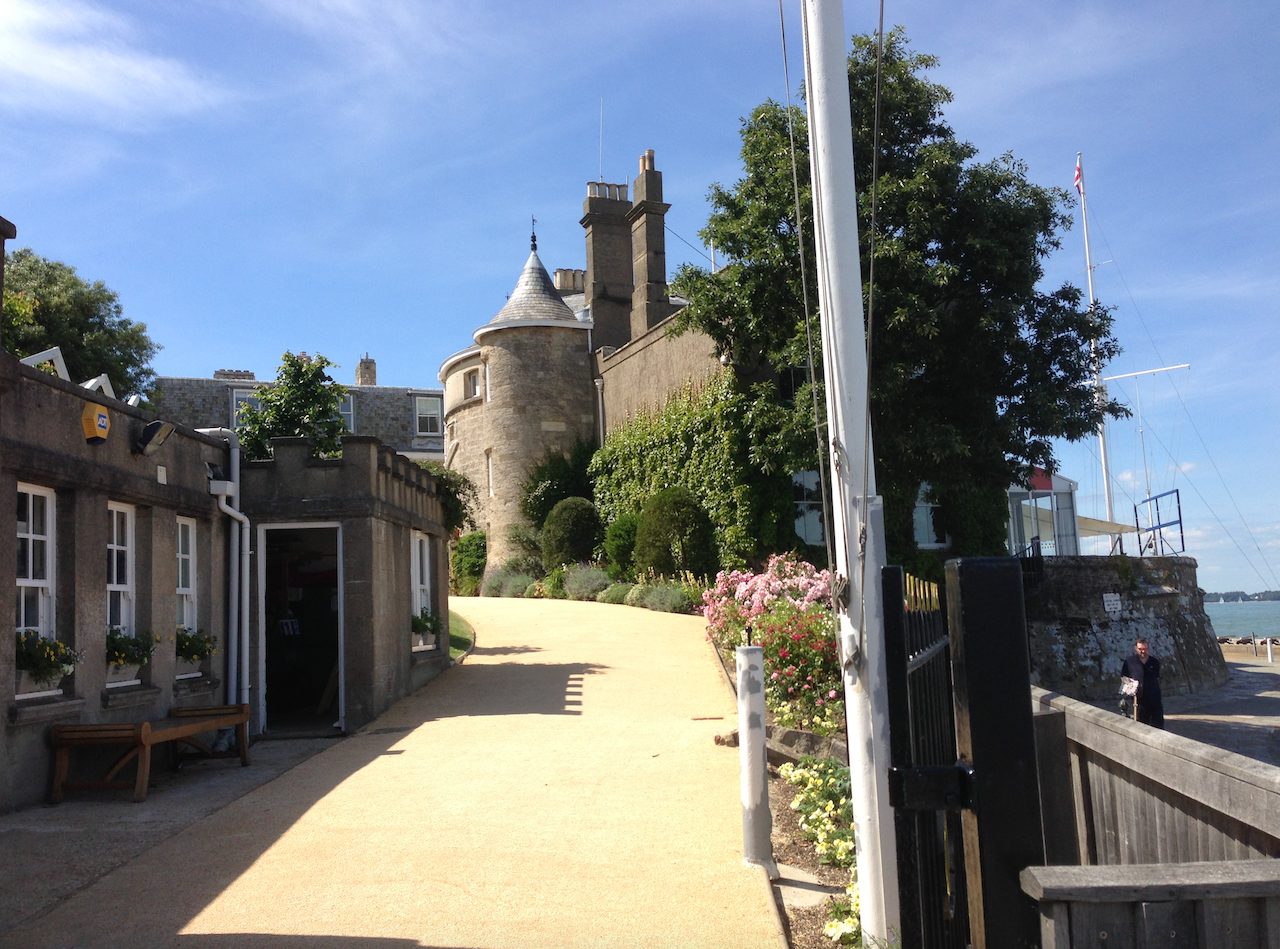
Cowes Castle was built in 1539 as part of Henry VIII's chain of coastal defences; others in the Solent included Yarmouth, Hurst and Calshot. The roles of Cowes Castle and its counterpart at East Cowes were to help prevent invasion of the Island (it was feared it would be occupied and used as a base for an invasion of England) and to protect the growing naval dockyard at Portsmouth.
It was once believed that Cowes took its name from these two so-called 'cow castles' but the placename existed long before the castles were built. However the earlier small settlements of East and West Shamblord were on higher ground inland and it was the protection given by the castles against French raids that allowed the towns on the waterfront to develop.
In the 16th century the Island was a noted haunt of pirates and the area was notorious for an occasional floating market at Meadhole (Osborne Bay) where they sold their stolen goods. However, an inventory of ordnance taken after Henry VIII's death in 1547 shows that the guns on the wings and one each of the pieces on the tower and barbican were 'not hable to serve'.
In 1545 Henry had watched from Portsmouth as his flagship Mary Rose sank during a French attack at the east end of the Island, but that was to be the last major French incursion. The castle was commanded by a Captain paid a shilling a day during Queen Elizabeth's reign when there was also a Porter at 8d (old pence) a day and three gunners at 6d a day each.
By 1774 when the Captain was Sir John Milles, late Lieutenant Governor of Jersey, the captain's pay had risen to 10 shillings a day. Apart from his military duties the Captain of Cowes Castle had maritime responsibilities, such as boarding foreign ships and inspecting crew and cargo, and his castle was used as a lodging place for important visitors to the Island and as a prison.
On Charles I's arrival in 1647 it was full and he had to stay in a common alehouse in the town before proceeding to what was to become his imprisonment at Carisbrooke Castle. The dramatist and Poet Laureate Sir William Davenant (1606-1668), whom gossip held to be the offspring of Shakespeare, was imprisoned in Cowes Castle in 1650 before being removed to the Tower; he had been captured on his return from a mission to Virginia for Queen Henrietta Maria and was released two years later.
Several surveys show that the castle's walls and foundations were in frequent need of repair due to the inroads of the sea and the ground on which it was built. East Cowes Castle appears to have been built on the Shrape mud and by Elizabeth's reign was ruinous; some of the stone was used in a house at Newport and by the 17th century even the site had been lost.
An inspection of Cowes Castle in 1692 recorded 'The walls..... are rent from top to bottom and is in great danger of falling to the ground with every cannons firing'. During the wars with France in the late 18th and early 19th centuries the Island was heavily garrisoned and the castle was armed with eleven 9-pounders.